Showing posts with label Vietnam. Show all posts

Sunday, 4 October 2026

Filipino online shoppers emerged as Southeast Asia's "savviest" consumers in a 2026

Filipino shoppers ranked as Southeast Asia's 'savviest' online

Philstar.com
October 4, 2026

MANILA, Philippines — Filipino online shoppers emerged as Southeast Asia's "savviest" consumers in a 2026 regional e-commerce report, with more than one in three falling into its top shopper segment.


The 2026 eCommerce Savvy Shopper Report for the Philippines found that 36% of Filipino shoppers qualified as "savvy," the highest share among six Southeast Asian markets covered.

Another 22% were classified as "near-savvy," bringing the combined share to 58%, also the largest pool in the region.

The Philippines was followed by Indonesia, where 28% of shoppers were classified as savvy, Vietnam at 25%, Thailand at 22%, Malaysia at 20% and Singapore at 9%.

Filipino savvy shoppers also stood out for how much more they spent.

Their monthly spending was 47% higher than that of general shoppers, the biggest difference among the six markets.

Vietnam followed with a 44% spending uplift, Malaysia with 36%, Thailand with 27%, Indonesia with 19% and Singapore with 13%.

The report estimated the weighted spending gap associated with savvy shoppers in the Philippines at $3.3 billion in 2026. It said the estimate was based on annual e-commerce marketplace spending in Southeast Asia in 2026.

What makes a shopper 'savvy'?

The report, jointly conducted by e-commerce company Lazada and market data firm Cube, assessed shopper savviness across four dimensions: verification, value optimization, digital fluency, and confidence and protection.

These measured whether consumers choose the right products, get the best value, use available digital tools effectively and feel protected when something goes wrong with a purchase.

Across Southeast Asia, the report found that shoppers were more willing to put in additional effort to secure better value than give up trust-related protections.

Forty-three percent said they were willing to wait longer for delivery, 41% would spend more effort finding a deal and 36% would compare offers.

By comparison, only 14% were willing to give up authenticity signals, while 13% would sacrifice purchase protection.

The Philippines also stood out as the only Southeast Asian market in the report where Gen X and Gen Z shoppers were equally willing to pay more for stronger purchase protection.

The report described this as an indication that trust cuts across generations rather than being limited to younger online consumers.

The Philippines report, however, did not disclose key survey methodology, including its sample size, sampling and recruitment method, fieldwork period or the scoring thresholds used to classify shoppers as "savvy" or "near-savvy."


Wednesday, 30 September 2026

Philippines has taken the lead among major Southeast Asian economies in adopting renewable energy policies

PH leads race for clean energy among emerging SE Asia countries — study

Ted Cordero
GMA News
30 September 2026

Over six months after President Ferdinand Marcos Jr. declared a national energy emergency, a new study revealed that the Philippines has taken the lead among major Southeast Asian economies in adopting renewable energy policies during the peak of the Strait of Hormuz crisis.


In a news release, international climate and energy research organization Zero Carbon Analytics said it conducted a study on six fastest-growing Southeast Asian markets — the Philippines, Indonesia, Malaysia, Thailand, and Singapore, alongside Vietnam — “all of which have committed to accelerating their shift to green technology amid historic oil market volatility.”

In its report, Zero Carbon Analytics said crude oil experienced greater volatility during the first six months of the conflict than 95% of all six-month periods since 2007, marking one of the most turbulent episodes for oil markets in nearly two decades.

In response, the research group said the Philippines adopted 13 clean energy policies between February and August 2026, representing the highest number among the tracked countries, which collectively announced 37 clean energy policies.

Across these nations, short-term clean energy policies outpaced the 29 fossil fuel policies passed during the same period, while long-term initiatives on renewables and electrification outpaced fossil-based efforts by a ratio of four to one, with 24 policies compared to six, according to Zero Carbon Analytics.

The research group cited key developments in the Philippines such as the proposing of the Sariling Kuryente Act, fast-tracking at least 250 megawatts of solar capacity to the grid, mandating energy storage systems for new renewable energy developers, and expanding electric vehicle adoption under the national energy emergency directives.

Despite its clean energy leadership, the group said the Philippines also adopted nine fossil fuel-focused policies, accounting for 40% of the energy policies tracked in the country.

These included accelerating up to 5 gigawatts of coal capacity and establishing the country's first government-managed Strategic Petroleum Reserve facility.

In a Facebook post, Energy Secretary Sharon Garin welcomed Zero Carbon Analytics’ findings.

“Who has introduced the most fossil fuel and renewable energy policies in the region? The Philippines has introduced the most energy policies since the start of the conflict, with 22 in total, leading in both fossil fuel and renewable energy policies,” Garin said.

“This is likely due to its declaration of a national energy emergency on 24 March 2026. The declaration included a list of emergency relief measures, such as directly procuring oil and increasing government control over fuel prices, as well as longer-term steps to accelerate renewables, EVs and energy efficiency across all sectors,” she said. — BAP, GMA News

Friday, 25 September 2026

Philippines emerged as one of the world’s fastest-improving tourism markets

Philippines jumps eight spots to 57th out of 110, ranks among world's fastest tourism improvers—WEF

Manila Bulletin Newsroom
Sep 25, 2026

The Philippines emerged as one of the world’s fastest-improving tourism markets, climbing eight places in a global ranking of conditions supporting travel and tourism (T&T) development, according to the World Economic Forum (WEF).


In its Travel & Tourism Development Index (TTDI) 2026 Insight Report published on Friday, Sept. 25, the Geneva-based WEF ranked the Philippines 57th out of 110 economies, with an overall score of 4.08.

The country’s TTDI score improved by 5.5 percent between 2024 and 2026, making the Philippines tied with Morocco for seventh among the fastest-improving economies covered by the index.

Compared with the recalculated 2019 baseline, the Philippines climbed 12 places while improving its overall score by 9.6 percent.

The gains came as Asia-Pacific led the global improvement in tourism development conditions, with its average TTDI score rising by 3.6 percent between 2024 and 2026 as the region continued to recover from its delayed post-pandemic reopening.

Seven of the 10 fastest-improving economies were developing countries in Asia-Pacific, with the Philippines joining Vietnam, Laos, Malaysia, Thailand, Nepal, and India among the region’s strongest improvers.

Albania recorded the largest improvement globally between 2024 and 2026, raising its score by seven percent.

WEF also classified the Philippines among the world’s 10 largest non-high-income T&T economies by direct T&T gross domestic product (GDP), alongside China, India, Indonesia, Malaysia, Thailand, Vietnam, Türkiye, Mexico, and Brazil.

Together, these emerging tourism economies account for more than 28 percent of global direct T&T GDP, with their share projected to rise to 35 percent by 2035.

Their average TTDI score has improved faster than those of the world’s leading tourism destinations. Since 2019, the group’s average score increased by 4.7 percent, compared with 2.9 percent for all economies covered by the index and 1.9 percent for the top 20.

As a group, the 10 emerging tourism economies outperform the top 20 in price competitiveness, natural resources, T&T demand sustainability, and cultural resources, reflecting their combination of natural assets, cultural heritage, and competitive pricing.

However, WEF said significant development gaps remain between these emerging markets (EMs) and the world’s tourism leaders.

Tourist services and infrastructure showed the largest gap, pointing to the need for greater investment in accommodation, visitor services, and supporting infrastructure.

EMs also lagged in business environment and human resources (HR) and labor market, reflecting challenges such as access to financing, regulatory barriers, and workforce capabilities.

Environmental sustainability remains another challenge, potentially putting at risk the natural resources that help attract tourists to these economies.

WEF said narrowing these gaps would require stronger infrastructure and services as well as improvements in the conditions that allow tourism businesses to operate and expand.

Globally, tourism development conditions improved across 101, or 92 percent, of the 110 economies between 2024 and 2026, while the average TTDI score increased by 2.1 percent—the fastest pace of improvement since 2019.

Japan topped the 2026 index, followed by the United States (US), Spain, Australia, and France. Advanced economies occupied nine of the top 10 positions, with China the only exception.

TTDI measures the factors and policies that enable the sustainable and resilient development of travel and tourism rather than tourism performance itself, such as visitor arrivals, spending, or revenues. The 2026 index comprises 17 pillars and 102 indicators, with the latest available data collected as of May 2026. - with reporting from Danielle T. Bayani

Thursday, 17 September 2026

Philippines forecast to be second fastest-growing economy in SE Asia through 2035

Philippines projected to be second fastest-growing economy in SE Asia until 2035

BusinessWorld
September 17, 2026

THE PHILIPPINES could emerge as Southeast Asia’s second fastest-growing major economy over the next decade, with growth averaging 5.8% through 2035, according to a report by Bain & Company, DBS Group Holdings, and Vriens & Partners. 


In the Southeast Asia Outlook 2026-2035 report released on Wednesday, the Philippine economy is projected to grow at an average annual rate of 5.8% from 2026 to 2035 under the baseline scenario.

“The Philippines, which has a favorable demographic tailwind, could grow at a 5.8% average annual rate as consumption, infrastructure, and governance reforms unlock investment,” the report said.

This would make the Philippines’ gross domestic product (GDP) growth the second-fastest among the six major Southeast Asian economies covered by the report, behind only Vietnam, which is projected to expand by an average of 6.2% annually until 2035.

The Philippine economy is expected to outpace Indonesia (5.4%), Malaysia (4.3%), Singapore (2.7%), and Thailand (2.2%).

Philippine GDP growth over the 10-year horizon is also above the 4.8% average for the six Southeast Asian economies.

The latest regional forecast for Southeast Asia is slower than the earlier average expansion of 5.1% for the 2024-2034 period, reflecting a more complex and volatile global environment.

However, the Philippine economy is experiencing a sharp slowdown this year, averaging 2.6% in the first half. The government is targeting 3.5%-4.5% GDP growth for 2026, and 5%-6% annually from 2027 to 2030.

Despite its relatively strong baseline forecast, the Philippines is also among the Southeast Asian economies facing the greatest downside exposure, according to the report.

The report noted that Indonesia, the Philippines, and Thailand would be the most exposed under a downside scenario because of their “capital-flow sensitivities, energy dependence, political uncertainty, and weaker structural momentum.”

Under more favorable global conditions, the Philippines could also capture less upside than Malaysia, Singapore, and Vietnam, which are better positioned to benefit from their roles in capital intermediation and global manufacturing supply chains. 

“Indonesia, Thailand, and the Philippines see more limited benefit, as persistent structural constraints limit their ability to translate an improved external environment into stronger growth,” the report said.

The Philippines’ favorable demographics, steady remittance inflows, and consumption-led  economic model provide some insulation from disruptions to global trade, it added.

However, it warned that the country’s dependence on imported energy, weaknesses in policy implementation and artificial intelligence (AI)-driven disruption to the outsourcing industry could prevent the economy from reaching its full potential.

The report also pointed to longer-term risks from AI-driven automation to the country’s business process outsourcing industry.

“Without stronger energy security and governance consistency, growth could be capped below the Philippines’ potential,” it said.

The report said that one of the Philippines’ immediate challenges is managing the transition to AI.

“The next few years will be critical; the Philippines must move into higher-value services while sustaining reform momentum through its next leadership transition,” it said.

The country also needs to strengthen its energy system, as gains in Philippine technology services have been constrained partly by limitations in the power grid. 

Across Southeast Asia, the report said growth over the next decade will increasingly depend on stronger institutions, more reliable energy systems and the ability to use AI to raise productivity.

“Dependence on imported energy quickly turns external price shocks into household inflation, while weak policy implementation hinders the conversion of investment commitment into actual deployment,” the report said.

It said grid capacity and reliability will be increasingly important in determining whether economies can expand their industrial bases and support power-intensive AI infrastructure.

The Philippines has already fallen short of the report’s earlier growth expectations. From 2024 to 2025, the economy grew by an average of 5.1%, compared with the 6.1% average assumed in their previous 2024-2034 forecast.

“The Philippines saw growth impeded by weaker investment and public sector execution,” the report said. — Justine Irish D. Tabile

Sunday, 13 September 2026

PH wins Mister Cosmopolitan 2026; 2nd crown in three years

PH breaks 'Vietnam curse' with Mister Cosmopolitan 2026 win

Armin P. Adina 
Inquirer.net
13 September 2026

A Filipino contender has finally won a pageant title on Vietnamese soil when John Eriq Bonifacio topped the 2026 Mister Cosmopolitan competition held in Nha Trang on Sept. 12.


The Kapampangan hunk bested 19 other aspirants at the fourth edition of the annual male search to inherit the title from Taiwanese titleholder Shawn Lin, who won at last year’s competition held in Thailand.


Pageant fans, particularly Filipinos, have coined the phrase “Vietnam curse” because delegates from the Philippines had previously never won in international competitions hosted in “the Land of the Ascending Dragon” despite sending formidable competitors.

The most recent “victim” of this curse was Asia Rose Simpson, who finished in the Top 12 of the 2026 Miss World pageant held on Sept. 5 despite topping the “Head-to-Head” Challenge and making the shortlist of several other fast-track competitions. Vietnamese delegate Le Nguyen Bao Ngoc claimed the Top 6 slot for Asia and Oceania.

Also fueling speculations of such a curse were 2023 Miss Earth Air Yllana Marie Aduana, 2024 Miss Cosmo Top 10 semifinalist Ahtisa Manalo, and 2024 Mister World Top 20 semifinalist Kirk Bondad.

Manalo would later compete at the 2025 Miss Universe pageant in Thailand, finishing third runner-up, while Bondad got redemption in the same country by winning the Mister International title last year.

During the question round at Mister Cosmopolitan, Bonifacio was asked,  “As a gentleman, what does having a noble heart mean to you, and how do you believe a man can demonstrate it through his action toward others?”

He responded: “For me, [a] gentleman with a noble heart is not defined by how he [dresses] or looks, but rather how he [treats] people with respect. This is something that I learned from my father who just passed away. It taught me that regardless of who they are, rich, poor, or what gender they choose, respect must always come first.”

For this year’s competition, the Mister Cosmopolitan pageant has adopted the tagline “Gentlemen with Noble Heart.”

Bonifacio added that many in today’s generation had already forgotten how to treat each other with respect. “But I am here right now standing in front of you, be a reminder to each [and] everyone, especially the youth, that to teach everyone with respect and kindness. Because I believe that the things you do in life reflects in return,” he said.

Aside from winning the top prize at the finale show, he also received the Best Physique and Best Catwalk awards at the preliminary competition.

In an interview after he posted his victory, Bonifacio expressed his gratitude to the Filipino people. “Maraming, maraming salamat sa Filipino fans na sumusuporta sa akin. We did it, guys. Mabuhay ang Philippines. Para sa inyo ito. Mahal ko kayong lahat,” he said.

(Thank you very much to the Filipino fans who are supporting me. We did it, guys. Long live the Philipines. This is for you. I love you all.)

Bonifacio’s victory marks the third straight year that a Mister Pilipinas Worldwide titleholder had topped an international competition. In 2024, Daumier Corilla became the first-ever Filipino delegate to be proclaimed Mister Global. And last year, Bondad scored the country’s second Mister International victory. /edv

Monday, 31 August 2026

Philippines scores back-to-back international pageant wins

Philippines scores back-to-back international pageant wins

Margarette Briton is Miss Interglobal 2026; Jamie Casiño is Miss Equality World.

Jojo Gabinete
Philippine Entertainment Portal
31 August 2026

MANILA, Philippines — The Philippines once again proved its supremacy in the field of beauty pageants when two Philippine representatives won consecutive international beauty titles on Sunday, August 30, 2026.


Margarette Briton, 26, won the inaugural edition of Miss International 2026 held in Bali, Indonesia.

Jamie Casiño, 28, was crowned Miss Equality World 2026 at the coronation ceremony held at MGI Hall in Bangkok, Thailand.

MISS INTERGLOBAL 2026


Nabila Fenelia of Indonesia was the first runner-up in Miss International 2026.

Second runner-up is Nicole Missios of Australia.

Dariya Toleukhan of Kazakhstan was the winner of the Mrs. Interglobal 2026 category winner.

Margarette was awarded four special awards at Miss International 2026: Star Connect Award, Social Impact Award, Dinner Dress Award, and National Costume Excellence Award.

MISS EQUALITY WORLD 2026


Miss Equality is an international beauty pageant for transgender women that kicked off in Bali, Indonesia, in 2022

"Gender equality and human rights" are the slogans promoted by Miss Equality World.

Jamie Casiño was the first Filipino to win the aforementioned crown and title.

There are thirteen official candidates for Miss Equality World 2026.

If Jamie hadn't won, Filipinos wouldn't have known that there was such a beauty pageant except for Miss International Queen.

Allana Cordero of Mexico was the first runner-up in Miss Equality World 2026 and Vi Ai Giang of Vietnam was the second runner-up.

In addition to being crowned Miss Equality World 2026, Jamie is the recipient of The Voice of Equality award.

Jamie showed off his intelligence with his winning answer to the question: “If you had to choose between strengthening anti-discrimination laws and investing directly in economic opportunities for transgender communities, which would you prioritize and why?"

She answered: “As a trans advocate, I would prioritize making gender-affirming care accessible to everyone because I do believe that if we give this gender-affirming care for transwomen, then we would be able to save lives, just like how we queens here do advocate for trans people.

“I am more than ready to be the voice of equality, and to work with the Miss Equality World Organization and remind trans people that they are not alone, so come join with me.

"Let’s save lives together for a better tomorrow.”


Sunday, 2 August 2026

PH companies dominate ASEAN’s best tech workplaces 2026

PH firms dominate ASEAN’s best tech workplaces

Story by J.G. Amor 
The Manila Times
02 August 2026

PHILIPPINE-based companies dominated the inaugural Southeast Asia's Best Workplaces in Technology 2026 rankings released by workplace culture authority Great Place To Work, accounting for seven of the top 10 organizations recognized across the region.


The rankings were based on more than 58,200 confidential employee survey responses representing over 219,200 employees from technology companies in Singapore, Malaysia, the Philippines, Vietnam, Indonesia and Thailand. Organizations were evaluated on employee trust, workplace culture and the consistency of employee experience across their workforce.

Cisco topped the regional list, followed by Carelon Global Solutions Philippines and Insight. Other Philippine-based organizations in the top 10 were Genpact, Concentrix Philippines, Capital One Philippines and Lexmark Research and Development Corp., a subsidiary of Xerox Corp. Cognizant, which operates across several Southeast Asian markets, ranked eighth, while Vietnam-based Bosch Global Software Technology Co. Ltd. placed ninth.

The study found that younger employees expressed the highest levels of confidence in their employers. Workers aged 25 and below accounted for 11 percent of respondents and recorded a 91.1-percent trust score in leadership, exceeding the overall average for recognized workplaces.

It also found that 79 percent of employees in the under-25 age group had been with their employers for less than two years. According to the report, they were the demographic group most prepared to embrace innovation in the workplace.

Compensation, however, remained an area of concern. The statement, "I feel I receive a fair share of the profits made by this organization," received a 75-percent rating, making it the lowest-scoring measure even among the region's highest-ranked employers.

Pay fairness and transparency in promotions were identified as the weakest aspects of workplace culture across all categories.

Great Place To Work said participating organizations were assessed through employee feedback on leadership, credibility, respect, fairness, pride and camaraderie. Regional rankings also considered each company's presence across Southeast Asia, employee population, and the number of markets where it had achieved Great Place To Work certification.

Charles Plumley, general manager of Great Place To Work Philippines, said the inaugural rankings reflected the growing importance of workplace culture as Southeast Asia's technology industry expands.

"There has never been a more exciting time to work in technology in this region," Plumley said. "The companies that will define the next decade are the ones measuring how their people feel."

"Southeast Asia is where the next decade in technology is being decided," said Evelyn Kwek, managing director for Asean and Australia-New Zealand at Great Place To Work. "The 219,262 employees behind this list have given the region a clear, public benchmark for how technology companies treat the people doing the building."

Wednesday, 1 July 2026

Philippines hits upper-middle income status - World Bank

Philippines achieves upper-middle-income ambition

Ben Arnold de Vera
Manila Bulletin
July 1, 2026

The Philippines achieved its long-standing goal of attaining upper-middle-income-country (UMIC) status with a record-high gross national income (GNI) per capita in 2025, even as neighboring Vietnam made a bigger stride toward the same World Bank classification.


The World Bank announced on Wednesday night, July 1 (Manila time), that the Philippines, Jordan, Micronesia, Sri Lanka, and Vietnam had joined the ranks of UMICs, with their respective GNI per capita ranging from $4,636 to $14,375 in 2025. This is the income range for UMICs for fiscal year (FY) 2027, covering the period from July 1, 2026, to June 30, 2027.


Manila Bulletin reported earlier that the Philippines’ GNI per capita rose to a record $4,850 in 2025 from $4,470 in 2024, based on World Bank documents published earlier this week.

GNI measures the total income earned by a country’s residents, both domestically and abroad, making it a broader measure of economic performance than gross domestic product (GDP), which accounts only for domestic output.

Based on separate World Bank Group (WBG) DataBank figures seen by Manila Bulletin, the Philippines’ GNI, using the Atlas method, rose to $566.8 billion in 2025 from over $518 billion in 2024.

The country had been stuck in lower-middle-income-country (LMIC) status since at least FY 1989.

“The Philippines achieved its reclassification through broad-based expansion. GDP grew at an average of 5.8 percent per year over five years, reflecting gains across all major industries, not a single sector boom, but an economy-wide shift,” the World Bank said in a blog post.

However, the Philippines’ 2025 GNI per capita remained below Vietnam’s, which climbed to $4,970 from $4,490 a year ago. As a result, the income gap between the two countries widened sixfold—from just $20 in 2024 to $120 in 2025.

“Vietnam tells a story of growth. Powered by an export-led model, the country saw exports surge by more than 15 percent in both 2024 and 2025, with its GDP growing at seven percent and eight percent, respectively. GNI expanded at an average of 10 percent annually between 2021 and 2025—one of the strongest sustained runs in the region,” the World Bank said.

Based on the June 18 World Bank board report seen by Manila Bulletin, Vietnam’s GDP per capita grew by a faster 7.4 percent in 2025, compared with the Philippines’ 3.6 percent.

To recall, Philippine economic growth slowed to a post-pandemic low of 4.4 percent last year in the aftermath of the multibillion-peso flood-control infrastructure corruption scandal, which tempered investor appetite as well as public and private consumption.

Among the other new UMICs, documents showed that Jordan posted a 2025 GNI per capita of $5,260, Micronesia recorded $4,760, and Sri Lanka reached $4,670.

Meanwhile, Togo moved up from low-income to LMIC status, with a 2025 GNI per capita of $1,350, documents showed.

For FY 2027, the LMIC income range covers economies with a 2025 GNI per capita of $1,176 to $4,635.

With its newly attained UMIC status, the Philippines will eventually lose access to the most concessional official development assistance (ODA), or low-interest loans, extended by bilateral development partners as well as multilateral lenders such as the World Bank, the Manila-based Asian Development Bank (ADB), and the China-led Asian Infrastructure Investment Bank (AIIB).

In his inaugural State of the Nation Address (SONA) in 2022, President Ferdinand R. Marcos Jr. said the Philippines aspired to attain UMIC status by 2024—a target that was postponed multiple times as economic growth fell short of expectations in recent years.

During the previous Duterte administration, its economic team had targeted UMIC status by 2020, a goal that was derailed by the socioeconomic crises inflicted by the Covid-19 pandemic.

Thursday, 25 June 2026

Philippines is the next big thing in global supply chain

Philippines, Thailand primed as next supply chain ‘rising stars’

BusinessWorld
June 25, 2026 

Thailand, the Philippines and Argentina are among a group of promising yet underutilized economies primed for an increasing role in supply chains, according to a new analysis of global trade trends.


These and other countries in Southeast Asia and Latin America stand to benefit from diversification as companies look beyond cost and efficiency to build resilience, Verisk Maplecroft, a UK-based risk intelligence firm, said in a report released Thursday.

A third of the world’s busiest ports and airports are vulnerable to disruption from conflicts, environmental risk and domestic security threats, the firm warned. At a time when trade resilience has deteriorated in more than 150 countries — accounting for 90% of global trade — there’s opportunity for “rising stars,” the report argued.

The shuttering of the Strait of Hormuz during the US-Israel conflict with Iran created “near-term headwinds” for both Thailand and the Philippines, Verisk Maplecroft said. Still, its data indicate that those “willing to take a longer-term view will find these markets worth their attention.”

Market openness, regulatory strengths and labor rights in each country are the three main factors the firm analyzes.

The supply chain potential in the Philippines comes despite a bout of political turmoil in the past year, including a sprawling scandal over corruption in contracts for flood mitigation projects that’s seen politicians issued with arrest warrants.

With a young, English-speaking labor force, the Philippines offers significant potential for industrial services and outsourcing, she said. “If you are confident in your company’s supply chain management systems to monitor and manage corruption risk, that doesn’t have to be a complete barrier,” Schwartz said.

THAILAND, ARGENTINA

Risks for Thailand, meantime, have decreased when compared with regional peers during the past five years, the firm said in its report. Thailand’s electronics sector is benefiting from AI investment, and the country is “well positioned to host higher-value supply chain links,” Verisk Maplecroft said. That’s even with an aging workforce and higher-cost labor compared with others in the region, it said.

“The ingredients are really good for a lot of the industries that are seeking supply chain diversification opportunities,” Schwartz said.

For Argentina, both the European Union-Mercosur trade accord and an agreement with US on reciprocal trade and investment could drive a shift on critical minerals, energy and industrial exports.

That graft scandal dented foreign investment in the Philippines last year and has been a factor in the government cutting its economic growth forecast for this year. The Senate, meantime, has been consumed by infighting related to a rift between President Ferdinand Marcos Jr. and his deputy, Sara Duterte, who faces an impeachment trial in July.

“Things are still happening behind the scenes, including efforts to attract investment and reduce regulatory burdens on businesses — though the results of these efforts have yet to fully emerge,” according to Laura Schwartz, senior Asia analyst at Verisk Maplecroft.

“Sometimes political chaos completely stops policymaking, and sometimes it happens alongside policymaking.”

Chile and Uruguay are also on the regional list, with the latter offering the region’s strongest risk-adjusted operating profile.

“Latin America still trails Southeast Asia as a scaled manufacturing platform, but Western efforts to reduce exposure to China are creating new supply-chain contenders,” according to the report.

The report also points to Vietnam, Malaysia, Mexico and Brazil as already benefiting from the reduction in bilateral trade between the US and China. Those four have their advantages as supply hubs, the report said, “but according to our data, risks to multinational supply chains in all of these jurisdictions are increasing.” — Bloomberg

Saturday, 6 June 2026

Mindoro town declared Biosphere Reserve by UNESCO

PH town among 14 new UNESCO biosphere reserves worldwide

Dennis Atienza Maliwanag
Inquirer.net
06 June 2026

MANILA, Philippines — Unesco has designated the Matibay na Bayan ng Sablayan Biosphere Reserve in Occidental Mindoro as one of 14 new biosphere reserves added to the World Network of Biosphere Reserves on World Environment Day.


The designation was announced on June 5 by the United Nations Educational, Scientific and Cultural Organization (Unesco), which said the new additions brought the global network to 797 biosphere reserves in 145 countries.

The Matibay na Bayan ng Sablayan Biosphere Reserve was among sites approved by Unesco’s International Co-ordinating Council of the Man and the Biosphere Programme during its 38th session in Hernandarias, Paraguay.

New Unesco sites

Unesco said the other newly designated biosphere reserves are located in Albania, Algeria, Aruba, Azerbaijan, Cameroon, Canada, Iran, Mongolia, Montenegro, Paraguay, Portugal, Timor-Leste, and Viet Nam.

The biosphere reserve in the Philippines covers the entire municipality of Sablayan in Occidental Mindoro, accounting for nearly 39 percent of the province’s total area. It spans 327,880 hectares and includes a mix of terrestrial and marine ecosystems.

Its core areas cover 86,265 hectares, including 70,188 hectares of terrestrial area and 16,077 hectares of marine area. These comprise seven terrestrial and 10 marine protected areas established under national or local legislation.

Home to Mangyan tribes

The reserve is home to indigenous peoples, particularly the Alangan and Taubuid Mangyan tribes, two of the eight ethnolinguistic groups inhabiting the mountainous areas of Mindoro.

Unescao noted that most of the municipality’s population, estimated at 84,898 in 2022, lives in the transition areas of the reserve. Agriculture remains the primary source of livelihood, particularly the cultivation of rice and corn, while ecotourism has emerged as an important driver of conservation and community development.

A Biosphere Management Council of Sablayan will oversee the reserve. The council will consist of representatives from the local government unit, national government agencies, academic institutions, and other stakeholder groups.

‘Living laboratories’

Unesco defines biosphere reserves as territories where biodiversity conservation, sustainable development, and scientific research are pursued simultaneously. The sites serve as “living laboratories” where communities test and develop approaches to balancing environmental protection with economic and social needs.

“Biosphere reserves prove every day that protecting nature and improving human lives are not competing goals,” Unesco Director-General Khaled El-Enany said in a statement marking World Environment Day.

“This year’s designations span every continent showing the full range of what it means to live in harmony with nature. Unesco will continue to work with governments, communities and scientists to ensure these living laboratories remain at the forefront of the world’s response to the climate and biodiversity crises,” he added.

Unesco also highlighted the role of biosphere reserves in advancing global conservation goals. Since the launch of the Man and the Biosphere Programme in 1971, biosphere reserves have become a key component of Unesco’s environmental initiatives, alongside World Heritage sites and Global Geoparks.

The organization said these sites contribute to the protection of more than 13 million square kilometers of terrestrial and marine ecosystems worldwide and support the global target of conserving 30 percent of the planet’s land and sea areas by 2030.

The Philippines’ newest biosphere reserve joins a global network of protected areas that promote biodiversity conservation while supporting the livelihoods, cultures, and sustainable development of local communities. /dm


Friday, 1 May 2026

Jollibee crowned No. 1 chicken QSR in Southeast Asia

Jollibee crowned No. 1 chicken QSR in Southeast Asia

Richmond Mercurio
Philstar.com
01 May 2025

MANILA, Philippines — Jollibee, the flagship brand of Asian food conglomerate Jollibee Foods Corp., has been ranked the No. 1 chicken quick-service restaurant (QSR) in Southeast Asia by Euromonitor International.


The Jollibee Group said the recognition underscores the brand’s sustained growth and strong consumer demand across multiple Southeast Asian markets.

Euromonitor International’s assessment draws on comprehensive research methods, including in-country research, store checks, trade interviews and company analysis to determine market size and competitive positioning across the region.

Jollibee has built broad market appeal across Southeast Asia by balancing menu localization with a consistent core brand experience.

Ernesto Tanmantiong, Jollibee Group global president and CEO, said the recognition reinforces Jollibee’s role as a key driver of international growth and highlights the group’s capability to scale restaurant brands across diverse markets through strong fundamentals and execution discipline.

“This milestone underscores the strength of Jollibee as our flagship brand and our ability to build brands that connect across markets. It reflects years of disciplined execution — deep consumer understanding, strong operating systems and a growth strategy that balances relevance with consistency,” he said.

Tanmantiong said Jollibee is well-positioned to scale significantly over time, supported by disciplined expansion and strong market fundamentals.

He added that the group would focus on scalable brands that stay meaningful to customers as it expands across Southeast Asia and other regions.

“With 317 stores across Southeast Asia outside the Philippines, we have a solid platform for continued expansion in this high-growth region,” Tanmantiong said.

Jollibee was recently ranked No. 1 QSR in Vietnam by Euromonitor International, despite not having the largest store network.

In Singapore, Jollibee was previously recognized by The Straits Times as the No. 1 fast-food brand in customer service, based on a nationwide consumer survey.

Jollibee also stands as the No. 1 QSR by store network in Brunei.

“There’s a common perception that Jollibee primarily serves Filipino customers outside the Philippines, but what we’re seeing on the ground is very different,” Dennis Flores, president of Jollibee Europe, Middle East, Asia and Australia, said.

“In markets like Vietnam and Brunei, nearly all our customers are locals, and in Singapore and Malaysia, locals make up most of our customer base. This tells us that great taste and a strong brand experience resonate beyond borders — it’s something consumers choose, regardless of culture,” he said.

Monday, 1 December 2025

World's Second Best Rice is found in the Philippines

Philippines’ Dinorado Achieves Global Recognition

Sugbo.ph
December 1, 2025

Dinorado rice has placed the Philippines firmly on the global culinary map after being named second best rice in the world at the World’s Best Rice Awards 2025 held in Phnom Penh, Cambodia. The Department of Agriculture announced the win, celebrating the variety’s signature tenderness, aroma, and flavor.


A Strong Finish Against Global Favorites

This year’s competition was tight, with Dinorado finishing just behind two gold winners, Vietnam’s ST25, a three-time champion, and Cambodia’s Phka Rumdoul, known for its floral fragrance. The recognition puts Dinorado in league with the world’s elite rice varieties.

A Product of Filipino Innovation


Developed in 2009 by the Philippine Rice Research Institute (PhilRice), Dinorado, also known as Rc218, was designed to elevate everyday meals with its softness and fragrant quality. Its combination of high eating quality and strong yield potential has made it a favorite among both consumers and farmers.

More Than Quality: A Statement of Identity

For industry leaders, the victory carries deeper meaning. Rowena Sadicon, founder of the Philippine Rice Industry Stakeholders Movement, said the award is “not just about quality, it’s about identity,” emphasizing that the Philippines is capable of producing rice that stands proudly on the world stage.

A Triumph for Farmers and Scientists

Agriculture Secretary Francisco Tiu Laurel Jr. hailed the achievement as proof of what collaboration between Filipino farmers and scientists can accomplish. The award underscores the country’s ability to produce sustainable, world-class rice despite being one of the world’s largest importers.

A Win That Elevates the Nation


Dinorado’s success is more than a medal, it’s a celebration of Filipino craftsmanship, perseverance, and agricultural excellence. Each grain is a reminder that the Philippines can grow not just rice, but global recognition and pride.

Sunday, 2 November 2025

Philippines to lead Asia‘s Gen Alpha boom by 2030

Philippines to lead Asia‘s Gen Alpha boom by 2030

Louella Desiderio
Philstar Global
02 November 2025

MANILA, Philippines — The Philippines is expected to have the biggest proportion of Gen Alphas among major Asian economies by 2030, a demographic that will define future consumer trends, according to research and analysis firm BMI.


In a report, the Fitch Solutions unit said that Asia is expected to have the biggest population of Gen Alphas across all years due to its already large population.

BMI said Asia is expected to have around 935.7 million Gen Alphas or almost 50 percent of the global Gen Alpha population in 2030.

Gen Alpha refers to those born between 2010 and 2024.

Within Asia, BMI said that “the proportion of Gen Alphas will be highest in the Philippines, making up 27 percent of total population in 2030.”

This will be followed by Malaysia and Vietnam, where Gen Alpha will account for 21 percent of the population in both markets.

In contrast, Japan and South Korea are expected to have the smallest proportion of Gen Alpha consumers at 12 percent and 11 percent, respectively, due to their aging population and low birth rates.

Those part of Gen Alpha are considered digital natives as they were born in a highly digitalized world and exposed to technology at a young age.

As the generation becomes increasingly integrated into the consumer market, BMI said that consumer trends would be in line with Gen Alphas’ preferences.

“Parents of Gen Alphas are predominantly millennials and older Gen Zs, whose spending habits and attitudes will set the foundation of how Gen Alpha evolve into the market,” BMI said.

At present, Gen Alpha accounts for 24 percent or two billion of the world’s total population of around 8.3 billion.

BMI said Gen Alpha is expected to remain at the two billion mark until 2050 due to the growing share of other generational cohorts such as Generation Beta (2025 to 2039) and Gamma (2040 to 2054) to the total population.

Tuesday, 14 October 2025

Philippines among top drivers of SE Asia’s RE growth

Philippines among top drivers of SE Asia’s RE growth

Story by Brix Lelis
Philstar Global
14 October 2025

MANILA, Philippines — The Philippines has emerged as a leading catalyst in Southeast Asia’s renewable energy (RE) transition through 2030, according to the International Energy Agency.


The latest IEA report showed that the Philippines, alongside Vietnam and Indonesia, would boost the region’s RE surge, with major capacity gains expected between 2025 and 2030.

In particular, the Philippines is poised to add around 15 gigawatts (GW) of new RE capacity, with solar and onshore wind making up 90 percent of the expansion.

“This represents a five-GW (around 50 percent) increase over the previous forecast, owing to completed and ongoing competitive auctions,” the IEA said.

Recently, the Department of Energy (DOE) attracted over 9,400 megawatts (MW) of capacity during the fourth green energy auction (GEA-4) round, with delivery dates between 2026 and 2029.

GEA-4 covers ground-mounted solar, roof-mounted solar, floating solar, onshore wind and integrated solar with energy storage systems.

This followed the successful bidding of over 6,000 MW of impounding hydro, pumped storage hydro and geothermal contracts under GEA-3.

“If challenges such as grid connection delays, high financing costs, land access restrictions and permitting bottlenecks are addressed, growth could be 90 percent higher, putting the country on track to exceed its targeted 35 percent renewable electricity share by 2030,” the IEA said.

Currently, renewables account for only 22 percent of the Philippines’ power mix, with coal remaining dominant at about 63 percent.

To ensure the timely delivery of new RE projects, the DOE is looking to allow power producers to build associated transmission facilities.

The move is designed to support effective grid integration of new projects and address constraints in the transmission network.

Across the region, ASEAN countries are on track to add over 95 GW of new RE capacity over the next five years, the IEA said.

Notably, more than half of these additions are likely to come from solar photovoltaic projects.

According to the IEA, Vietnam leads ASEAN’s RE growth and accounts for over 40 percent of total capacity additions, followed by Indonesia at 20 percent.

Both countries are expected to accelerate their expansion efforts through 2030.

Wednesday, 3 September 2025

Moody's: Philippines among Southeast Asia’s rising semiconductor hubs

‘Philippines among Southeast Asia’s rising semiconductor hubs’

Keisha Ta-Asan
Philstar Global
03 September 2025

MANILA, Philippines — The Philippines is emerging as one of Southeast Asia’s growing hubs for semiconductor assembly and testing, with the industry now accounting for about 32 percent of the country’s total goods exports in 2024, according to Moody’s Ratings.


In its latest sector review, Moody’s said the Philippines, alongside Malaysia and Vietnam, is playing a bigger role in the global chip supply chain as multinational firms diversify operations amid United States-China trade tensions and calls to strengthen supply chain resilience.

While Southeast Asia is gaining ground in back-end processing – particularly assembly, testing and packaging – Moody’s cautioned that economies like the Philippines face hurdles in moving up the value chain.

“Technical gaps constrain their ability to capture greater economic value,” the report said, pointing to weaknesses in research and development, talent and infrastructure.

According to Moody’s, Asia continues to dominate global semiconductor manufacturing, commanding more than 75 percent of overall chipmaking capacity, spanning advanced wafer fabrication, materials and assembly.

Despite US-led efforts to reshore production and the intensifying push for self-sufficiency in China, large-scale relocations of chipmaking out of Asia remain “commercially challenging” due to cost advantages and established ecosystems.

In the Philippines, semiconductors remain the backbone of electronics exports, supplying components used in consumer devices, automotive and industrial applications.

However, Moody’s warned that chronic issues such as power supply reliability, logistics bottleneck and limited investment could weigh on the country’s ability to attract higher-value operations in fabrication and design.

Still, the credit watcher said the region is on track to capture around 24 percent of global semiconductor back-end capacity by 2032, up from current levels. Malaysia leads the pack, but the Philippines and Vietnam are expected to expand their roles as cost-competitive alternatives for multinational players.

“Securing a competitive edge will hinge on workforce development, innovation and stronger public-private partnerships,” Moody’s said, adding that without such reforms, Southeast Asian economies risk remaining concentrated in low-margin, labor-intensive segments of the semiconductor chain.

Monday, 1 September 2025

Philippines emerged as one of the top-performing nations at WorldSkills ASEAN Manila 2025

PH bags 10 golds in WorldSkills ASEAN tilt

Philippine News Agency
September 1, 2025

MANILA – The Philippines emerged as one of the top-performing nations at WorldSkills ASEAN Manila 2025, bagging 10 gold medals during the competition held Aug. 25 to 30 in Pasay City.


The gold medals were earned in 10 skill areas, including in three demonstration events Industrial Control, Carpentry, and Plumbing and Heating.

The gold medalists were Hannah Krystelle Caintic (Graphic Design Technology); Hayden Christian Gravador and Gian Benedict Cariño (Internet-of-Things); John Patrick Torres and Steven Retirado (CNC Maintenance); Agee Docayso (Cooking); Carlos Antonio Delos Reyes (Hotel Reception); James Cavin Sayago (Electrical Installations); Denmark Dadia (Refrigeration and Air Conditioning); James Bryan Estrada (Industrial Control); Honorato Amad II (Carpentry); and Alexis Joseph Anuta (Plumbing and Heating).

The last time the country won a gold medal was in Vietnam in 2004 in the Refrigeration and Air-Conditioning skill area.

In his speech during the closing ceremony, Technical Education and Skills Development Authority (TESDA) Secretary Kiko Benitez congratulated the competitors for their performance and reminded them about the competition’s significance.


“What we witnessed was bigger than medals. We saw not just skills, but discipline. Not just competition, but collaboration. Not just dreams, but the courage to make them real,” Benitez said, as quoted in a news release on Monday.

“We learned the lesson that excellence knows no borders. We gained confidence that ASEAN can stand shoulder to shoulder with the world. But above all, we took on a responsibility. A responsibility to keep investing in our youth, our workers, our communities.”


The biennial event, hosted this year by TESDA, brought together hundreds of young skilled professionals from 10 Southeast Asian member countries. They competed in 32 skill areas, celebrating technical expertise and innovation across the region.

The Philippines’ strong performance in this year’s competition reflects the nation’s growing investment in technical vocational education and training and its commitment to elevating skills standards to global levels.

Aside from gold medals, the Philippines also brought home seven silver and eight bronze medals, along with five Medallions for Excellence, which are awarded to competitors whose performance meets the rigorous international standards set by WorldSkills International.

Malaysia emerged as overall top performer with 13 gold medals, four silvers, three bronzes, and two Medallions for Excellence.


Indonesia produced nine golds, one silver, eight bronzes, and eight Medallions for Excellence.


The weeklong competition, held at the World Trade Center, Philippine Trade Training Center and SMX Convention Center, also featured industry-led exhibits, Try-a-Skill booths, and cultural performances, drawing thousands of students, educators, and industry partners to witness the transformative impact of skills development. (PR)

Tuesday, 12 August 2025

School in Baguio wins international award for organic farming

Baguio school wins Asia award for organic farming program

GMA Integrated News 
08 August 2025

The Happy Hollow National High School (HHNHS) in Baguio City won the 2025 AIA Outstanding Healthy Eating Award for its organic farming initiative. 


The Department of Education (DepEd) recognized the school as a model for how educational institutions can support the government’s food security and sustainability agenda.

The award honors schools in Asia that excel in promoting healthy lifestyles, active living, and environmental responsibility. 

Happy Hollow NHS was cited for its flagship program, Project O.R.G.A.N.I.C. (Offering Resources of Growing Agri-product and Nutrition in Community), and received US$15,000 (about P840,000) in prize money.

Designated as a farm school by DepEd in 2024, the Baguio-based school trains students in organic agriculture and sustainable food production while encouraging healthy eating and waste reduction. The program has taught 168 Grade 12 students under the Organic Agriculture Production (OAP) strand to grow mustard greens using organic methods and recycled materials.

Teacher Aries Busacay said the program aims to help students “live happier and healthier,” while involving the community in agricultural activities. Older students mentor younger batches, with support from barangay officials, nutritionists, and parents through backyard gardening, feeding programs using school-grown produce, planting and harvesting workshops, and nutrition seminars. Participants also prepare for TESDA NC II certification to enhance job opportunities.

DepEd said the program has contributed to lower malnutrition rates based on body mass index data, improved student engagement, and fostered a stronger culture of sustainability in the community.

Education Secretary Sonny Angara said the initiative shows what can be achieved when schools, parents, and local communities collaborate. 

"Patunay itong Project O.R.G.A.N.I.C. na kapag nagtulungan ang paaralan, magulang, at komunidad, kayang buhayin ang tradisyon ng agrikultura at sabay nating mapaunlad ang kalusugan at kinabukasan ng ating mga kabataan,” he said.

(Project O.R.G.A.N.I.C. proves that when schools, parents, and the community work together, we can keep the tradition of agriculture alive while improving the health and future of our children.) 

The farm school concept is anchored on Republic Act No. 10618 or the Rural Farm Schools Act, authored by the late Senator Edgardo J. Angara. Under the current leadership of Sec. Angara, there are now 156 farm schools across eight regions offering agricultural training, technical skills, and entrepreneurship education.

Happy Hollow NHS topped 15 other schools from across the Asia-Pacific region, including entries from Australia, Hong Kong, Thailand, Vietnam, Malaysia, Indonesia, and Sri Lanka. —Sherylin Untalan/KG, GMA Integrated News

Thursday, 10 July 2025

PH 3rd safest destination for Travelers in 2025 - Travelbag

Philippines Ranks Third Safest Destination for Travelers in 2025, According to Travelbag

Christa I. De La Cruz 
Esquire Philippines
10 July 2025

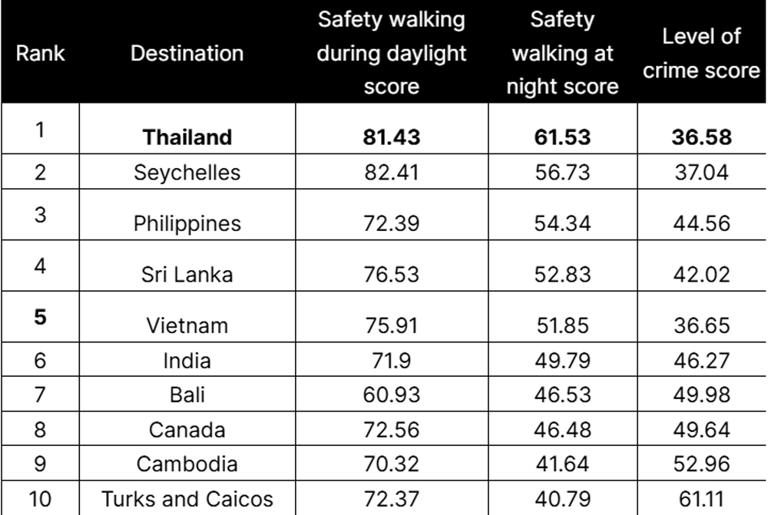
Research by travel booking platform Travelbag revealed that the world's safest destination for travelers in 2025 is Thailand, with the Philippines ranking third in the list.

Philippines Ranks Third Safest Destination for Travelers in 2025, According to Travelbag

For many travelers, feeling safe is just as important as the destination. Whether it's a quiet solo trip, a family adventure, or a romantic getaway, knowing that you won't be robbed at gunpoint anytime soon makes a big difference. The long-haul travel platform examined safety ratings, crime levels, and how safe people feel walking around both day and night based on data from Numbeo.

Travelbag

The Philippines, with its thousands of islands, rich culture, and famously friendly people, is increasingly viewed as a safe choice for tourists. The Travelbag report gives the Philippines solid scores: 72.39 for "Safety walking during daylight" and 54.34 for "Safety walking at night." Its "Level of crime" is noted at 44.56. These numbers suggest a country where you can enjoy adventure with growing peace of mind.

This positive ranking comes as the Philippines actively works to improve tourism and safety. The Department of Tourism (DOT) and local governments focus on traveler safety. For instance, cities like Dumaguete and Davao have been named among the safest in the country for 2025 by the World Travel Index. They scored well for day and night safety, low crime rates, and strong public trust in authorities. Dumaguete earned a Safety Index score of 81.36, making it the highest among Philippine cities and ranking 1097th globally. Davao City in Davao Del Sur, which used to be the first on the list, came in second with a Safety Index score of 80.73. Bulacan, Balanga (Bataan), Lucena (Quezon), Naga City (Camarines Sur), Baguio City, Puerto Princesa, Legazpi City, and Makati City round up the top 10 in the Philippines.

The DOT is also planning to establish Tourist First Aid Facilities in popular tourist destinations like La Union, Boracay Island, Siargao Island, Panglao Island, Palawan, and Puerto Galera. These locations will have medical staff ready to help.

Wednesday, 18 June 2025

121 PH universities made it to THE Impact Rankings 2025

University impact rankings: Philippines most represented in ASEA

Cristina Chi
Philstar Global
18 June 2025

MANILA, Philippines — The Philippines had 121 universities ranked in the latest Times Higher Education Impact Rankings — the highest number among ASEAN countries and third globally behind India and Pakistan.

The rankings, released Wednesday, June 18, measured over 2,500 universities from 130 countries against the United Nations' Sustainable Development Goals. 

With 121 schools on the list, the Philippines placed ahead of Thailand (85 universities) and Indonesia (76 universities) in total representation within the Southeast Asian region. 

This is also more than double the 56 Philippine universities and colleges included in last year's edition.

The Ateneo de Manila University remains the Philippines' top school in THE's impact rankings, placing in the 101-200 tier overall. This is higher than its 201-300 placement the previous year.


It is followed by the Batangas State University, Isabela State University, and the University of the Philippines — all of which are in the 401-600 band. 

While the Philippines led in representation, Indonesia claimed the region's highest individual ranking, with Universitas Airlangga jumping to joint ninth place globally from joint 81st the previous year — the first time an Indonesian university cracked the global top 10.

The rankings assess how universities contribute to addressing global challenges like poverty, climate change and inequality. 

To qualify, institutions must submit data on partnerships for goals and at least three other UN development categories.

The top-ranked schools in the Southeast Asian region for each of the 17 SDGs are from Malaysia, Thailand, Indonesia and Vietnam.