Showing posts with label natural heritage. Show all posts

Saturday, 6 June 2026

Mindoro town declared Biosphere Reserve by UNESCO

PH town among 14 new UNESCO biosphere reserves worldwide

Dennis Atienza Maliwanag
Inquirer.net
06 June 2026

MANILA, Philippines — Unesco has designated the Matibay na Bayan ng Sablayan Biosphere Reserve in Occidental Mindoro as one of 14 new biosphere reserves added to the World Network of Biosphere Reserves on World Environment Day.


The designation was announced on June 5 by the United Nations Educational, Scientific and Cultural Organization (Unesco), which said the new additions brought the global network to 797 biosphere reserves in 145 countries.

The Matibay na Bayan ng Sablayan Biosphere Reserve was among sites approved by Unesco’s International Co-ordinating Council of the Man and the Biosphere Programme during its 38th session in Hernandarias, Paraguay.

New Unesco sites

Unesco said the other newly designated biosphere reserves are located in Albania, Algeria, Aruba, Azerbaijan, Cameroon, Canada, Iran, Mongolia, Montenegro, Paraguay, Portugal, Timor-Leste, and Viet Nam.

The biosphere reserve in the Philippines covers the entire municipality of Sablayan in Occidental Mindoro, accounting for nearly 39 percent of the province’s total area. It spans 327,880 hectares and includes a mix of terrestrial and marine ecosystems.

Its core areas cover 86,265 hectares, including 70,188 hectares of terrestrial area and 16,077 hectares of marine area. These comprise seven terrestrial and 10 marine protected areas established under national or local legislation.

Home to Mangyan tribes

The reserve is home to indigenous peoples, particularly the Alangan and Taubuid Mangyan tribes, two of the eight ethnolinguistic groups inhabiting the mountainous areas of Mindoro.

Unescao noted that most of the municipality’s population, estimated at 84,898 in 2022, lives in the transition areas of the reserve. Agriculture remains the primary source of livelihood, particularly the cultivation of rice and corn, while ecotourism has emerged as an important driver of conservation and community development.

A Biosphere Management Council of Sablayan will oversee the reserve. The council will consist of representatives from the local government unit, national government agencies, academic institutions, and other stakeholder groups.

‘Living laboratories’

Unesco defines biosphere reserves as territories where biodiversity conservation, sustainable development, and scientific research are pursued simultaneously. The sites serve as “living laboratories” where communities test and develop approaches to balancing environmental protection with economic and social needs.

“Biosphere reserves prove every day that protecting nature and improving human lives are not competing goals,” Unesco Director-General Khaled El-Enany said in a statement marking World Environment Day.

“This year’s designations span every continent showing the full range of what it means to live in harmony with nature. Unesco will continue to work with governments, communities and scientists to ensure these living laboratories remain at the forefront of the world’s response to the climate and biodiversity crises,” he added.

Unesco also highlighted the role of biosphere reserves in advancing global conservation goals. Since the launch of the Man and the Biosphere Programme in 1971, biosphere reserves have become a key component of Unesco’s environmental initiatives, alongside World Heritage sites and Global Geoparks.

The organization said these sites contribute to the protection of more than 13 million square kilometers of terrestrial and marine ecosystems worldwide and support the global target of conserving 30 percent of the planet’s land and sea areas by 2030.

The Philippines’ newest biosphere reserve joins a global network of protected areas that promote biodiversity conservation while supporting the livelihoods, cultures, and sustainable development of local communities. /dm


Wednesday, 29 April 2026

Entalula Beach named world's No. 1 best beach for 2026

Palawan's Entalula Beach named world's No. 1 best beach for 2026

Melanie Uson
Philstar.com
29 April 2026

Entalula Beach in El Nido, Palawan, has been named this year’s No. 1 beach in the world.


The pristine destination topped this year’s World’s 50 Best Beaches list, as selected by the judges, beach ambassadors, and the World’s 50 Beaches team.

“Entalula Beach in Palawan is one of those places you have to see to believe. It is set apart by its towering limestone cliffs that rise sharply behind a stretch of soft white sand, creating one of the most visually striking settings in the region and the world,” the media company described in the caption.

It also underscored the beach’s distinctive surrounding landscape, crystal-clear waters, and relatively uncrowded atmosphere compared with nearby beaches.

“With access only by boat, it remains quieter and helps preserve its more natural feel. It’s the contrast of majestic cliffs, clear water, and amazing seclusion that gives Entalula its edge as a place that feels both dramatic and calm at the same time,” it added.

This year’s top ranking comes after the beach landed at No. 2 on last year’s list.

Leyte’s Kalanggaman Island also made it to the list at No. 25, known for its clear waters and narrow sandbar.

Following Entalula, Fteri Beach in Greece ranked second, followed by Australia’s Wharton Beach, Nosy Iranja in Madagascar, and East Beach on Vomo Island in Fiji.

The nominations were based on eight key criteria: unique characteristics, wildlife, untouched nature, natural soundtrack, ease of water entry, frequency of calm conditions, lack of overcrowding, and the idyllic scenes it offers.

Completing the top 10 beaches are Shoal Bay East in Anguilla, Dhigurah in the Maldives, Playa Balandra in Mexico, Koh Rong in Cambodia, and Donald Duck Bay in Thailand.

El Nido, Palawan, was also recently recognized by BBC as one of the eight best destinations in the world.

Thursday, 1 May 2025

PH got the world's best beaches in 2025

El Nido's Entalula, Romblon's Bon Bon named among world's 50 best beaches anew

GMA Integrated News
01 May 2025

Entalula Beach in El Nido, Palawan and Romblon Island's Bon Bon Beach were once again named among the world's top 50 beaches.

Entalula Beach ranked second on the World's 50 Best Beaches list for 2025, two notches higher from its fourth-place ranking in 2024.

Entalula Beach, Palawan

Bon Bon Beach also went up the list, landing on 38th this 2025 from last year's 45th ranking.

Entalula Beach joins Cala Goloritze in Italy, Bang Bao Beach in Thailand, Fteri Beach in Greece, and PK 9 Beach in the French Polynesia to make up the world's top five beaches this 2025.

Entalula Beach is known for its limestone cliffs, white sand, and crystal-clear waters perfect for swimming and snorkeling. The beach isn't as frequented compared to other famous beaches in El Nido thanks to its secluded location, making it the perfect spot for those who want to steer clear of crowds.

Meanwhile, Bon Bon Beach boasts a natural sandbar that extends to Bangug Island. Known for its powdery white sand and clear waters absent of huge waves, the undeveloped beach is the quintessential serene paradise.

Bon Bon Beach, Romblon


The World's 50 Best Beaches list gathers thousands of experienced travel professionals and travel journalists to vote for what they believe is the best beach in the world. An in-house team of travel experts also works with beach ambassadors known for their experiences on the world's top beaches to review each submission.

The final list is chosen based on eight criteria: a beach's uniqueness, likelihood of beachgoers to encounter wildlife, a beach's untouched nature, soundtrack of nature, ease of entry, calm waters, crowds, and idyllic condition.

—CDC, GMA Integrated News

Thursday, 12 December 2024

Three new Philippine Parks added to ASEAN list

Three Philippine Parks Make It on the ASEAN Heritage List

Leana Vibal
Spot.ph
12 December 2024

Good news! In 2024, three Philippine parks were officially recognized as part of the list of ASEAN Heritage Parks, a.k.a. areas of  "outstanding wilderness and biodiversity values."


Balinsasayao Twin Lakes Natural Park, Turtle Islands Wildlife Sanctuary, and Apo Reef Natural Park join 11 other Philippine parks on the ASEAN Heritage Park list. This makes the Philippines the country with the most entries on the list, comprising over 22% of the 64 parks recognized. 

What is an ASEAN Heritage Park?

ASEAN Heritage Parks are "protected areas of high conservation importance, preserving in total a complete spectrum of representative ecosystems of the ASEAN region."

Simply put, these parks are the best examples of the high-impact ecological zones in the region. More importantly, they have established significant sustainable efforts in protected area management and conservation. 

The list started in 1984 with only 11 areas included. It has since grown into 62 zones across Southeast Asia. 

Aside from the prestige of recognition and the validation that you're doing right by the environment, being on the ASEAN Heritage Park list does have its perks, especially for the park administrators and rangers who manage these spots. 

Areas included in the list become part of a network encouraging them to share best practices and experiences on protected area management and participate in capacity-building opportunities. Additionally, they increase their chances of partnering with international conservation partners and get assistance in enhancing their operations. 

Here are the three new ASEAN Heritage Parks from the Philippines:

Turtle Islands Wildlife Sanctuary

The Turtle Islands Wildlife Sanctuary (TIWS) is a group of islands in the Sulu Archipelago. This key marine biodiversity area is the first trans-frontier protected area for marine turtles in the world, covering waters in both Malaysia and the Philippines. 


Its claim to fame is that it is one of the few remaining major nesting areas for Green Sea Turtles in Southeast Asia. In the worldwide turtle nesting context, it's currently ranked 11. Yearly, especially during peak egg-laying season, over 80 to 100 Green Sea Turtles make their nests and release their eggs along the shores of its beaches. Many Hawksbill Turtles also lay their eggs in this area, albeit their numbers are smaller than the Green Sea Turtles. 


Aside from turtles, the area is known to be home to over 200 species of plants, including 10 mangrove species and 19 species of ferns. This rich foliage has resulted in at least 34 species of birds also calling TIWS their home. There are also a number of bat speceis, 12 reptiles, and about 281 terrestrial plant species have been reported.

Apo Reef Natural Park

Apo Reef Natural Park covers three islands in Occidental Mindoro with the Apo Reef being the largest of the tree.

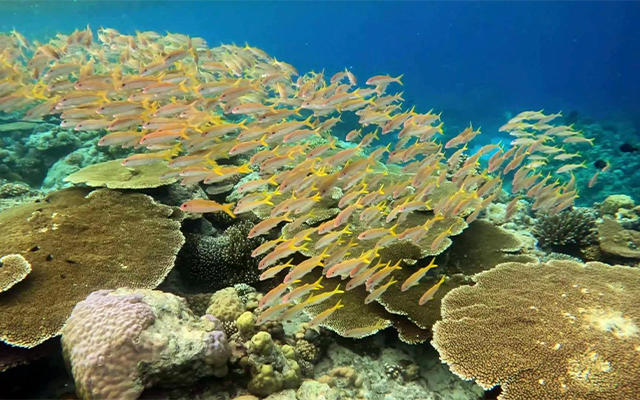
Apo Reef is the biggest coral reef in the Philippines and ranks as the world’s second-largest connected reef system after the Great Barrier Reef in Australia. It covers an area of over 34 square kilometers and has two main reefs separated by a 30-meter-deep channel. The area is known to be home to at least 285 marine species, including the angelfish, butterflyfish, dolphins, and sea turtles. 

Aside from the underwater beauty of the Apo Reef Natural Park, there's also a lot to be proud of on land. The two other islands the marine park, Binangaan and Cayos del Bajo, are both known for their limestone structures and coralline formations. There are also a number of known bird species in the area.

Balinsasayao Twin Lakes Natural Park

Nestled within the Mount Talinis range in Negros Oriental, this 8,016-hectare is includes the crater lakes Balinsasayao and Danao, which are widely believed to have been formed by ancient volcanic activity.


The park ranks second only to Palawan in biodiversity, sheltering 427 critically endangered, endangered, and vulnerable species of plants and animals in its dense forests.


Beyond being highly biodiverse, the park is also a place for leisurely hikes, including treks to visit waterfalls and ponds within the reserve.

Aside from these three, two other ASEAN parks were added to the list. These are the Phou Xieng Thong National Protected Area and Nam Poui National Protected Area, both in Lao PDR (Laos). Together, these five newly designated areas contribute a collective 11.6 million hectares of legally gazetted protected areas representing terrestrial, marine, and wetland ecosystems.

Other parks in the Philippines named in the ASEAN Heritage Parks list are Agusan Marsh Wildlife Sanctuary, Mt. Makiling Forest Reserve, Mt. Hamiguitan Range Wildlife Sanctuary, Mt. Inayawan Range Natural Park, Mt. Kitanglad Range Natural Park, Mt. Malindang Range Natural Park, Mts. Iglit-Baco National Park, Mts. Timpoong-Hibok-Hibok Natural Monument, Pasonanca Natural Park, Tubbataha Reefs Natural Park, and Mt. Apo Natural Park.

Thursday, 30 May 2024

30 reasons to visit the Philippines

30 reasons to visit the Philippines

Stars Insider (Portugal)
30 May 2024

With over 7,000 tropical islands to choose from, the Philippines affords travelers some of the best beach holiday options in the world. But this archipelagic nation in Southeast Asia is also renowned for an amazingly varied interior landscape of smoldering volcanic mountains, dense verdant forests, emerald rice fields, and hundreds of pristine lakes and lagoons. Coupling a 500-year-old cultural heritage with a globally significant level of biodiversity, the country is indeed one of the most enticing tourism destinations on the planet.   

1. Palawan Island (Palawan)


The largest island of the province of Palawan has often been cited by travel pundits as the most beautiful island in the world for its abundant wildlife, jungle-clad mountains, and remote powder-white beaches. The entire length of the island forms a mountain range, its forests and grasslands home to many endemic species of birds and animals.

2. Apo Island (Negros Oriental)


The marine habitat around the island of Apo, in Negros Oriental province, is a popular dive site and snorkeling destination. The island is home to over 650 documented species of fish and other marine creatures, including the protected sea turtle.

3. Siargao Island (Surigao del Norte)


Siargao Island is moored among numerous other islands and islets and lies within the province of Surigao del Norte. Siargao is renowned for its watersports options, perhaps most famously Cloud 9, one of the top surfing spots in the Philippines.

4. Philippine Tarsier and Wildlife Sanctuary (Bohol)


Located on the island of Bohol, the Philippine Tarsier and Wildlife Sanctuary is effectively a forested area dedicated to the protection of the tarsier, a ridiculously cute and small nocturnal primate with big, round eyes. These tiny creatures (one of the world's smallest primates), are shy, delicate, and emotionally sensitive. Visitors to the sanctuary are therefore asked to lower their voices and move slowly and carefully.

5. Banaue (Ifugao)


Resembling ripples of emerald-colored velvet, the rice terraces of the Philippine Cordilleras include the Batad rice terraces (pictured) and the Bangaan rice terraces, both found in Banaue in the province of Ifugao. These terraces are believed to have been hand-carved into the mountains 2,000 years ago to plant rice, and are the main tourist sites in the region.

6. Mambajao (Camiguin)


Aim to be in Mambajao in Camiguin province through October for the riotously colorful Lanzones Festival, a four-day celebration in honor of the lanzones tree and its fruit.

7. Coron Island (Palawan)


Coron Island lies within the Calamian Islands group in northern Palawan. Its clear azure waters provide underwater visibility extending up to 24 m (80 ft), which attracts divers from all over the world keen to explore the Second World War wrecks the destination is famous for. Ecotourism thrives on Coron, its lakes and lagoons among some of the cleanest in Southeast Asia.

8. Vigan (Ilocos Sur)


The delightful city of Vigan, the capital of the province of Ilocos Sur, should be explored at leisure. Fusing colonial Spanish architecture with that of native Philippine and Oriental building designs and construction, the destination's streets, plazas, and heritage buildings are a pleasure to discover.

9. Asik-Asik Falls (Cotabato)


Incredibly, this wondrous waterfall was only discovered in 2010. Asik-Asik means "sprinkle sprinkle" in the local Hiligaynon language, though after heavy rain the waters can turn into a cascade. The previously hidden waterfall is located near the village of Sitio Dulao, in the mountainous Alamada region of Cotabato province.

10. Oslob (Cebu)


Oslob on Cebu Island is renowned for its whale sharks. A good spot for sightings is Sogod Bay, and the best time of the year is from November through May, when these gentle giants migrate through the area. While observing whale sharks from boats on the water's surface is perfectly acceptable (pictured), resist the temptation to swim with them. The whale shark is a protected species and it is illegal to harass them.

11. MassKara Festival (Negros Occidental)


One of the most eagerly anticipated of all Philippine festivals is the colorful and exotic MassKara Festival. Held annually in Bacolod on the fourth Sunday of October, the event is influenced by the Carnival of Venice and the Rio Carnival.

12. Mayon Volcano (Albay)


The near-perfect cone of the Mayon Volcano, the most active volcano in the Philippines, is a cherished landmark. It looms large, 2,463 m (8,081 ft), over the island of Luzon.

13. Manila


Chances are you'll enter the Philippines via Manila, the country's busy and densely populated capital city. Founded by Spanish conquistadors in 1571, Manila today packs a historic and cultural punch. Spend a few days exploring its many neighborhoods including Binondo and Makati (pictured), Manila's modern shopping hub.

14. Taal Lake (Batangas)


Taal Lake surrounds the exposed cone of Taal Volcano, itself filled to the brim with what looks like green tea. The freshwater crater lake is found in the province of Batangas, on the island of Luzon. Regular tours of the lake are available to tourists. After crossing the lake, visitors travel to the top of the volcano island on horseback for incredible views like this one.

15. El Nido (Palawan)


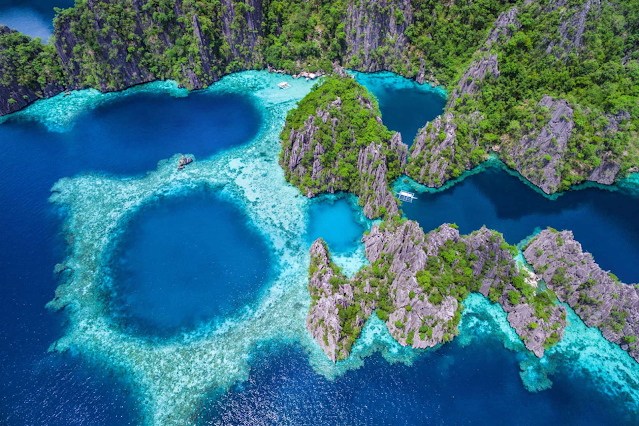
El Nido region, in the northernmost tip of mainland Palawan, boasts one of the most diverse ecosystems in the Philippines, and is protected for its unique flora and fauna, and pristine geologic formations. This includes over 50 spotless white sand beaches and a network of shallow lagoons (pictured).

16. Hundred Islands National Park (Pangasinan)


In fact totaling 124 islands, this outstanding national park is located in Pangasinan province, in the northern Philippines. This is the place for island-hopping, so why not jump in a bangka (native watercraft) and explore the reefs and golden beaches at leisure? Remember to pack snorkeling gear!

17. Corregidor Island (Bataan)


Corregidor is one of the most important historic sites in the Philippines. During the Second World War, it was the location of two costly sieges and pitched battles—the first during the first months of 1942, and the second in January 1945—between the Imperial Japanese Army and the US Army. The ruined army barracks and military installations defended by the Americans serve as part of the Pacific War Memorial complex.

18. Tubbataha Natural Park (Palawan)


The uninhabited Tubbataha islands and reefs in the middle of the Sula Sea rank among some of the best diving sites in the world. The park is a unique example of an atoll reef with a very high density of marine species. As a center of marine biodiversity, Tubbataha contains 75% of the described coral species and 40% of the world's reef fish.

19. Magellan's Cross (Cebu)


A cross of tindalo wood said to encase the original cross planted by Portuguese explorer Ferdinand Magellan on April 21, 1521 is housed in a chapel next to the Basilica Menor del Santo Niño in Cebu City. On April 27, six days after planting the cross, Magellan was killed at the Battle of Mactan.

20. Batanes


This archipelagic province in the country's northernmost Cagayan Valley region is appreciated for its verdant pastoral landscape, a hilly and mountainous environment that some travelers say remind them of New Zealand. The province's three largest islands, Batan, Itbayat, and Sabtang, are the only inhabited islands. Incidentally, the Japanese incursion of the Philippines during the Second World War began with the invasion of Batan Island, on December 8, 1941. Pictured is the Basco lighthouse. Its viewing deck is the perfect place to take in the whole of Batan Island.

21. Fort San Pedro (Cebu)


Built by the Spanish and dating back to 1738, this is the oldest triangular bastion fort in the Philippines. It's located in Cebu City, on Cebu Island, where the first Spanish settlement was established. Its sturdy weathered walls house an engaging museum that preserves all sorts of documents and artifacts relating to Spanish colonial rule.

22. Philippine eagle


Endemic to the country's forests, the Philippine eagle is the country's national bird. This majestic raptor, one of the rarest and most powerful birds in the world, is critically endangered, so spying one circling above the canopy will be a real privilege.

23. Puerto Princesa Subterranean River National Park (Palawan)


The Puerto Princesa Subterranean River National Park was voted as a New7Wonders of Nature in 2012 for its unbeatable biodiversity and the fact that the river flows directly into the sea, with its brackish lower half subjected to tidal influence, distinguishing it as a significant natural global phenomenon. The park is found on the western coast of the island of Palawan and can be visited by sightseeing watercraft.

24. Bohol Island (Bohol)


Mention Bohol and chocolate springs to mind—the Chocolate Hills, numerous mounds of brown-colored limestone formations that have put this part of the Philippines on the tourism map. In fact, the entire landscape is a national Geological Monument.

25. Manila Ocean Park


Manila's amazing oceanarium teems with over 14,000 marine creatures representing 277 species, all indigenous to the Philippines and Southeast Asia. The main attraction is the subterranean walkway tunnel (pictured), which provides a spectacular underwater view of sharks, stingrays, and other denizens of the deep.

26. Filipino cuisine


One of the great delights of visiting the Philippines is indulging in its delicious and varied cuisine. Dishes range from the very simple to the more complex. Pictured is pork adobo (or adobong baboy)—braised pork belly, with bay leaves, soy sauce, vinegar, and spices—known for its simplicity and ease of preparation.

27. Street food


If eating on the go, Filipino street food will surprise and sustain you. Try shakoy, also known as pilipit—deep fried twisted donuts, a favorite dessert snack.

28. La Trinidad (Benguet)


Make a diversion to La Trinidad, the capital of Benguet province and celebrated for the first and largest community artwork project in the Philippines, "Colors of StoBoSa." Dozens of hillside residences have been decorated in rainbow hues to produce a stunning multicolored canvas, which was retouched in 2018. The painting has a projected life expectancy of five years, so visit sooner rather than later.

29. Sagada (Mountain Province)


One of the country's more bizarre tourist attractions can be found in Sagada, a destination tucked away in the aptly named Mountain Province. The people of Sagada follow a unique burial ritual whereby coffins containing the town's dearly departed are hung either inside the caves or on the face of the cliffs rather than placed into the ground. If you visit, whatever you do don't touch the coffins. Instead, observe the scene from a distance using binoculars.

30. Quiapo (Manila)


Pause at the Minor Basilica of the Black Nazarene in the Quiapo district of Manila and admire the revered Black Nazarene, a life-sized image of a dark-skinned, kneeling Jesus Christ carrying the cross carved from a dark wood in the 16th century in Mexico.

📷 : All Photos from Shutterstock except Black Nazarene (Getty Images)