Showing posts with label Occidental Mindoro. Show all posts

Saturday, 6 June 2026

Mindoro town declared Biosphere Reserve by UNESCO

PH town among 14 new UNESCO biosphere reserves worldwide

Dennis Atienza Maliwanag
Inquirer.net
06 June 2026

MANILA, Philippines — Unesco has designated the Matibay na Bayan ng Sablayan Biosphere Reserve in Occidental Mindoro as one of 14 new biosphere reserves added to the World Network of Biosphere Reserves on World Environment Day.


The designation was announced on June 5 by the United Nations Educational, Scientific and Cultural Organization (Unesco), which said the new additions brought the global network to 797 biosphere reserves in 145 countries.

The Matibay na Bayan ng Sablayan Biosphere Reserve was among sites approved by Unesco’s International Co-ordinating Council of the Man and the Biosphere Programme during its 38th session in Hernandarias, Paraguay.

New Unesco sites

Unesco said the other newly designated biosphere reserves are located in Albania, Algeria, Aruba, Azerbaijan, Cameroon, Canada, Iran, Mongolia, Montenegro, Paraguay, Portugal, Timor-Leste, and Viet Nam.

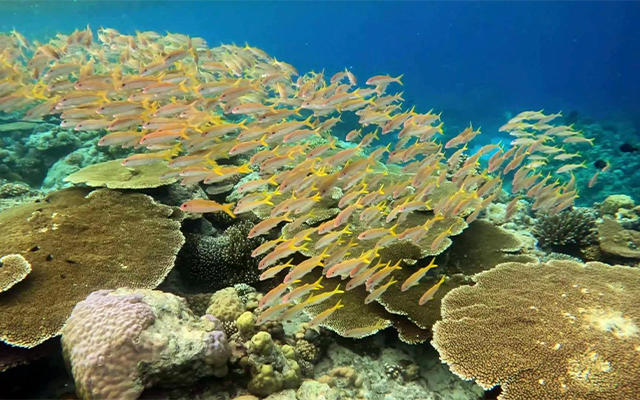
The biosphere reserve in the Philippines covers the entire municipality of Sablayan in Occidental Mindoro, accounting for nearly 39 percent of the province’s total area. It spans 327,880 hectares and includes a mix of terrestrial and marine ecosystems.

Its core areas cover 86,265 hectares, including 70,188 hectares of terrestrial area and 16,077 hectares of marine area. These comprise seven terrestrial and 10 marine protected areas established under national or local legislation.

Home to Mangyan tribes

The reserve is home to indigenous peoples, particularly the Alangan and Taubuid Mangyan tribes, two of the eight ethnolinguistic groups inhabiting the mountainous areas of Mindoro.

Unescao noted that most of the municipality’s population, estimated at 84,898 in 2022, lives in the transition areas of the reserve. Agriculture remains the primary source of livelihood, particularly the cultivation of rice and corn, while ecotourism has emerged as an important driver of conservation and community development.

A Biosphere Management Council of Sablayan will oversee the reserve. The council will consist of representatives from the local government unit, national government agencies, academic institutions, and other stakeholder groups.

‘Living laboratories’

Unesco defines biosphere reserves as territories where biodiversity conservation, sustainable development, and scientific research are pursued simultaneously. The sites serve as “living laboratories” where communities test and develop approaches to balancing environmental protection with economic and social needs.

“Biosphere reserves prove every day that protecting nature and improving human lives are not competing goals,” Unesco Director-General Khaled El-Enany said in a statement marking World Environment Day.

“This year’s designations span every continent showing the full range of what it means to live in harmony with nature. Unesco will continue to work with governments, communities and scientists to ensure these living laboratories remain at the forefront of the world’s response to the climate and biodiversity crises,” he added.

Unesco also highlighted the role of biosphere reserves in advancing global conservation goals. Since the launch of the Man and the Biosphere Programme in 1971, biosphere reserves have become a key component of Unesco’s environmental initiatives, alongside World Heritage sites and Global Geoparks.

The organization said these sites contribute to the protection of more than 13 million square kilometers of terrestrial and marine ecosystems worldwide and support the global target of conserving 30 percent of the planet’s land and sea areas by 2030.

The Philippines’ newest biosphere reserve joins a global network of protected areas that promote biodiversity conservation while supporting the livelihoods, cultures, and sustainable development of local communities. /dm


Thursday, 17 July 2025

Mindoro as biodiversity hotspot

Scientists discover more of Mindoro’s ancient technology, biodiversity

Raymond Gregory Tribdino
Manila Times
17 July 2025

Scientists from the Ateneo de Manila University (ADMU), collaborating with international experts and institutions, have uncovered compelling evidence of Mindoro’s significant role in ancient maritime activities in Southeast Asia. At almost the same time, biologists from the University of the Philippines-Diliman (UPD) revealed a new species of mice endemic to the biodiverse island.

A map of Island Southeast Asia (ISEA) and the Sunda region as it appeared roughly 25,000 years ago at the height of the last Ice Age, with locations of archaeological sites surveyed by the Mindoro Archaeology Project. (Base Map: www.gebco.net, 2014)

The ADMU findings detail effective human migration, advanced technological innovation, and long-distance intercultural relations dating back more than 35,000 years. The compilation of a 15-year study detailed in the Ateneo researchers' latest publication from the Mindoro Archaeology Project offers some of the oldest evidence of Homo sapiens (anatomically modern humans) in the country. These discoveries were made in Ilin Island, San Jose, and Sta. Teresa, Magsaysay all in Occidental Mindoro.

Mindoro, unlike most other main Philippine islands except Palawan, was never connected to mainland Southeast Asia by land bridges or ice sheets. Sea crossings were always necessary to reach it, which likely spurred the development of sophisticated technologies for traversing and surviving this environment.

Mindoro’s unique geological history and isolation are also reflected in its extraordinary biodiversity. The island is home to a bounty of endemic mammalian wildlife found nowhere else on Earth, including the famous tamaraw, the Mindoro warty pig and the humble Mindoro shrew.

Recently, three more species were added to this list with the discovery of Philippine forest mice, all belonging to the Apomys genus. From 2013 to 2017, teams of field biologists led by Filipino scientist Dr. Danilo Balete surveyed relatively understudied forests of Mindoro. During their expeditions, they noticed three distinctive forest mice that appeared noticeably different from the island's known endemic species, Apomys gracilirostris.

Evidence of Sophisticated Ancient Technology

The ADMU study called Chronology and Ecology of Early Islanders in the Philippines: The Mindoro Archaeology Project, published on June 1 this year, outlined a variety of finds—including human remains, animal bones, shells, and tools made from stone, bone, and shell — show that Mindoro's early inhabitants had successfully harnessed land and marine resources.

Over 30,000 years ago, the island’s inhabitants already possessed seafaring capabilities and specific fishing skills, enabling them to catch predatory open-sea fish species like bonito and shark, and establish connections with distant islands and populations in the vast maritime region of Wallacea.

“Particularly noteworthy is the innovative use of shells as raw material for tools, culminating in the manufacture of adzes from giant clam shells (Tridacna species) 7,000 to 9,000 years ago. These tools bear a striking similarity to shell adzes found across Island Southeast Asia, as far as Manus Island in Papua New Guinea, more than 3,000 kilometers away,” the ADMU study indicated.

The researchers also found a human grave on Ilin Island dating to about 5,000 years ago. The body was laid to rest in a fetal position, bedded and covered with limestone slabs. The burial method was similar to other flexed burials found across Southeast Asia, suggesting shared ideological and social influences and emerging social complexity across a vast area from the mainland to distant islands.

These archaeological sites have yielded evidence of culturally sophisticated inhabitants who were behaviorally and technologically adapted to coastal and marine environments. Collectively, these discoveries suggest Mindoro and nearby Philippine islands were part of an extensive maritime network that existed during the Stone Age, facilitating cultural and technological exchange between early human populations across Island Southeast Asia for millennia.

The latest publication from the Mindoro Archeology Project was authored by Dr. Alfred F. Pawlik, Dr. Riczar B. Fuentes and Dr. Tanya Uldin of the Ateneo de Manila University Department of Sociology and Anthropology; Dr. Marie Grace Pamela G. Faylona of the University of the Philippines-Diliman Department of Anthropology, De La Salle University Department of Sociology and Behavioral Sciences and Philippine Normal University College of Advanced Studies; and Trishia Gayle R. Palconit, a PhD student at the University of Ferrara, Italy.

Mindoro's Unique Endemic Wildlife

Mindoro's unique geological history and isolation are also reflected in its extraordinary biodiversity. The island is home to a bounty of endemic mammalian wildlife found nowhere else on Earth, including the famous tamaraw, the Mindoro warty pig and the humble Mindoro shrew.

Recently, three more species were added to this list with the discovery of Philippine forest mice, all belonging to the Apomys genus.

Between 2013 and 2017, field biologists, led by renowned Filipino scientist Dr. Danilo Balete, surveyed Mindoro's relatively understudied forests. During their expeditions, they observed three distinctive forest mice that appeared noticeably different from the island's known endemic species, Apomys gracilirostris.

Dr. Balete collaborated with Dr. Mariano Roy Duya and Melizar Duya of the University of the Philippines Diliman College of Science, Institute of Biology (UPD-CSIB), along with U.S. biologists. They analyzed the genes, fur, and skull structures of the forest mice, confirming after nearly a decade of laboratory work that the three are indeed new species: the tiny Apomys minor, the hairy-eared A. crinitus and A. veluzi. The latter was named in honor of the late Maria Josefa "Sweepea" Veluz, a distinguished mammalogist of the National Museum of Natural History of the Philippines.

There are now 12 endemic mammals unique to the island of Mindoro from the previous count of nine. It also solidifies the island's status as a unique evolutionary hotspot, now recognized as the smallest known island globally where mammal speciation has occurred.

The study, titled "Three new species of Philippine forest mice (Apomys, Muridae, Mammalia), members of a clade endemic to Mindoro Island," is published in the journal Zootaxa.

Thursday, 12 December 2024

Three new Philippine Parks added to ASEAN list

Three Philippine Parks Make It on the ASEAN Heritage List

Leana Vibal
Spot.ph
12 December 2024

Good news! In 2024, three Philippine parks were officially recognized as part of the list of ASEAN Heritage Parks, a.k.a. areas of  "outstanding wilderness and biodiversity values."


Balinsasayao Twin Lakes Natural Park, Turtle Islands Wildlife Sanctuary, and Apo Reef Natural Park join 11 other Philippine parks on the ASEAN Heritage Park list. This makes the Philippines the country with the most entries on the list, comprising over 22% of the 64 parks recognized. 

What is an ASEAN Heritage Park?

ASEAN Heritage Parks are "protected areas of high conservation importance, preserving in total a complete spectrum of representative ecosystems of the ASEAN region."

Simply put, these parks are the best examples of the high-impact ecological zones in the region. More importantly, they have established significant sustainable efforts in protected area management and conservation. 

The list started in 1984 with only 11 areas included. It has since grown into 62 zones across Southeast Asia. 

Aside from the prestige of recognition and the validation that you're doing right by the environment, being on the ASEAN Heritage Park list does have its perks, especially for the park administrators and rangers who manage these spots. 

Areas included in the list become part of a network encouraging them to share best practices and experiences on protected area management and participate in capacity-building opportunities. Additionally, they increase their chances of partnering with international conservation partners and get assistance in enhancing their operations. 

Here are the three new ASEAN Heritage Parks from the Philippines:

Turtle Islands Wildlife Sanctuary

The Turtle Islands Wildlife Sanctuary (TIWS) is a group of islands in the Sulu Archipelago. This key marine biodiversity area is the first trans-frontier protected area for marine turtles in the world, covering waters in both Malaysia and the Philippines. 


Its claim to fame is that it is one of the few remaining major nesting areas for Green Sea Turtles in Southeast Asia. In the worldwide turtle nesting context, it's currently ranked 11. Yearly, especially during peak egg-laying season, over 80 to 100 Green Sea Turtles make their nests and release their eggs along the shores of its beaches. Many Hawksbill Turtles also lay their eggs in this area, albeit their numbers are smaller than the Green Sea Turtles. 


Aside from turtles, the area is known to be home to over 200 species of plants, including 10 mangrove species and 19 species of ferns. This rich foliage has resulted in at least 34 species of birds also calling TIWS their home. There are also a number of bat speceis, 12 reptiles, and about 281 terrestrial plant species have been reported.

Apo Reef Natural Park

Apo Reef Natural Park covers three islands in Occidental Mindoro with the Apo Reef being the largest of the tree.

Apo Reef is the biggest coral reef in the Philippines and ranks as the world’s second-largest connected reef system after the Great Barrier Reef in Australia. It covers an area of over 34 square kilometers and has two main reefs separated by a 30-meter-deep channel. The area is known to be home to at least 285 marine species, including the angelfish, butterflyfish, dolphins, and sea turtles. 

Aside from the underwater beauty of the Apo Reef Natural Park, there's also a lot to be proud of on land. The two other islands the marine park, Binangaan and Cayos del Bajo, are both known for their limestone structures and coralline formations. There are also a number of known bird species in the area.

Balinsasayao Twin Lakes Natural Park

Nestled within the Mount Talinis range in Negros Oriental, this 8,016-hectare is includes the crater lakes Balinsasayao and Danao, which are widely believed to have been formed by ancient volcanic activity.


The park ranks second only to Palawan in biodiversity, sheltering 427 critically endangered, endangered, and vulnerable species of plants and animals in its dense forests.


Beyond being highly biodiverse, the park is also a place for leisurely hikes, including treks to visit waterfalls and ponds within the reserve.

Aside from these three, two other ASEAN parks were added to the list. These are the Phou Xieng Thong National Protected Area and Nam Poui National Protected Area, both in Lao PDR (Laos). Together, these five newly designated areas contribute a collective 11.6 million hectares of legally gazetted protected areas representing terrestrial, marine, and wetland ecosystems.

Other parks in the Philippines named in the ASEAN Heritage Parks list are Agusan Marsh Wildlife Sanctuary, Mt. Makiling Forest Reserve, Mt. Hamiguitan Range Wildlife Sanctuary, Mt. Inayawan Range Natural Park, Mt. Kitanglad Range Natural Park, Mt. Malindang Range Natural Park, Mts. Iglit-Baco National Park, Mts. Timpoong-Hibok-Hibok Natural Monument, Pasonanca Natural Park, Tubbataha Reefs Natural Park, and Mt. Apo Natural Park.