Showing posts with label Philippine fauna. Show all posts

Tuesday, 6 October 2026

New frog species discovered in Southern Philippines

Scientists discover new frog, resurrect two species in Philippines after 106 years

The Star (Malaysia)
06 Oct 2026 

GENERAL SANTOS CITY: Filipino and foreign scientists have discovered a new frog species and “resurrected” two others in the southern and central Philippines, all of which were thought to have been the same species over the past 100 years.


Before the discoveries, they were referred to as cryptic species, meaning they look very similar but are genetically and behaviourally distinct.

Filipino wildlife biologist Kier Mitchel Pitogo, one of the authors of the study detailing the three new additions to the Philippine amphibian fauna, explained that these frogs play an important role in the environment, acting as bioindicators of forest habitat quality.

“These frogs are associated with primary forests… From what we’ve observed during our fieldwork, they are typically among the first wildlife to disappear when forests are lost or heavily disturbed. Because of this, they can serve as bioindicators of habitat quality, meaning their presence or absence can tell us something about changes in the forest,” he told the Inquirer on Sunday.

The three latest discoveries are the Platymantis habagatan (Mindanao variable forest frog), a new species from Mindanao Island, except the southern region; and two resurrected species, P. jagorii (Jagor’s variable forest frog) and P. laticeps (Broad-headed variable forest frog).

Habagatan is a Cebuano word for “south” or “southern”, referring to its distribution in the southern Philippines.

“It is the first description of a new ground-dwelling Platymantis from the Mindanao biogeographic region in 106 years,” said Pitogo, a doctoral student in ecology and evolutionary biology at the University of Kansas, USA.

Among the three, the Jagor’s variable forest frog is the smallest, with proportionally smaller eyes and a relatively wider head. It is found across Samar, Leyte, Bohol, Dinagat, and Siargao.

Its close relative, the Mindanao variable forest frog, shares some of these characteristics but is proportionally larger overall and is widely distributed across Mindanao, except for the southern region.

The Broad-headed variable forest frog co-occurs with the Mindanao variable forest frog in northeastern Mindanao but can be readily distinguished by its much larger body size (about 38–41 mm compared with 30–35 mm), tuberculate body, and much narrower space between the eyes.

For a century, Pitogo noted these frogs were treated as a single species, Platymantis dorsalis.

He stressed that for conservation purposes, it becomes extremely important to get their names and identities right.

“Conservation decisions are ultimately made at the species level, so if we don’t recognise the species correctly, we may not even know which species is declining, where it occurs, or what habitat needs to be protected,” Pitogo explained.

It took four years and 230 frog specimens for the authors to officially add the three latest species to the country’s amphibian fauna.

Aside from Pitogo, the authors include Rew Hoskins, Faben Hana Tesfazion, Camila G. Meneses, Hayden W. Cannon, Christian E. Supsup, Syrus Cesar P. Decena, Marites B. Sanguila, and Rafe M. Brown.

They are affiliated with the University of Kansas, Visayas State University-Alangalang in Leyte, or Father Saturnino Urios University in Butuan City. Inqurier/ANN

Thursday, 2 July 2026

Rare plant rediscovered in Mount Apo park

Rare plant rediscovered in Mount Apo park

Josiah Antonio
Philstar Global
02 July 2026

MANILA, Philippines —  A rare plant has been rediscovered in Mount Apo Natural Park after 122 years, according to field reports by the Department of Environment and Natural Resources-Davao Region yesterday.


The discovery was made by the Protected Area Management Office (PAMO) team during routine wildlife monitoring activities.

While retrieving camera traps along a forest trail, the team spotted a tiny flowering plant that caught their attention despite its minute size.

After careful examination, the specimen was identified as Ophiorrhiza biflora, a Philippine endemic species first collected in Mount Apo in October 1904 by American botanist Edwin Bingham Copeland.

Belonging to the Rubiaceae family, which includes coffee, gardenia, mussaenda and santan, O. biflora has also been recorded in Benguet and Negros.

However, the Mount Apo specimen represents the first successful photographic documentation of the species, marking a significant milestone in Philippine botanical research.

The DENR-Davao Region said the rediscovery is highly significant as it confirms the continued survival of a Philippine endemic species that had not been documented in Mount Apo for over a century.

This also reinforces Mount Apo Natural Park’s status as one of the country’s important biodiversity hotspots and further strengthens its bid for UNESCO Global Geopark recognition, the regional office said.

Thursday, 17 July 2025

Mindoro as biodiversity hotspot

Scientists discover more of Mindoro’s ancient technology, biodiversity

Raymond Gregory Tribdino
Manila Times
17 July 2025

Scientists from the Ateneo de Manila University (ADMU), collaborating with international experts and institutions, have uncovered compelling evidence of Mindoro’s significant role in ancient maritime activities in Southeast Asia. At almost the same time, biologists from the University of the Philippines-Diliman (UPD) revealed a new species of mice endemic to the biodiverse island.

A map of Island Southeast Asia (ISEA) and the Sunda region as it appeared roughly 25,000 years ago at the height of the last Ice Age, with locations of archaeological sites surveyed by the Mindoro Archaeology Project. (Base Map: www.gebco.net, 2014)

The ADMU findings detail effective human migration, advanced technological innovation, and long-distance intercultural relations dating back more than 35,000 years. The compilation of a 15-year study detailed in the Ateneo researchers' latest publication from the Mindoro Archaeology Project offers some of the oldest evidence of Homo sapiens (anatomically modern humans) in the country. These discoveries were made in Ilin Island, San Jose, and Sta. Teresa, Magsaysay all in Occidental Mindoro.

Mindoro, unlike most other main Philippine islands except Palawan, was never connected to mainland Southeast Asia by land bridges or ice sheets. Sea crossings were always necessary to reach it, which likely spurred the development of sophisticated technologies for traversing and surviving this environment.

Mindoro’s unique geological history and isolation are also reflected in its extraordinary biodiversity. The island is home to a bounty of endemic mammalian wildlife found nowhere else on Earth, including the famous tamaraw, the Mindoro warty pig and the humble Mindoro shrew.

Recently, three more species were added to this list with the discovery of Philippine forest mice, all belonging to the Apomys genus. From 2013 to 2017, teams of field biologists led by Filipino scientist Dr. Danilo Balete surveyed relatively understudied forests of Mindoro. During their expeditions, they noticed three distinctive forest mice that appeared noticeably different from the island's known endemic species, Apomys gracilirostris.

Evidence of Sophisticated Ancient Technology

The ADMU study called Chronology and Ecology of Early Islanders in the Philippines: The Mindoro Archaeology Project, published on June 1 this year, outlined a variety of finds—including human remains, animal bones, shells, and tools made from stone, bone, and shell — show that Mindoro's early inhabitants had successfully harnessed land and marine resources.

Over 30,000 years ago, the island’s inhabitants already possessed seafaring capabilities and specific fishing skills, enabling them to catch predatory open-sea fish species like bonito and shark, and establish connections with distant islands and populations in the vast maritime region of Wallacea.

“Particularly noteworthy is the innovative use of shells as raw material for tools, culminating in the manufacture of adzes from giant clam shells (Tridacna species) 7,000 to 9,000 years ago. These tools bear a striking similarity to shell adzes found across Island Southeast Asia, as far as Manus Island in Papua New Guinea, more than 3,000 kilometers away,” the ADMU study indicated.

The researchers also found a human grave on Ilin Island dating to about 5,000 years ago. The body was laid to rest in a fetal position, bedded and covered with limestone slabs. The burial method was similar to other flexed burials found across Southeast Asia, suggesting shared ideological and social influences and emerging social complexity across a vast area from the mainland to distant islands.

These archaeological sites have yielded evidence of culturally sophisticated inhabitants who were behaviorally and technologically adapted to coastal and marine environments. Collectively, these discoveries suggest Mindoro and nearby Philippine islands were part of an extensive maritime network that existed during the Stone Age, facilitating cultural and technological exchange between early human populations across Island Southeast Asia for millennia.

The latest publication from the Mindoro Archeology Project was authored by Dr. Alfred F. Pawlik, Dr. Riczar B. Fuentes and Dr. Tanya Uldin of the Ateneo de Manila University Department of Sociology and Anthropology; Dr. Marie Grace Pamela G. Faylona of the University of the Philippines-Diliman Department of Anthropology, De La Salle University Department of Sociology and Behavioral Sciences and Philippine Normal University College of Advanced Studies; and Trishia Gayle R. Palconit, a PhD student at the University of Ferrara, Italy.

Mindoro's Unique Endemic Wildlife

Mindoro's unique geological history and isolation are also reflected in its extraordinary biodiversity. The island is home to a bounty of endemic mammalian wildlife found nowhere else on Earth, including the famous tamaraw, the Mindoro warty pig and the humble Mindoro shrew.

Recently, three more species were added to this list with the discovery of Philippine forest mice, all belonging to the Apomys genus.

Between 2013 and 2017, field biologists, led by renowned Filipino scientist Dr. Danilo Balete, surveyed Mindoro's relatively understudied forests. During their expeditions, they observed three distinctive forest mice that appeared noticeably different from the island's known endemic species, Apomys gracilirostris.

Dr. Balete collaborated with Dr. Mariano Roy Duya and Melizar Duya of the University of the Philippines Diliman College of Science, Institute of Biology (UPD-CSIB), along with U.S. biologists. They analyzed the genes, fur, and skull structures of the forest mice, confirming after nearly a decade of laboratory work that the three are indeed new species: the tiny Apomys minor, the hairy-eared A. crinitus and A. veluzi. The latter was named in honor of the late Maria Josefa "Sweepea" Veluz, a distinguished mammalogist of the National Museum of Natural History of the Philippines.

There are now 12 endemic mammals unique to the island of Mindoro from the previous count of nine. It also solidifies the island's status as a unique evolutionary hotspot, now recognized as the smallest known island globally where mammal speciation has occurred.

The study, titled "Three new species of Philippine forest mice (Apomys, Muridae, Mammalia), members of a clade endemic to Mindoro Island," is published in the journal Zootaxa.

Thursday, 15 May 2025

Experience the beauty of the Philippines

30 reasons to visit the Philippines

Stars Insider
15 May 2025

With over 7,000 tropical islands to choose from, the Philippines affords travelers some of the best beach holiday options in the world. But this archipelagic nation in Southeast Asia is also renowned for an amazingly varied interior landscape of smoldering volcanic mountains, dense verdant forests, emerald rice fields, and hundreds of pristine lakes and lagoons. Coupling a 500-year-old cultural heritage with a globally significant level of biodiversity, the country is indeed one of the most enticing tourism destinations on the planet.

Browse through this gallery for 30 reasons why you should start planning your Philippines vacation now.

Palawan Island (Palawan)

©Shutterstock 

The largest island of the province of Palawan has often been cited by travel pundits as the most beautiful island in the world for its abundant wildlife, jungle-clad mountains, and remote powder-white beaches. The entire length of the island forms a mountain range, its forests and grasslands home to many endemic species of birds and animals.

Apo Island (Negros Oriental)


©Shutterstock 

The marine habitat around the island of Apo, in Negros Oriental province, is a popular dive site and snorkeling destination. The island is home to over 650 documented species of fish and other marine creatures, including the protected sea turtle.

Siargao Island (Surigao del Norte)

©Shutterstock 

Siargao Island is moored among numerous other islands and islets and lies within the province of Surigao del Norte. Siargao is renowned for its watersports options, perhaps most famously Cloud 9, one of the top surfing spots in the Philippines.

Philippine Tarsier and Wildlife Sanctuary (Bohol)


©Shutterstock 

Located on the island of Bohol, the Philippine Tarsier and Wildlife Sanctuary is effectively a forested area dedicated to the protection of the tarsier, a ridiculously cute and small nocturnal primate with big, round eyes. These tiny creatures (one of the world's smallest primates), are shy, delicate, and emotionally sensitive. Visitors to the sanctuary are therefore asked to lower their voices and move slowly and carefully.

Banaue (Ifugao)


©Shutterstock 

Resembling ripples of emerald-colored velvet, the rice terraces of the Philippine Cordilleras include the Batad rice terraces (pictured) and the Bangaan rice terraces, both found in Banaue in the province of Ifugao. These terraces are believed to have been hand-carved into the mountains 2,000 years ago to plant rice, and are the main tourist sites in the region.

Mambajao (Camiguin)


©Shutterstock

Aim to be in Mambajao in Camiguin province through October for the riotously colorful Lanzones Festival, a four-day celebration in honor of the lanzones tree and its fruit.

Coron Island (Palawan)


©Shutterstock 

Coron Island lies within the Calamian Islands group in northern Palawan. Its clear azure waters provide underwater visibility extending up to 24 m (80 ft), which attracts divers from all over the world keen to explore the Second World War wrecks the destination is famous for. Ecotourism thrives on Coron, its lakes and lagoons among some of the cleanest in Southeast Asia.

Vigan (Ilocos Sur)


©Shutterstock

The delightful city of Vigan, the capital of the province of Ilocos Sur, should be explored at leisure. Fusing colonial Spanish architecture with that of native Philippine and Oriental building designs and construction, the destination's streets, plazas, and heritage buildings are a pleasure to discover.

Asik-Asik Falls (Cotabato)


©Shutterstock 

Incredibly, this wondrous waterfall was only discovered in 2010. Asik-Asik means "sprinkle sprinkle" in the local Hiligaynon language, though after heavy rain the waters can turn into a cascade. The previously hidden waterfall is located near the village of Sitio Dulao, in the mountainous Alamada region of Cotabato province.

Oslob (Cebu)


©Shutterstock 

Oslob on Cebu Island is renowned for its whale sharks. A good spot for sightings is Sogod Bay, and the best time of the year is from November through May, when these gentle giants migrate through the area. While observing whale sharks from boats on the water's surface is perfectly acceptable (pictured), resist the temptation to swim with them. The whale shark is a protected species and it is illegal to harass them.

MassKara Festival (Negros Occidental)


©Shutterstock 

One of the most eagerly anticipated of all Philippine festivals is the colorful and exotic MassKara Festival. Held annually in Bacolod on the fourth Sunday of October, the event is influenced by the Carnival of Venice and the Rio Carnival.

Mayon Volcano (Albay)


©Shutterstock 

The near-perfect cone of the Mayon Volcano, the most active volcano in the Philippines, is a cherished landmark. It looms large, 2,463 m (8,081 ft), over the island of Luzon.

Manila


©Shutterstock 

Chances are you'll enter the Philippines via Manila, the country's busy and densely populated capital city. Founded by Spanish conquistadors in 1571, Manila today packs a historic and cultural punch. Spend a few days exploring its many neighborhoods including Binondo and Makati (pictured), Manila's modern shopping hub.

Taal Lake (Batangas)


©Shutterstock 

Taal Lake surrounds the exposed cone of Taal Volcano, itself filled to the brim with what looks like green tea. The freshwater crater lake is found in the province of Batangas, on the island of Luzon. Regular tours of the lake are available to tourists. After crossing the lake, visitors travel to the top of the volcano island on horseback for incredible views like this one.

El Nido (Palawan)


©Shutterstock 

El Nido region, in the northernmost tip of mainland Palawan, boasts one of the most diverse ecosystems in the Philippines, and is protected for its unique flora and fauna, and pristine geologic formations. This includes over 50 spotless white sand beaches and a network of shallow lagoons (pictured).

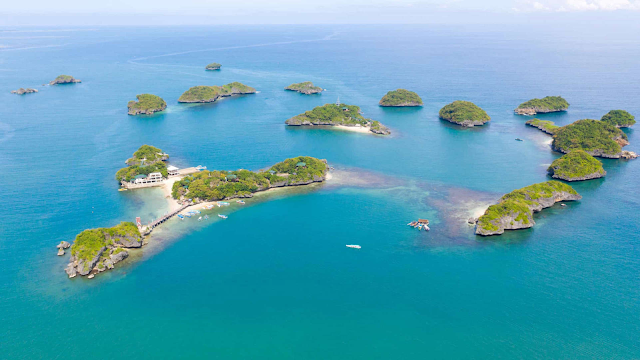
Hundred Islands National Park (Pangasinan)


©Shutterstock 

In fact totaling 124 islands, this outstanding national park is located in Pangasinan province, in the northern Philippines. This is the place for island-hopping, so why not jump in a bangka (native watercraft) and explore the reefs and golden beaches at leisure? Remember to pack snorkeling gear!

Corregidor Island (Cavite)


©Shutterstock 

Corregidor is one of the most important historic sites in the Philippines. During the Second World War, it was the location of two costly sieges and pitched battles—the first during the first months of 1942, and the second in January 1945—between the Imperial Japanese Army and the US Army. The ruined army barracks and military installations defended by the Americans serve as part of the Pacific War Memorial complex.

Tubbataha Natural Park (Palawan)


©Shutterstock 

The uninhabited Tubbataha islands and reefs in the middle of the Sulu Sea rank among some of the best diving sites in the world. The park is a unique example of an atoll reef with a very high density of marine species. As a center of marine biodiversity, Tubbataha contains 75% of the described coral species and 40% of the world's reef fish.

Magellan's Cross (Cebu)


©Shutterstock 

A cross of tindalo wood said to encase the original cross planted by Portuguese explorer Ferdinand Magellan on April 21, 1521 is housed in a chapel next to the Basilica Menor del Santo Niño in Cebu City. On April 27, six days after planting the cross, Magellan was killed at the Battle of Mactan.

Batanes (Batanes)


©Shutterstock 

This archipelagic province in the country's northernmost Cagayan Valley region is appreciated for its verdant pastoral landscape, a hilly and mountainous environment that some travelers say remind them of New Zealand. The province's three largest islands, Batan, Itbayat, and Sabtang, are the only inhabited islands. Incidentally, the Japanese incursion of the Philippines during the Second World War began with the invasion of Batan Island, on December 8, 1941. Pictured is the Basco lighthouse. Its viewing deck is the perfect place to take in the whole of Batan Island.

Fort San Pedro (Cebu)


©Shutterstock 

Built by the Spanish and dating back to 1738, this is the oldest triangular bastion fort in the Philippines. It's located in Cebu City, on Cebu Island, where the first Spanish settlement was established. Its sturdy weathered walls house an engaging museum that preserves all sorts of documents and artifacts relating to Spanish colonial rule.

Philippine Eagle (Mindanao)


©Shutterstock 

Endemic to the country's forests, the Philippine eagle is the country's national bird. This majestic raptor, one of the rarest and most powerful birds in the world, is critically endangered, so spying one circling above the canopy will be a real privilege.

Puerto Princesa Subterranean River National Park (Palawan)


©Shutterstock 

The Puerto Princesa Subterranean River National Park was voted as a New7Wonders of Nature in 2012 for its unbeatable biodiversity and the fact that the river flows directly into the sea, with its brackish lower half subjected to tidal influence, distinguishing it as a significant natural global phenomenon. The park is found on the western coast of the island of Palawan and can be visited by sightseeing watercraft.

Bohol Island (Bohol)


©Shutterstock 

Mention Bohol and chocolate springs to mind—the Chocolate Hills, numerous mounds of brown-colored limestone formations that have put this part of the Philippines on the tourism map. In fact, the entire landscape is a national Geological Monument.

Manila Ocean Park


©Shutterstock 

Manila's amazing oceanarium teems with over 14,000 marine creatures representing 277 species, all indigenous to the Philippines and Southeast Asia. The main attraction is the subterranean walkway tunnel (pictured), which provides a spectacular underwater view of sharks, stingrays, and other denizens of the deep.

Filipino cuisine


©Shutterstock 

One of the great delights of visiting the Philippines is indulging in its delicious and varied cuisine. Dishes range from the very simple to the more complex. Pictured is pork adobo (or adobong baboy)—braised pork belly, with bay leaves, soy sauce, vinegar, and spices—known for its simplicity and ease of preparation.

Street food


©Shutterstock 

If eating on the go, Filipino street food will surprise and sustain you. Try shakoy, also known as pilipit—deep fried twisted donuts, a favorite dessert snack.

La Trinidad (Benguet)


©Shutterstock 

Make a diversion to La Trinidad, the capital of Benguet province and celebrated for the first and largest community artwork project in the Philippines, "Colors of StoBoSa." Dozens of hillside residences have been decorated in rainbow hues to produce a stunning multicolored canvas, which was retouched in 2018. The painting has a projected life expectancy of five years, so visit sooner rather than later.

Sagada (Mountain Province)


©Shutterstock 

One of the country's more bizarre tourist attractions can be found in Sagada, a destination tucked away in the aptly named Mountain Province. The people of Sagada follow a unique burial ritual whereby coffins containing the town's dearly departed are hung either inside the caves or on the face of the cliffs rather than placed into the ground. If you visit, whatever you do don't touch the coffins. Instead, observe the scene from a distance using binoculars.

Quiapo (Manila)


©Getty Images

Pause at the Minor Basilica of the Black Nazarene in the Quiapo district of Manila and admire the revered Black Nazarene, a life-sized image of a dark-skinned, kneeling Jesus Christ carrying the cross carved from a dark wood in the 16th century in Mexico.

Wednesday, 29 January 2025

Cebu among top pet-friendly cities in Asia

Cebu among top pet-friendly cities in Asia

Morexette Marie B. Erram
Cebu Daily News
29 January 2025

CEBU CITY, Philippines — Fantastic news for fur parents who want to visit the Queen City of the South with their four-legged loved ones.


Cebu City was named among the top pet-friendly cities in Asia for 2024.

Online travel platform Agoda recently revealed their list of top 10 pet-friendly cities in the region, with Cebu ranked second, next to Vietnam’s coastal city Da Nang.

Rounding up the top five are Vietnam’s Hanoi, Nha Trang, and Tainan in Taiwan respectively.

Manila, the country’s capital, landed on the 10th spot. Aside from Manila, completing the top ten were Pattaya (Thailand), Taichung (Taiwan), Ho Chi Minh City (Vietnam), and New Delhi (India).

According to Agoda, their list of pet-friendly cities is based on the average number of accommodations that allow guests to bring in their pets.

In addition, the Singapore-based firm observed an increase in pet travel in Asia, particularly among Millennials and Gen Z.

They recorded a 64 percent growth pet-friendly properties in 2024.

“Millennials and Gen Z leading the charge as they embrace pet parenthood and splurge on their furry friends, according to a recent study by Allied Market Research,” they added.


Thursday, 17 October 2024

New species of King Cobra endemic in Philippines

Luzon King Cobra: New species endemic in Philippines – study

Morexette Marie B. Erram - Senior Multimedia Reporter 
CDN Digital 
October 17,2024

CEBU CITY, Philippines — A study identified a new species of king cobra that’s endemic only in the Philippines.

Researchers identified a new king cobra species that’s endemic only in the Philippines. It’s called the Luzon king cobra (Ophiophagus salvatana). | Photo from European Journal of Taxonomy

The European Journal of Taxonomy on Wednesday, October 16, published the latest research on the taxonomy of king cobra, considered the world’s longest venomous snake.

It presented a taxonomic revision of the king cobra species, with scientific name Ophiophagus hannah (O. hannah), as well as the discovery of two new species.

Thursday, 19 September 2024

Filipino scientists discovered two distinct species of carabao

Scientists: Philippine native carabao, riverine buffalo are 'distinct species'

Dominique Nicole Flores 
Philstar.com
September 18, 2024

MANILA, Philippines — Filipino scientists discovered in their recent studies that the two subspecies of domesticated water buffaloes in the Philippines are distinct species. 

Traditionally, the country has classified swamp buffalo (Bubalus bubalis carabensis) and riverine buffalo (Bubalus bubalis bubalis) as two subspecies of domesticated buffalo (Bubalus bubalis). 

A species is a group of organisms that share common characteristics and genetic structure that can interbreed among themselves. A subspecies is identified when there are organisms of the same species with distinct characteristics or traits, such as having a different color or behavior.  

Researchers from the University of the Philippines Diliman - College of Science’s Institute of Biology (UPD-CSC IB) and the Department of Agriculture - Philippines Carabao Center (DA-PCC) determined that the swamp buffalo has a unique DNA sequence of genes compared to riverine buffaloes. 

They also found each to have a different number of chromosomes. The swamp buffalo, which is more commonly known as the Philippine native carabao, only has 48 chromosomes, while the riverine buffalo has 50. 

As a result, the team of researchers is proposing to rename the swamp buffalo from Bubalu bubalis carabenesis to Bubalus kerabau, since it is distinct from domesticated buffaloes. This is in line with Austrian zoologist Leopold Joseph Fitzinger’s classification of the swamp buffalo in 1860.    

“The reclassification of the Bubalus bubalis carabanensis to Bubalus kerabau Fitzinger, 1860 supports earlier assumptions that riverine and swamp buffaloes are distinct,” UP biology professor Ian Kendrich Fontanilla said. 

Since species are essential in the conservation of ecosystems, researchers emphasize that consistently examining species in the country will help in determining effective breeding strategies to avoid biodiversity loss. 

“Confusions on the classifications of the two buffaloes have implications on the breeding program of these species,” Fontilla added.

Difference between swamp and riverine buffaloes

Besides the distinct chromosome count, one can distinguish a swamp buffalo from a riverine buffalo based on its physical or morphological characteristics.

According to the researchers, the lower jaws (or chevron) of swamp buffaloes have either white or light gray markings. They are smaller in size and lighter than riverine buffaloes, weighing only around 350 to 450 kilograms. Another unique physical attribute is its crescent-shaped horns. 

Swamp buffalo (native Philippine carabao)

Meanwhile, riverine buffaloes are larger and weigh more than 450 kilograms, sometimes even up to 1,000 kgs. They also have curly horns as opposed to swamp buffaloes.

A riverine buffalo

These two distinct species can also be differentiated based on their purpose. 

Swamp buffaloes are normally used as draught animals, which means they are animals that help cultivate farms and transport tools and produce. They are only used as an alternative for meat, milk, hide and manure for organic fertilizer. 

As for riverine buffaloes, this is not their primary role. Instead, they are traditionally used in milk and meat production. 

Next steps. The team of researchers said that they plan to study the chromosomes of crossbred buffaloes since their current study is only limited to those of swamp and riverine buffaloes.  

Continued research will help “guide conservation and management efforts,” they said.  

The UPD-CS IB and DA-PCC have published their research entitled, “Molecular Data and Karyotype Revealed Two Distinct Species of Domesticated Water Buffaloes in the Philippines,” in the Philippine Journal of Science.