Showing posts with label Filipino icons. Show all posts

Friday, 20 November 2026

Heart Evangelista earns fashion icon award at Harper’s Bazaar women of the year

Heart Evangelista earns fashion icon award at Harper’s Bazaar women of the year

Anne Pasajol 
Inquirer.net
20 November 2026

Filipino actress-fashion personality Heart Evangelista was overwhelmed with gratitude after being given the Fashion Icon award at Harper’s Bazaar’s Women of the Year 2026 in Thailand.


Evangelista made a quick trip to Thailand to personally accept the accolade at the ceremony organized by Harper’s Bazaar Thailand and held in Bangkok on Wednesday, Nov. 18.

“Never in my wildest dreams did I imagine being recognized as Fashion Icon of the Year by Harper’s Bazaar Thailand!” she captioned the video on her Instagram page on Thursday, Nov. 19. “What an incredibly special moment and one I will treasure for a lifetime!”

She also expressed her gratitude for the love and support she has received throughout her journey, as well as the highs and the lows that have shaped her.

“My heart is truly overflowing! Thank you, thank you, thank you! God is so good!” she added.

During her acceptance speech, Evangelista looked back on her younger years, recalling how she was not a “typical cool girl” and simply wanted to learn to love herself.

“This is actually my very first award in Thailand. For me, it’s unimaginable. I am so grateful and in awe to be here with all of you,” she said.

Toward the latter part of her video, she exclaimed, “May narating ‘yung kaartehan ko. Sabi ko sa’yo e.”

Meanwhile, just last October, Evangelista emerged as the top celebrity voice at New York Fashion Week (NYFW) for Spring/Summer 2027, ranking ahead of American personality Paris Hilton and South Korean actor Jung Hae-In.

Tuesday, 13 October 2026

Philippine Airline awarded with Asia's Leading Cultural Airline 2026

How Filipino hospitality earned PAL Asia’s Leading Cultural Airline 2026 award

The POST (thepost.ph)
13 October 2026

From a field of 13 nominated airlines, Philippine Airlines is recognized by the World Travel Awards for how it brings Filipino warmth, hospitality, and culture to the skies.


There is something distinctly Filipino about the way we welcome people. It is in the warmth of a greeting, the instinct to make someone feel comfortable, and the little gestures of care that can turn an ordinary encounter into something memorable. It is a kind of hospitality that Filipinos are known for around the world, and one that Philippine Airlines (PAL) has carried across international skies for 85 years.

Now, that distinctly Filipino way of making people feel at home has earned the country’s flag carrier another international recognition.

Philippine Airlines has been named Asia’s Leading Cultural Airline for 2026 at the World Travel Awards, emerging as the winner from a field of 13 nominated airlines across the region.


WTA recognizes excellence across the global travel, tourism, hospitality, and aviation industries. For the Asia’s Leading Cultural Airline category, PAL competed against 12 other nominated airlines. Winners were selected through an online voting process involving travel and tourism executives as well as consumer travel buyers. Votes from verified industry professionals carry double weight, while all votes undergo an internal audit.

The recognition goes beyond the usual measures of an airline’s performance, such as its aircraft, cabin amenities, or route network. Instead, it celebrates something less tangible but equally important to the travel experience: the ability to express a country’s identity and culture through service.

For PAL, that identity has always been closely tied to Filipino hospitality, where warmth, sincerity, and genuine care are as much a part of the journey as the destination itself.

Air travel has changed considerably over the past eight decades. Aircraft have become more advanced, cabins more sophisticated, and the world more connected. Yet for passengers, some of the most memorable moments of a journey are often with the people.

This human connection has long been central to PAL’s approach to service. As the country’s flag carrier, the airline does more than transport passengers between destinations. It also represents the Philippines to international travelers, often providing their first introduction to Filipino hospitality or their first familiar welcome on the journey home.


“Receiving this recognition is a source of pride for Philippine Airlines and for the people who bring the Filipino spirit to life in every part of the journey,” said Atty. Carlos Luis Fernandez, PAL executive vice president and chief operating officer. “This award reflects the dedication of our employees who bring Filipino warmth to our passengers wherever PAL flies.”

The award is particularly meaningful as PAL marks 85 years of operations, a milestone that reflects not only the airline’s longevity but also the evolution of Philippine aviation and its role in connecting Filipinos with the rest of the world.

The recognition also comes at a time when PAL is investing in the future of its operations. The airline is advancing its fleet modernization program, upgrading cabin interiors, and strengthening its connectivity as it works to improve the passenger experience and respond to the changing demands of international travel.

But even as airlines compete through newer aircraft, improved onboard products, and expanded networks, PAL’s latest award underscores the importance of retaining a distinctive identity.

For the Philippine flag carrier, winning the category reinforces the value of a service philosophy rooted in national culture at a time when the aviation industry continues to evolve.

It is also a reminder that an airline’s identity is shaped not only by where it flies or what it offers onboard, but by how it makes passengers feel throughout their journey.

And for an airline that has spent 85 years connecting the Philippines to the world, perhaps that is the most meaningful recognition of all: that Filipino hospitality continues to travel well, wherever PAL flies.

Sunday, 3 May 2026

Jollibee is on Time’s 2026 most influential companies

Jollibee lands spot on Time’s 2026 most influential companies list

Richmond Mercurio
Philstar Global
03 May 2026

MANILA, Philippines — Jollibee continues to assert its global dominance, with the homegrown fast-food giant earning a spot on Time’s list of the 100 Most Influential Companies of 2026.


The Time 100 Most Influential Companies list recognizes the world’s most influential businesses of the year.

Companies on the list are those whose impact, innovation, ambition and success are setting new standards for the world.

This year, Time introduced the Time100 Companies: Industry Leaders lists, an expansion of the Time100 Most Influential Companies issue that dives deeper into 20 sectors to highlight organizations shaping their industries.

Jollibee was named among the 10 most influential food and drink companies of 2026.

It is joined by the Ferrero Group, OpenTable, Mixue Group, Farmer’s Fridge, Wonder, Celsius Holdings, Pairwise, Fishwife and David Protein.

Jollibee is the flagship brand of Jollibee Foods Corp., one of the world’s fastest-growing restaurant companies, which manages and operates a portfolio of 19 brands with over 10,000 stores and cafés across 33 countries.

Jollibee was recently ranked by Euromonitor International as the No. 1 Chicken Quick Service Restaurant in Southeast Asia, based on 2025 value sales.

The brand operates 1,658 stores across Southeast Asia as of end-2025, including 317 outside the Philippines, with potential for expansion in priority regional growth markets.

Its growth has been driven by localized product innovation, mainstream customer appeal and a consistently strong guest experience.

Signature products Chickenjoy and Jolly Spaghetti remain among the brand’s top-selling items across markets and continue to drive repeat visits and strong customer affinity.

Tuesday, 13 August 2024

Mikee Cojuangco-Jaworski celebrates Filipino success at the Olympics

Mikee Cojuangco-Jaworski celebrates Filipino success at the Olympics

BILYONARYO.COM
August 13, 2024

A moment of Filipino pride.

Though Mikee Cojuangco-Jaworski no longer competes internationally in equestrian sports, she remains deeply involved in the world of athletics.


Since 2013, she has been a member of the International Olympic Committee and now serves as an executive board member.

At the Paris 2024 Olympics, Mikee had the distinct honor of presenting awards for the women’s 57kg boxing division, where Filipina athlete and two-time Olympic medalist Nesthy Petecio earned a bronze medal.

This occasion echoes the pride felt when Mikee presented the Philippines’ first Olympic gold to Hidilyn Diaz, who triumphed in the women’s 55kg weightlifting category at the 2020 Tokyo Olympics.


Thursday, 8 August 2024

Two-time Olympic medalists from the Philippines

Nesthy Petecio joins Carlos Yulo among ranks of two-time Olympic medalists from the Philippines

JUSTIN KENNETH CARANDANG
GMA Integrated News
August 8, 2024 

Filipina boxer Nesthy Petecio just became a two-time Olympic medalist, joining a prestigious list of athletes from the Philippines to have won more than one medal in the Olympic Games.

Petecio, who already held a silver medal from the Tokyo Olympics three years ago, secured a bronze in the 2024 Paris Olympics after a semifinal finish in the women’s 57 kg division.

Over the weekend, Carlos Yulo also joined the list following his historic two-gold feat in the men’s gymnastics competition in Paris.

Here is the full list of athletes with two medals from the Summer Games:

Photos (clockwise from top left): Nesthy Petecio at the Paris 2024 Olympics, photo: REUTERS/Peter Cziborra. Carlos Yulo at the Paris 2024 Olympics, photo: REUTERS/Hannah Mckay. Teofilo Yldefonso, photo: philippineolympians.org. Hidilyn Diaz at the Tokyo 2020 Olympics: photo: REUTERS/Edgard Garrido.


Teofilo Yldefonso

Swimmer Teofilo Yldefonso is the country's first Olympic medalist as he claimed bronze in the 200m breaststroke event in the 1928 Summer Games in Netherlands. He then notched another bronze in the next edition of the Olympics in Los Angeles.

Hidilyn Diaz

Weightlifter Hidilyn Diaz broke the Philippines’ Olympic medal drought when she claimed the silver medal in the 2016 Rio Olympics. Prior to this, the Philippines last claimed an Olympic medal in 1996 from Mansueto ‘Onyok’ Velasco.

After her silver in Rio, Diaz eventually won the country’s historic first-ever gold medal in Tokyo.

Carlos Yulo

Gymnast Carlos Yulo carved his own place in history in Paris becoming the first male Filipino athlete to win a gold medal, the first Filipino to win two gold medals, and the first to win two medals in a single edition of the Olympics.

He ruled the men’s floor exercise and the men’s vault events to claim his two golds.

Nesthy Petecio

In Tokyo 2020, the Filipino boxer claimed silver in the featherweight event.

Now in Paris, Petecio punched a ticket to the semifinals which guaranteed her at least an Olympic bronze. Despite falling short against 20-year-old Julia Szeremeta of Poland, she becomes one of the most decorated Olympians in the history of the Philippines.

—JMB, GMA Integrated News

Sunday, 14 July 2024

The jeepney — a moving canvas, a Filipino heritage

The jeepney — a moving canvas, a Filipino heritage

By Lander P. Blanza
The Manila Times
July 14, 2024

The Willys Jeep was created in response to the US Army's need for a light, durable, and versatile vehicle. Its innovative design included a powerful yet efficient 60-horsepower engine, a rugged four-wheel drive system, and a distinctive flat-fender body style. Willys and Ford produced over 639,000 Jeeps during World War II. The Jeep was equipped with a four-cylinder 60-horsepower engine and weighed 2,200 pounds. These vehicles were used by the G.I.s during WWII, and many were abandoned afterward.

During peacetime, many Filipinos were left without transportation, facing the challenges of total destruction, particularly in Manila and the suburbs. However, the Filipinos' resourcefulness was evident as they repurposed the abandoned Willys jeeps left by the US soldiers, rebuilding and modifying them to cater to the needs of the impoverished citizens.


This transformation gave birth to the iconic jeepneys, which have since become an integral part of daily life in the Philippines, serving as a vital mode of transportation since the 1950s.

Filipinos transformed these jeeps into passenger jeepneys using galvanized or stainless steel for the body, fabric covers instead of side windows, and longitudinally mounted benches with space for 20 or even more passengers.

The most interesting part was the body designs done by Filipino artists; they were meticulously designed with brilliant colors and patterns, featuring a diverse range of inspirations. These included tourist spots in the country, such as the iconic Mayon Volcano, album designs of rock legends, and many more. This variety of influences is a testament to the rich cultural landscape of the Philippines.

These designs, which became the norm in the manufacturing of jeepneys, turned the vehicles into captivating moving canvases.

The jeepneys, always vibrant and adorned with religious symbols and intricate designs that fascinate the eye, dominate Manila and serve specific routes throughout the country.


In theory, jeepney drivers are expected to adhere to designated stops. However, they exhibit remarkable adaptability in reality, stopping anywhere they're flagged down or wherever a passenger wishes to disembark. If their jeepneys are not filled to capacity, drivers reduce their speeds to a minimum, always primed to pick up a new passenger. It's important to understand that maintaining a high volume of passengers is essential.

With its simplicity and low cost, the jeepney has made it a cultural icon. It's crucial that the community carefully consider any proposed changes to the system, ensuring that people's voices are heard and our needs are met.

According to a study, there are approximately 179,000 jeepneys nationwide, most of which are several decades old. These jeepneys, with their diesel engines, are significant contributors to air pollution. Therefore, it is essential for the government and all stakeholders to join forces in addressing this pressing issue.

Undeniably, the problems with these old jeepneys underscore the critical need for collaboration. The phase-out of jeepneys in the Philippines due to modernization initiatives affects drivers and passengers. Drivers are encountering challenges such as reduced income, miscommunication leading to inconsistent perceptions, and competition from alternative modes of transport such as motorcycle taxis.

However, the decision to preserve these iconic vehicles is not solely in the hands of policymakers. With their appreciation for art and culture, the public can play a significant role in advocating for preserving the traditional body designs of jeepneys.

It is crucial to heed the advice of art critics and Senator Raffy Tulfo, who in a hearing with the LTO, stressed the need to preserve the jeepney's iconic features. These elaborate and captivating body designs, along with the longer, taller, and safer modern jeepneys, are not just vehicles, but tapestries of Filipino life. The jeepneys, an unofficial national symbol, are a moving canvas, a true Filipino heritage.

Tuesday, 18 June 2024

PH Flag from 1900s Preserved in Michigan Museum

PH Flag from 1900s Preserved in Michigan Museum

Story by the SPOT.ph team 
17 June 2024

(SPOT.ph) A Philippine flag from a time of quiet resistance in the early 1900s has been preserved at the University of Michigan Museum of Anthropology (UMMA), a relic from the past when Filipinos had yet to gain independence and could only express patriotism in secret.

Renowned Filipino historian Ambeth Ocampo recently gained access to the Philippine flag, which he said was collected by American constabulary officer Owen Tomlinson who was deployed in the Philippine highlands in the early 1900s, when the Philippines was held by the Americans.

He shared this on his Facebook page just a few days after the celebration of Philippine Independence on June 12.

On its website, the UMMA talks about the origin of the flag, noting how it served as an expression of defiance against the American occupation of the Philippines. It was a time of resistance in the country, and the US banned images of the Philippine flag, which was already hoisted upon the declaration of independence from Spain in 1898.

That original flag bears three stars and the sun in the middle of a white equilateral triangle, with equal blue and red strips.

"This flag originated from the Ifugao Province in Northern Philippines between 1909 and 1915, during a time of great political turmoil: The Philippines had just declared independence from Spain in 1898 and was ready to establish itself as a new nation, even boasting a new national flag designed by its first President, Emilio Aguinaldo," UMMA says.


"It is likely that this flag was created as a way for rebel groups in Ifugao and other areas in the northern Philippines to proudly display their defiance against the US Occupation of the Philippines while intentionally flipping the flag upside down as a declaration of war, symbolizing courage and valor."

Ocampo adds further insights, saying the flag, while found in Ifugao, actually came from lowland Bulacan, as explained by the inscription "Kabinataang Baliwag" in the middle of the triangle on the flag, in place of the sun. This means the flag was from the Youth of Baliwag town in Bulacan.

The edges of the triangle, meanwhile, bears the inscription "Magbangon Bayan" (Rise Motherland), while the apex of the triangle bears the letters KA, which stands for the revolutionary group Katipunan.  

"It is a significant relic from a time described by my history teachers as the Period of Suppressed Nationalism, when it was forbidden to display our flag that was a symbol of resistance against Spanish and U.S. rule. This flag reminded young people of the independence stolen from the Filipinos in 1898 and returned in 1946," said Ocampo, the latter year in reference to the Philippines’ liberation from Japanese rule.

Ocampo's post about the relic has drawn several calls for the flag to be returned home.

"Shouldn’t it be returned to the Philippines?" read one comment.

Another echoed this sentiment, saying: "Dapat isauli sa Pilipinas ang mga bagay na ‘yan."    

Still, another commenter said: "I hope that, just like the Balangiga Bells, this precious flag would be returned to our country." The Balangiga Bells, church bells taken by US soldiers as war trophies from a church in Eastern Samar in 1901, were returned to the Philippines in 2018 following adamant calls from then President Rodrigo Duterte.

For Ocampo, however, a digital repatriation of the flag might be good enough for now. Besides, it's best to make sure we first have the capacity to preserve the item. "Maaalagaan ba natin gaya ng nasa larawan?" asked the historian. To another comment, he said: "We have physical and soon digital access already. Let's see what comes next."

Friday, 14 June 2024

Filipino Celebrities with Wax Figures at Madame Tussauds

Filipino Celebrities with Wax Figures at Madame Tussauds

Story by Nikko Tuazon
Pep.ph
14 June 2024

Recognized for its collection of lifelike wax figures, Madame Tussauds Wax Museum celebrates individuals who have achieved notable popularity and cultural significance.

Some of these individuals are Filipinos who have made their mark and gained worldwide acclaim for their talents and achievements.

PEP.ph (Philippine Entertainment Portal) lists the Filipino celebrities who have been given the rare honor of having their own wax figure.

PIA WURTZBACH

In addition to being the third Filipina to win the Miss Universe title, Pia Wurtzbach also holds the distinction of being the first Filipino and the first beauty queen to have her own wax figure.

Pia made the announcement in September 2018.

Months later, in March 2019, her wax figure was officially unveiled at a mall in the Philippines before it took its place at Madame Tussauds Hong Kong.

The wax figure is an exact replica of Pia during her final walk as Miss Universe 2015, adorned in a stunning royal blue ball gown designed by Michael Cinco, who also crafted the gown for her wax "twin."

However, the wax figure is holding a replica of the iconic Phoenix Mikimoto Crown, which is not the design of the crown she wore when she won. Pia Wurtzbach crowned her successor, Iris Mittenaere, with a different crown during the Miss Universe 2016 coronation night in the Philippines in January 2017.

The actual crown, featuring blue diamonds, light blue topazes, and blue sapphires, was created by the Czech company Diamonds International Corporation (DIC).

In March 2024, Pia's wax figure was temporarily relocated to the museum's Singapore branch for a special exhibit, and will be displayed there until September 1, 2024.

MANNY PACQUIAO

Boxing champ Manny Pacquiao became the first Filipino male to have his likeness created by the wax artists at Madame Tussauds.

Manny's wax figure was officially unveiled in November 2021 at Madame Tussauds Hong Kong.

His wax figure is wearing the actual boxing gear that Manny considers among his lucky garments throughout his boxing career.

The figure is set in a boxing ring, giving fans around the world the chance to take fun snapshots with him in action.

CATRIONA GRAY

Catriona Gray is the third Filipino celebrity to have a wax figure.


The creation of Catriona's wax figure took over two years, largely due to delays caused by the COVID-19 pandemic.

Initially announced in January 2020 by Madame Tussauds Singapore, the life-sized figure was eagerly awaited.

Finally, on March 30, 2022, Catriona's stunning wax figure was unveiled at the Singapore branch.

The wax figure captures the magic of her crowning moment during the Miss Universe 2018 pageant in Thailand. It is adorned with everything Catriona wore at that iconic moment, from her signature ear cuff to her Jojo Bragais heels.

To add a special touch, Filipino fashion designer Mak Tumang recreated his renowned "Lava Gown" specifically for Catriona's wax counterpart.

Catriona's wax figure was relocated to the Hong Kong branch on September 1, 2023, and is now featured in the Fashion Zone of the museum.

ANNE CURTIS

Anne Curtis is the fourth Filipino celebrity to be honored with a wax figure.


The Hong Kong branch of the renowned Madame Tussauds announced this exciting news on Friday, December 1, 2023.

According to a report by Preview.ph, Anne's wax figure will capture one of her iconic fashion moments.

Though the official launch date has not been announced yet, hers will be displayed in the Glamour Zone of the museum, alongside a host of famous Hollywood stars. 

LEA SALONGA

Lea Salonga is set to join the ranks of Filipino celebrities immortalized in wax at Madame Tussauds.


On Wednesday, June 5, 2024, Madame Tussauds Singapore made the exciting announcement via Instagram.

Its post read: "Shining, Shimmering, Splendid! The legendary Lea Salonga will have her very own wax figure in #MadameTussuadsSG! Are you as excited as we are?"

Scheduled for unveiling in the third quarter of this year, Lea’s wax figure will be a highlight at the Singapore museum in time for its 10th anniversary celebration.

THE PROCESS OF MAKING A MADAME TUSSAUDS WAX FIGURE

According to an article by CNET.com, the creation of a typical Madame Tussauds figure spans about four months, involves around 20 skilled artists, and costs roughly GBP150,000, or approximately PHP11,220,185.73.

The process begins with the museum obtaining permission from the celebrity, as not all celebrities agree to having their own wax figures.

This is followed by a detailed consultation to decide on the pose and expression of the wax figure. An extensive data and measurement collection session then ensures every detail is precise.

Next is the sculpting process, which includes creating a clay model, forming a plaster cast, and ultimately crafting the wax figure. This phase can take up to six weeks.

Interestingly, not all parts of the wax figure are made of wax; some components are actually crafted from fiberglass.

After sculpting, the painting process begins. Artists meticulously hand-paint the entire figure, including the eyes, to perfectly match the celebrity.

Following the painting, the clothing phase takes place, where celebrities either donate their clothing or have outfits custom-made for the wax figure.

Wednesday, 12 June 2024

Marcos to Filipinos: Let's build a new Philippines

Marcos to Filipinos: Let's build a new Philippines

By Kristina Maralit
Manila Times
12 June 2024

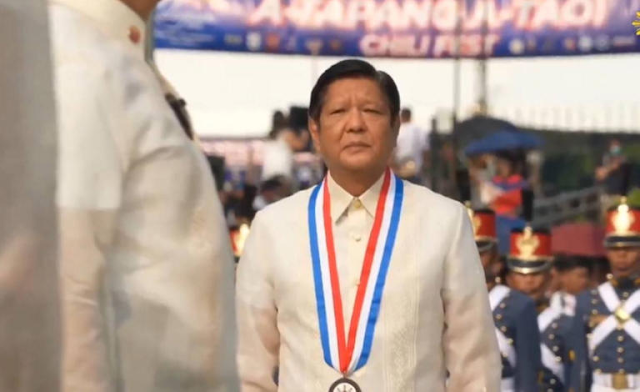
MANILA, Philippines — Ferdinand Marcos Jr. on Wednesday urged Filipinos build a Bagong Pilipinas (new Philippines) and achieve a brighter future as he led the commemoration of the country's 126th Independence Day.


"As we celebrate the founding of our nation today, let us dedicate ourselves to the challenging but rewarding task of realizing the full potential of the Filipinos and building a Bagong Pilipinas—one that truly embodies the ideals of a just, progressive, and independent Republic," Marcos said in his message.

He recounted how the Philippine flag first waved freely in Kawit, Cavite.

"It heralded the birth of the Philippines and declared to the world our untiring resolve to chart our own destiny as a sovereign nation," he said.

The chief executive pointed out that true freedom could be witnessed among ordinary Filipinos who face and overcome their day-to-day challenges.

"While the times may be different, our struggles remain the same. We continue to witness the true spirit of freedom in every Filipino who fights fairly in their day-to-day lives," he said.

"We see it in the resilience of our farmers and fisherfolk as they provide us sustenance. We see it in the dedication of our teachers as they nurture the minds of the future generation. We see it in the tenacity of our soldiers as they protect every inch of our territory, adamant as they are in the certainty that Filipinos do not, and shall never, succumb to oppression," he added.

Marcos urged citizens to not forget the lessons of the past and to remain untiring in fighting for and sustaining the freedom that the country's forefathers sacrificed their lives for.

Marcos joined the flag-raising and wreath-laying ceremony at the Rizal National Monument in Manila. In the afternoon, he will attend anniversary rites at Rizal Park at 5 p.m., then host an event for dignitaries in Malacañang.

There will be a parade from the Cultural Center of the Philippines grounds to Roxas Boulevard up to the Burnham Green across the Quirino Grandstand.

To cap off the celebration, a free concert of the P-pop girl group BINI will be held after the "Kalayaan Parade."


Friday, 7 June 2024

Lea Salonga Is Madame Tussauds' New Filipino Wax Figure

Lea Salonga Is Madame Tussauds' New Filipino Wax Figure

Story by Leana Vibal 
Spot.ph
07 June 2024

Lea Salonga was just announced the next Filipino star to have a wax figure of her likeness at Madame Tussauds Singapore. 


The multi-faceted musical icon is headed for the star-studded halls of Madame Tussauds in Resorts World Sentosa Singapore, with her wax figure set to be unveiled in the third quarter of 2024.  

Here's what we know about Lea Salonga's Madame Tussauds Singapore wax figure:

It's a big year for Filipino stars and the Madame Tussauds brand. From the traveling figures of Pia Wurtzbach and Catriona Gray making waves in Singapore and Hong Kong to Anne Curtis getting chosen as the next Filipino wax figure model for Madame Tussauds Hong Kong, Salonga's debut at the famous museum and tourist destination marks another milestone for Philippine entertainment.

"When my manager said this is happening, that Madame Tussauds is interested in making a wax figure of me, it was an absolute honour and privilege to be asked. It’s fantastic!," shared Lea in her sitting session with the Madame Tussauds Singapore team of expert sculptors and artists.


Salonga, of course, needs no introduction. She has a well-decorated career in music and entertainment that spans over 45 years. Her credits include being the first Asian to play Eponine in Les Miserables on Broadway, debuting the role of  Kim in Miss Saigon, and being the Philippines' OG Disney Princess—she is, after all, the singing voice of Mulan and Jasmine. 

You might even say Queen P, Pia Wurtzbach, manifested this momentous occasion. In an interview with SPOT.ph back in March when her own wax figure made its Singapore debut, Wurtzbach expressed a wish for her wax figure to stand alongside Salonga's. "I think she's iconic and it's about time that we had her (wax figure), " says Wurtzbach.


Salonga's installation to the Madame Tussauds halls comes at a time when the museum continues to entice Filipinos to visit their different locations by including more Filipinos in their line up. 

"We are truly excited and honoured to have Lea's wax figure," says Elaine Quek, Head of Sales and Marketing at Madame Tussauds Singapore.

Originally opened in 2014, Madame Tussauds Singapore is in the integrated entertainment and leisure complex of Resorts World Sentosa. It features different zones making it the home to the likeness of over 80 glamorous stars from Asia, Hollywood, Bollywood and beyond. 

Saturday, 13 April 2024

The evolution of Barong Tagalog

The barong Tagalog is definitely for everyone

Manila Times
13 April 2024

It is a fashionable fact that the barong Tagalog is no longer just the stuff of formal, traditional events but a versatile attire that has evolved through the years. Thanks to Filipino creativity, it has become the outfit of choice for many different people — from office workers to the stylish set, and of course, from president to president, male or female.

The evolution comes as no surprise as the barong's lightweight fabric, sleek shape and comfortable cut make it the perfect go-to for tropical climates like the Philippines. Moreover, the endless possibilities for beautiful embroidery, appliques, and other embellishments highlight its fashion appeal, even for women, who have made it part of their Filipiniana, formal or even everyday wear.

STYLE SHOOTER Fashion model and photography influencer Mikyle Quizon plays it cool in a short-sleeved pink silk polo barong with pintucks.

BOLLYWOOD BABE Indian actor and singer Addy Raj shows the barong’s inclusive appeal wearing this men’s blue silk cocoon Barong with geometric embroidery.

VOLLEY BELLE Volleyball sensation Fifi Sharma shows her stylish side with this women’s mandarin collar barong with classic floral embroidery, which she dresses down with denim.

MULTI MAVEN Restaurateur and content creator Bambi del Rosario Young matches a men's black-and-white embroidered Barong with a black slip dress.

SENATE SENSATION With his work as Senate Chief of Staff and Chairman of disaster relief NGO Panday Bayanihan, Brian Poe Llamanzares represents a new generation of public service in Kultura’s heather black cocoon barong with bold white geometric embroidery.
        
HEARTY HOST TV and event host KC Montero wears a one-of-a-kind men's barong with embroidery inspired by warrior tattoo
   
HOT HITTER Volleyball star Rex Intal relaxes off-court in a short-sleeved pina-silk Barong featuring a “suksok” pattern with denim.

Combining elements from the pre-colonial native Filipinos and traditional Spanish colonial styles, the Barong was named the official national attire in 1975. What is considered the distinctive type of modern barong — with its tapering cut, cuffs, and flared sleeves — was created by fashion designer Jean Paul Gaultier of Pierre Cardin Manille in the '70s.

Since then, there have been short-sleeved polo barongs, preferred by office workers, made with linen, ramie or cotton, as well as shirt jack barongs popularized by politicians.

Kultura, the purveyor of Filipinana wear for the modern era, notes that the finest barong Tagalog are made from a variety of indigenous sheer fabrics — piña from pineapple fiber, pina seda interweaving pina with silk, and jusi handwoven from abaca fibers. Pinukpok from the Bicol Region is made from loosely woven abaca fibers; jusilyn is mechanically woven from silk, cotton, or polyester; and organza is made from silk or polyester.

As it celebrates and shares with The Manila Times Lifestyle its new campaign titled "Barong is for Everyone," Kultura embraces the attire's ability to unite those from diverse backgrounds with the different ways it can be worn today via this special editorial shoot.

Classic or modern, paired with slacks for formal occasions or jeans for a street-style take, the timeless and versatile barong remains a symbol of cultural pride. Take inspiration from these individuals who have made the barong their own regardless of age, gender identity, nationality, and beyond.