Showing posts with label Filipino scientists. Show all posts

Tuesday, 6 October 2026

New frog species discovered in Southern Philippines

Scientists discover new frog, resurrect two species in Philippines after 106 years

The Star (Malaysia)
06 Oct 2026 

GENERAL SANTOS CITY: Filipino and foreign scientists have discovered a new frog species and “resurrected” two others in the southern and central Philippines, all of which were thought to have been the same species over the past 100 years.


Before the discoveries, they were referred to as cryptic species, meaning they look very similar but are genetically and behaviourally distinct.

Filipino wildlife biologist Kier Mitchel Pitogo, one of the authors of the study detailing the three new additions to the Philippine amphibian fauna, explained that these frogs play an important role in the environment, acting as bioindicators of forest habitat quality.

“These frogs are associated with primary forests… From what we’ve observed during our fieldwork, they are typically among the first wildlife to disappear when forests are lost or heavily disturbed. Because of this, they can serve as bioindicators of habitat quality, meaning their presence or absence can tell us something about changes in the forest,” he told the Inquirer on Sunday.

The three latest discoveries are the Platymantis habagatan (Mindanao variable forest frog), a new species from Mindanao Island, except the southern region; and two resurrected species, P. jagorii (Jagor’s variable forest frog) and P. laticeps (Broad-headed variable forest frog).

Habagatan is a Cebuano word for “south” or “southern”, referring to its distribution in the southern Philippines.

“It is the first description of a new ground-dwelling Platymantis from the Mindanao biogeographic region in 106 years,” said Pitogo, a doctoral student in ecology and evolutionary biology at the University of Kansas, USA.

Among the three, the Jagor’s variable forest frog is the smallest, with proportionally smaller eyes and a relatively wider head. It is found across Samar, Leyte, Bohol, Dinagat, and Siargao.

Its close relative, the Mindanao variable forest frog, shares some of these characteristics but is proportionally larger overall and is widely distributed across Mindanao, except for the southern region.

The Broad-headed variable forest frog co-occurs with the Mindanao variable forest frog in northeastern Mindanao but can be readily distinguished by its much larger body size (about 38–41 mm compared with 30–35 mm), tuberculate body, and much narrower space between the eyes.

For a century, Pitogo noted these frogs were treated as a single species, Platymantis dorsalis.

He stressed that for conservation purposes, it becomes extremely important to get their names and identities right.

“Conservation decisions are ultimately made at the species level, so if we don’t recognise the species correctly, we may not even know which species is declining, where it occurs, or what habitat needs to be protected,” Pitogo explained.

It took four years and 230 frog specimens for the authors to officially add the three latest species to the country’s amphibian fauna.

Aside from Pitogo, the authors include Rew Hoskins, Faben Hana Tesfazion, Camila G. Meneses, Hayden W. Cannon, Christian E. Supsup, Syrus Cesar P. Decena, Marites B. Sanguila, and Rafe M. Brown.

They are affiliated with the University of Kansas, Visayas State University-Alangalang in Leyte, or Father Saturnino Urios University in Butuan City. Inqurier/ANN

Sunday, 4 October 2026

First Filipino inducted into Explorers Club

Call of the wild: First Filipino inducted into Explorers Club

Gillian Villanueva 
Inquirer.net
04 October 2026

MANILA, Philippines — For Gregg Yan, a 43-year-old communications consultant and founder of environmental nonprofit Best Alternatives, one does not need to have formal training as a scientist to be able to write academic articles about animal conservation.


His experience traveling the world and being exposed to the wonders of wildlife is what informs his writing.

“I had written hundreds or maybe thousands of stories about wildlife and people,” he told the Inquirer. “I’m really a journalist, but because I grew up seeing wildlife and my personal interest was about animals … I never let a lack of academic qualifications [stop me].”

After 20 years of working in the field where he photographed and wrote about some of the world’s most endangered animals, Yan became the first Filipino to be inducted as a fellow into the 120-year-old international society The Explorers Club.


The group, whose members include the likes of astronaut Neil Armstrong and primatologist Jane Goodall, is a “multidisciplinary society dedicated to the advancement of field research, scientific exploration and resource conservation.”

Yan is also a longtime contributor to the Inquirer.

“Being a fellow is essentially securing a seat at the table to allow more Filipinos to be part of The Explorers Club in the future, and we do not have a lack of great explorers,” he said.

An observant farm boy

His interest in wildlife began when he was a young boy growing up on a farm in Bulacan.

“In the 1980s, me and my brother, because we did not have any neighbors, would go exploring the farm every day after school. We had all sorts of animals, not just farm animals. We had different types of insects, snakes, frogs and birds,” he said.

Yan and his brother later left for Manila to study, but returned to the farm after graduating from college. This time, however, Gregg noticed that the beasts and critters that fascinated him as a child had largely disappeared.

“It was because surrounding areas started developing and farms started using pesticides. And the river beside our house was the most polluted river on planet Earth, which is the Meycauayan River,” he said.

‘Localized extinctions’

The sad observation made him realize that “localized extinction can happen not just in one’s lifetime, but in the blink of an eye.”

“I thought that, if this is what’s going on in our backyard in Bulacan, what more is happening across the planet?” he said.

While in college, Yan worked on his communication and writing skills as a journalism student at Ateneo de Manila University and as an intern at the Inquirer. His thesis, not surprisingly, was about the wildlife that had managed to take refuge within the Ateneo campus.

Finding green options

“I spent so many nights and mornings alone, looking for snakes and birds and stuff,” he recalled.

After graduating, Yan worked with the World Wide Fund For Nature as a communication officer for 12 years, immersing himself in conservation issues.

“One of my favorite adventures was finding the pangolin in Palawan, or studying the seabirds of the Tubbataha reefs, also in Palawan. My core expertise was about fish … I write academic journal articles about fish conservation,” he said.

In 2015, Yan founded the nongovernmental organization Best Alternatives, which promotes environment-friendly products.

“Let’s say, in [making] traditional Chinese medicine, they like to use endangered wildlife like tiger bones, rhinoceros horns, or dried seahorse,’’ he said. “At Best Alternatives, we do research to find out what can be the alternatives to these illegal or unethical [materials] that are being used.”

Mindoro to East Africa

Parallel to this advocacy, Yan also stays in touch with indigenous communities who play an important role in wildlife conservation. These include the Tawbuid people of Mindoro.

“I’ve written stories about them. In many ways, they are simpler and better than so many people we see right now … and they live right beside the tamaraw up to this day. So, every time I go there, I essentially see how conservation works,” he said.

Outside the Philippines, Yan had encounters with the Maasai tribe in Tanzania and Kenya, taking part in a tradition where his skin was ritually marked with a heated stick covered in cattle dung. Being herders, the tribe believes the animal’s waste can work as a disinfectant, he explained.

“To remember those adventures, I only have to look at my arms … because they are seared into my flesh, literally, and into my memory.”

Yan hopes that his fellow travelers and adventurers will be mindful enough and help the places they visit stay clean or unspoiled. It can be as simple as picking up trash while mountain climbing or scuba diving.

“We need to make sure that future generations of Pinoy and Pinay explorers will still have something to explore and protect,” he said.

Monday, 21 September 2026

Young inventors on the rise in the Philippines

Young inventors on the rise in Philippines

IP filings eyed for fresh high

Brix Lelis 
The Philippine Star 
September 21, 2026

MANILA, Philippines — The Intellectual Property Office of the Philippines (IPOPHL) is targeting a new record for IP filings this year, buoyed by a growing number of young inventors.


“Many young people are getting into the groove of what to invent, what to create and what to innovate. But naturally, we at IPOPHL desire much, much more,” IPOPHL director general Teodoro Pascua said in an interview over the weekend.

Pascua said the country has been seeing a steady increase in IP applications, and he is hopeful that filings will be “better” this year.

Filings for patents, trademarks, utility models and industrial designs reached an all-time high of 53,231 in 2025, up by two percent from 52,257 a year earlier.

While declining to provide figures, Pascua said applications have continued to post positive growth nearly nine months into the year.

Beyond increasing the number of IP filings, however, IPOPHL also wants to speed up the registration process to encourage more innovators to formally protect their creations.

“We can only encourage and persuade (people to file). But the registration, that’s within our fingers. If we can accelerate it, I think it would be much better than just asking others to keep on filing,” Pascua said.

Last week, the Department of Trade and Industry launched the ASEAN Creative Industries Expo, showcasing various creative industry domains, including audiovisual media, creative services, design, digital interactive media, and publishing and printed media.

Trade Secretary Cristina Roque said the creative industry serves as a form of cultural currency, drawing global audiences and opportunities to the Philippines.

“This cultural currency is no longer just an expression of identity. The creative industry is a major strength of the Philippines and a primary driver for both trade and tourism,” Roque said.

Philippine Statistics Authority data showed that the creative economy rose to P2.12 trillion last year, accounting for around 7.6 percent of the country’s gross domestic product.

This included P320.06 billion in creative goods exports and P426.99 billion in creative services exports.

Employment in creative industries, however, declined to 8.71 million in 2025 from the previous year’s 8.74 million.

Roque acknowledged that much work remains to be done to fully realize the sector’s full potential.

Saturday, 6 June 2026

Six Filipino scientists make it to Singapore Asian Scientist's List

6 Filipinos make new 'Asian Scientist 100' list

Kristofer Purnell 
Philstar.com
June 6, 2026 

MANILA, Philippines — Six (6) Filipino scientists have been included in the eighth release of the "Asian Scientist 100" list by Singapore's Asian Scientist Magazine.

Honorees: May Anne Mata, Marcela Navasero, Mary Donnabelle Balela, Aurelio delos Reyes, Romulo Davide and Garry Benico


Since 2016 the magazine annually compiles a list of the most outstanding researchers in the Asia-Pacific region, highlighting their achievements across a range of scientific disciplines.

Requirements for inclusion are being a recipient of a national or international prize for their research of a significant scientific discovery or provided leadership in academia.

Past Filipino honorees including National Scientists Ramon Cabanos Barba, Angel C. Alcala, Edgardo D. Gomez, Gavino Cajulao Trono Jr., Emil Q. Javier, and Carmencita David-Padilla, Philippine Space Agency director general Gay Jane Perez and Project NOAH executive director Mahar Lagmay.

The following are this year's Filipino honorees:

Marcela M. Navasero (natural pest control and agricultural biosecurity)

Romulo G. Davide (plant pathology and nematology)

Mary Donnabelle L. Balela (oil spill mitigation and marine environmental protection)

Garry Benico (aquatic biosciences)

Aurelio A. de los Reyes (mathematical modeling - reproductive health)

May Anne E. Mata (mathematical biology - infectious disease)

Navasero is a recipient of the Presidential Lingkod Bayan Award, who is recognized for her leadership in natural pest control and agricultural biosecurity.

She led rapid pest assessments, managed outbreak responses and identified natural enemies of invasive species as a frontliner of the National Crop Protection Center’s Quick Response Team.

Davide, dubbed the "Father of Philippine Nematology," was named a National Scientist in 2024 and is known for his pioneering work in plant pathology and nematology, particularly his research on plant-parasitic nematodes.

Balela received the Outstanding Research and Development Award. During the Department of Science and Technology's National Science and Technology Week 2024 for developing modular kapok booms for marine oil spills.

The scientist's work uses biodegradable, locally sourced kapok fibres to create reusable oil sorbents capable of absorbing several times their weight in oil, offering a sustainable, low-waste solution for oil spill mitigation and marine environmental protection.

De los Reyes received the same award for his mathematical modeling of optimal contraception dosing strategies to improve reproductive health and last year was named the National Research Council of the Philippines Achievement Awardee for Mathematical Sciences. 

Benico was named an Outstanding Young Scientist by the National Academy of Science and Technology last year for his research in aquatic biosciences, particularly the taxonomy and systematics of microalgae and harmful dinoflagellates affecting marine ecosystems, fisheries, and aquaculture.

Mata was also given the distinction for her exemplary research in infectious disease modeling and analysis, applied mathematics, mathematical biology and operations research. 

Saturday, 18 October 2025

4 Filipino inventions to watch out for in the global market

4 Filipino inventions to watch out for in the global market

JISELLE ANNE C. CASUCIAN
GMA Integrated News 
18 October 2025

Showcased during the culmination event of the Department of Science and Technology’s Project: PAGDAHAN in Muntinlupa were innovations and inventions made by Filipinos, who have since penetrated the global scene with their genius and creativity.

Here are 4 different noteworthy inventions to look out for:

1.  QBX-SMA

Made by Tekton GeoMetrix Inc, the QBX-SMA is a device that was made to be installed in commercial buildings. The machine’s purpose is to gather vibration data during earthquakes using highly sensitive sensors, which can immediately alert the building occupants about structural damage, corrective measures, and on-the-spot response to ongoing disasters.

The project is currently being used in some parts of the United States and El Salvador, and is now commercially available.

QBX-SMA gathers vibration data during earthquakes

2.  Parallax 3D

Parallax 3D is an engineering simulation system that uses mixed reality technology. Developed by Batangas State University and the National Engineering University, Parallax3D is an immersive platform for learning through a customized virtual laboratory.

Among its growing number of available virtual laboratories are biology laboratory (animal and plant cell), chemistry laboratory (distillation and filtration assembly), industry module (excavator control), and human anatomy.

Parallax 3D is an engineering simulation system that uses mixed reality technology

3.  Charging in Minutes (CharM) system

Established in 2019, the start-up company CHRG EV Technologies Inc. offers a Mode 4 fast-charging system of electric vehicles through lithium-ion battery technology, reducing a typical e-vehicles’ full charging time from 4-6 hours to only 30 minutes.

The station is ideal for charging e-trikes and e-jeepneys. The station comes complete with charging boxes, pods, vehicle control units and battery management systems.

CHRG EV Technologies Inc. offers a Mode 4 fast-charging system of electric vehicles through lithium-ion battery technology, reducing a typical e-vehicles’ full charging time from 4-6 hours to only 30 minutes

4.  Pili AdheSeal

The Pili Adheseal is a sealant with a non-toxic smell made of Pili Sap. The seal is strong enough to be used in aviation, and can even be converted into a fertilizer after use.

The seal had landed first prize at the 3rd China-ASEAN Innovation and Entrepreneurship Competition.

Pili Adheseal is a sealant with a non-toxic smell made of Pili Sap. The seal is strong enough to be used in aviation, and can even be converted into a fertilizer after use


DOST’s Project Promoting Advanced DOST Technologies Across Global Horizons Through Amplified PR Strategies for International Exhibitions (PAGDAHAN) aims to showcase the global visibility efforts of DOST-developed and supported projects throughout the year. —LDF, GMA Integrated News

Thursday, 17 July 2025

Mindoro as biodiversity hotspot

Scientists discover more of Mindoro’s ancient technology, biodiversity

Raymond Gregory Tribdino
Manila Times
17 July 2025

Scientists from the Ateneo de Manila University (ADMU), collaborating with international experts and institutions, have uncovered compelling evidence of Mindoro’s significant role in ancient maritime activities in Southeast Asia. At almost the same time, biologists from the University of the Philippines-Diliman (UPD) revealed a new species of mice endemic to the biodiverse island.

A map of Island Southeast Asia (ISEA) and the Sunda region as it appeared roughly 25,000 years ago at the height of the last Ice Age, with locations of archaeological sites surveyed by the Mindoro Archaeology Project. (Base Map: www.gebco.net, 2014)

The ADMU findings detail effective human migration, advanced technological innovation, and long-distance intercultural relations dating back more than 35,000 years. The compilation of a 15-year study detailed in the Ateneo researchers' latest publication from the Mindoro Archaeology Project offers some of the oldest evidence of Homo sapiens (anatomically modern humans) in the country. These discoveries were made in Ilin Island, San Jose, and Sta. Teresa, Magsaysay all in Occidental Mindoro.

Mindoro, unlike most other main Philippine islands except Palawan, was never connected to mainland Southeast Asia by land bridges or ice sheets. Sea crossings were always necessary to reach it, which likely spurred the development of sophisticated technologies for traversing and surviving this environment.

Mindoro’s unique geological history and isolation are also reflected in its extraordinary biodiversity. The island is home to a bounty of endemic mammalian wildlife found nowhere else on Earth, including the famous tamaraw, the Mindoro warty pig and the humble Mindoro shrew.

Recently, three more species were added to this list with the discovery of Philippine forest mice, all belonging to the Apomys genus. From 2013 to 2017, teams of field biologists led by Filipino scientist Dr. Danilo Balete surveyed relatively understudied forests of Mindoro. During their expeditions, they noticed three distinctive forest mice that appeared noticeably different from the island's known endemic species, Apomys gracilirostris.

Evidence of Sophisticated Ancient Technology

The ADMU study called Chronology and Ecology of Early Islanders in the Philippines: The Mindoro Archaeology Project, published on June 1 this year, outlined a variety of finds—including human remains, animal bones, shells, and tools made from stone, bone, and shell — show that Mindoro's early inhabitants had successfully harnessed land and marine resources.

Over 30,000 years ago, the island’s inhabitants already possessed seafaring capabilities and specific fishing skills, enabling them to catch predatory open-sea fish species like bonito and shark, and establish connections with distant islands and populations in the vast maritime region of Wallacea.

“Particularly noteworthy is the innovative use of shells as raw material for tools, culminating in the manufacture of adzes from giant clam shells (Tridacna species) 7,000 to 9,000 years ago. These tools bear a striking similarity to shell adzes found across Island Southeast Asia, as far as Manus Island in Papua New Guinea, more than 3,000 kilometers away,” the ADMU study indicated.

The researchers also found a human grave on Ilin Island dating to about 5,000 years ago. The body was laid to rest in a fetal position, bedded and covered with limestone slabs. The burial method was similar to other flexed burials found across Southeast Asia, suggesting shared ideological and social influences and emerging social complexity across a vast area from the mainland to distant islands.

These archaeological sites have yielded evidence of culturally sophisticated inhabitants who were behaviorally and technologically adapted to coastal and marine environments. Collectively, these discoveries suggest Mindoro and nearby Philippine islands were part of an extensive maritime network that existed during the Stone Age, facilitating cultural and technological exchange between early human populations across Island Southeast Asia for millennia.

The latest publication from the Mindoro Archeology Project was authored by Dr. Alfred F. Pawlik, Dr. Riczar B. Fuentes and Dr. Tanya Uldin of the Ateneo de Manila University Department of Sociology and Anthropology; Dr. Marie Grace Pamela G. Faylona of the University of the Philippines-Diliman Department of Anthropology, De La Salle University Department of Sociology and Behavioral Sciences and Philippine Normal University College of Advanced Studies; and Trishia Gayle R. Palconit, a PhD student at the University of Ferrara, Italy.

Mindoro's Unique Endemic Wildlife

Mindoro's unique geological history and isolation are also reflected in its extraordinary biodiversity. The island is home to a bounty of endemic mammalian wildlife found nowhere else on Earth, including the famous tamaraw, the Mindoro warty pig and the humble Mindoro shrew.

Recently, three more species were added to this list with the discovery of Philippine forest mice, all belonging to the Apomys genus.

Between 2013 and 2017, field biologists, led by renowned Filipino scientist Dr. Danilo Balete, surveyed Mindoro's relatively understudied forests. During their expeditions, they observed three distinctive forest mice that appeared noticeably different from the island's known endemic species, Apomys gracilirostris.

Dr. Balete collaborated with Dr. Mariano Roy Duya and Melizar Duya of the University of the Philippines Diliman College of Science, Institute of Biology (UPD-CSIB), along with U.S. biologists. They analyzed the genes, fur, and skull structures of the forest mice, confirming after nearly a decade of laboratory work that the three are indeed new species: the tiny Apomys minor, the hairy-eared A. crinitus and A. veluzi. The latter was named in honor of the late Maria Josefa "Sweepea" Veluz, a distinguished mammalogist of the National Museum of Natural History of the Philippines.

There are now 12 endemic mammals unique to the island of Mindoro from the previous count of nine. It also solidifies the island's status as a unique evolutionary hotspot, now recognized as the smallest known island globally where mammal speciation has occurred.

The study, titled "Three new species of Philippine forest mice (Apomys, Muridae, Mammalia), members of a clade endemic to Mindoro Island," is published in the journal Zootaxa.

Tuesday, 1 July 2025

Pinoy engineer in Top 10 Young Inventors Prize 2025

Pinoy aeronautical engineer named in Top 10 Young Inventors Prize 2025

Mariel Celine Serquiña 
GMA Integrated News
01 July 2025

A Filipino aeronautical engineer has become one of the 10 recipients of the Young Inventors Prize 2025 for his eco-friendly aircraft sealant and adhesive made from pili tree resin.


Mark Kennedy Bantugon, 26, has developed the Pili Seal, an aircraft sealant and adhesive made from the agricultural waste of pili tree resin.

Pili Seal aims to reduce environmental impact by providing a safer alternative to traditional sealants and adhesives, some of which contain toxic petrochemicals.

The two-part sealant and adhesive can withstand fuel exposure, heat, and pressure. It also has the potential to be used in the construction, automotive, marine, and defense industries.

According to the European Patent Office, Pili Seal can repurpose the pili tree resin waste generated in the Philippines.

It noted that agricultural pili tree resin waste in the country, which primarily comes from the perfume and food industries, yields about 155 million kilograms annually.

Awarded last June 18 in Iceland, each of the 10 awardees receives 5,000 euros.

During the 2025 Young Investors Prize ceremony on the same day, Bantungon said he chose the pili tree resin because of its sticky characteristics and fragrance.

Bantungon also said that before getting the final output, he tried 84 formulas.

He also shared that he drew inspiration from his parents, who are farmers and were present during the event.

The Young Inventors Prize recognizes inventors under 30 years old who support the United Nations Sustainable Development Goals (UN SDG).

Bantugon was selected from 450 candidates all over the world by an independent jury.

“By transforming agricultural waste into a high-performance sealant, Mark Kennedy Bantugon is directly contributing to UN SDG 9 (Industry, Innovation & Infrastructure),” the European Patent Office said.


Sunday, 22 June 2025

Justine Malabanan representing the Philippines on the world stage

Justine Malabanan representing the Philippines on the world stage

The Manila Times
22 June 2025

In a world increasingly defined by global movements, digital revolutions, and cultural exchange, some Filipinos manage to shine not through fanfare, but through quiet force. Justine Therese Malabanan is one of them.


A Harvard MBA graduate, a former brand manager at Procter & Gamble and consultant at Boston Consulting Group, and currently a senior deployment lead at a global AI startup, Malabanan has built an impressive career across continents. Yet amid the whirlwind of multinational meetings and AI innovations, she continues to hold fast to something deeply personal: her Filipino identity.

"When I'm given a project at work, I make sure to give it my best not just for myself or my family, but also because I know that I represent my country," said Malabanan. "We're a growing group of Filipinos in tech in the US, and I want to make sure that if my peers' interaction with me is one of their first with a Filipino, they remember that we're reliable teammates who show what bayanihan means."

The global track, the Filipino way

Malabanan's story is not a typical tale of international ascent. Raised in the Philippines and educated at Miriam College and Ateneo de Manila University, she rose through the ranks on the strength of her intellect, integrity, and cultural rootedness. Her achievements span various domains: business case competitions, AI deployment, radio hosting, and even intercultural arts. But at the heart of her accomplishments is a persistent drive to serve as an ambassador of Filipino excellence.

At Harvard, her Filipino perspective gave her unique contributions during classroom discussions.

"There were two cases during my MBA where I felt a strong urge to speak up," she recalled. "One was about small package sizes in Asia. The tingi culture isn't uncommon to Filipinos, especially with sari-sari stores. What some classmates saw as environmentally unsustainable, I explained as a necessity in communities where people buy only what they can afford daily."

In another case, she questioned the long-standing effects of colonization, raising the possibility that had colonized nations been allowed to develop freely, they could have achieved the same breakthroughs attributed to their colonizers.

"Both cases led to healthy debate," she added, "but more importantly, they led to broader and more empathetic mindsets."

From the Philippines to the world

Malabanan's international journey began long before Harvard. In high school and college, she wrote for Heliophon, a Los Angeles-based magazine promoting intercultural dialogue. She was also the youngest junior jock at Magic 89.9, hosting a children's show streamed worldwide. She participated in global essay contests, was active in student exchange tours, and competed in international business case competitions.

In her professional life, she has worked in consulting with Boston Consulting Group, marketing with Procter & Gamble, and now, artificial intelligence. At every stop, she's found ways to share her culture.

"I bring up the rich history of the Philippines in conversations with co-workers," she said. "I try to introduce Filipino cuisine by taking friends to restaurants in New York, or by bringing Filipino snacks to the office."

More than this, she has always focused on impact.

"Across all of my roles, it's been important to me that I can tie my work to societal good," she explained. "When I was a senior brand manager of Tide in the Philippines, I knew I was helping people stay clean and safe during the pandemic. I was also supporting local laundromats and labanderas whose livelihoods depended on access to quality products."

A mindset rooted in home

Behind her global success lies the quiet strength of a loving home. Her parents, Rex and Christa Malabanan, recall Malabanan's curiosity from a very young age.

"During her toddler years, she would browse magazines and ask about the places and people," said Christa. "There was always this eagerness to know—not just what something is, but why it is."

That spirit of inquiry, coupled with a tireless work ethic, shaped her foundation.

"She wants to do everything the best way possible. She works hard to reach her goals. And she doubles the effort if needed," Christa added.

Their parenting philosophy was deliberate but gentle: emphasize process over praise, presence over pressure. "We didn't give extreme praise for achievements," said Rex. "Instead, we celebrated hard work, passion, and dedication. We were always there — not to solve problems for her, but to guide her in solving them herself."

Staying grounded in the fast lane

Today, Malabanan finds herself at the forefront of the AI revolution, managing international accounts in a company with team members across India, the US, and the UK. Despite the fast pace and high stakes, she stays rooted by values she holds close.

"In high-pressure environments, it's easy to get blinded by competition and success," she said. "I always try to anchor myself on humility, faith, and kindness. Humility lets me stay open to learning. Faith helps me to let go and let God. Kindness reminds me to support my peers the way I'd want to be supported."

Outside of work, her life is vibrant and textured: she cooks international cuisine, sings, cycles, ice skates, and volunteers for children's organizations.

"She used to sell her artwork to relatives," her parents shared. "She enjoys the process of competing — whether it's school, work, or the arts. For her, just being in the game is already a win."

Passing the torch

Malabanan is well aware that her journey can serve as a path for others.

"Many young Filipinos dream of contributing globally but don't always know where to start," she said. "Start small. Share your passions online. Join global competitions. Learn new languages. Be a bridge for cultures."

Her advice to the next generation is both poetic and empowering: "My two favorite quotes are: 'If your dreams don't scare you, they're not big enough' and 'Life shrinks and expands in proportion to one's courage.' I hope they strive to shoot for the moon and have the courage to build the rocket ship to get there. We're not settling for the stars."

Her parents echo a message of faith and resilience for other Filipino families: "Growth in the international arena could be challenging, especially for Asian women. But Justine proved that with faith, skills, and values, you can earn the respect of the world."

"Equip your child with the right skills. Nourish them with the right values. Love them unconditionally," Christa concluded. "To champion in faith is the ultimate gift."

In a world that is loud and fast-moving, Justine Malabanan is a reminder that the quiet force of purpose, identity, and integrity can carry the Filipino voice far and wide — and make it heard by everyone everywhere.

Tuesday, 25 February 2025

Pinoy scientists testing volcanic materials for shield against radiation

Filipino scientists turn volcanic ash into radiation-resistant building material

While more tests are needed, the discovery can offer a practical way to manage waste from natural disasters.

Jason Gutierrez
Benar News (Indonesia)
25 February 2025

Small cement cubes made of volcanic ash are spread throughout Joel Maquiling’s lab as the Filipino scientist excitedly explains potential practical uses for the concrete material. 

A sample of cement cube made from ash from the Taal volcano is seen in this photo during an interview at the Ateneo de manila University in Quezon City, Metro Manila, Feb 19, 2025

Along with two other researchers, Maquiling is spearheading a study on tons of ash expelled by the Taal volcano south of Manila during a huge eruption five years ago that posed challenges on how to dispose of this waste. 

Instead of treating the pyroclastic material as mere waste, the scientists have been studying whether volcanic ash could be used in construction applications.

The results, so far, have been astonishing: By mixing the material with cement, the researchers have created construction blocks which, they say, can be used as a shield against harmful radiation.

This material could then be used in hospitals, industrial sites and nuclear facilities. More importantly, it could be an alternative to other more expensive construction materials such as concrete and lead, which can be less friendly to the environment.

“We’re not here just to build materials. It’s not just ‘build, build, build,’” said Maquiling, referring to a much-touted infrastructure initiative of the previous Philippine administration.

“We want it to be ‘build, build, build’ but anchored on good science and engineering,” the scientist, who heads the physics department at the Ateneo de Manila University, told BenarNews.

He and his team set out to develop “geopolymers,” or rare geomaterials from waste products of natural cataclysmic events, such as volcanic eruptions.

The January 2020 eruption of Taal volcano, located about 64 kilometers (40 miles) from Manila, provided Maquiling with a challenge of what to do with the tons of waste it had emitted.

Three men, surrounded by ash and dead trees on the Taal volcano, look for items to salvage, Jan. 14, 2020. (Jojo Riñoza/BenarNews)

In the wake of the eruption, reporters and photographers from BenarNews traveled to the disaster site. Their cameras captured apocalyptic scenes of devastation, including one picture of a slope of the volcano buried in ash. 

“One thing that we wanted to do was to create materials which have greater compressive strength, that could withstand greater pressure, greater forces,” Maquiling told BenarNews

Maquiling said his team also experimented with whether mixing the concrete with other materials would change its properties.

“For example, what if they could shield you from a natural or cataclysmic radiation meltdown, or something like a nuclear event? The next question is, what if there are other properties from that strong infrastructure material that would protect us from nuclear warfare, for example, a nuclear meltdown, or radiation exposure? And that’s what we found in this,” he said.

Dr. Joel Maquiling shows a sample of cement cube made from Taal volcanic ash during an interview with BenarNews at Ateneo de Manila University in Quezon City, Philippines, Feb. 19, 2025. (Jojo Riñoza/BenarNews)

They discovered that combining volcanic ash from Taal with other aggregates created a concrete material that is stronger and has enhanced “shielding capacity” for radiation.

Practical applications include using the material in hospitals and research institutes, Maquiling said. Or in the future, it can be used as materials for buildings or houses in a disaster-prone country such as the Philippines, he also said.

A news release earlier this month from Ateneo University also highlighted the material’s possible benefits.

“Radiation shielding is essential for hospitals, industrial sites, and nuclear facilities. These places use ionizing radiation for beneficial purposes such as in helping doctors treat sick organs and broken bones; looking for structural weaknesses in buildings; or helping sterilize food for longer shelf life,” it said.  

“Though useful, exposure to ionizing radiation can be harmful for prolonged periods – hence the need for shielding. However, currently available materials like concrete and lead can be expensive and environmentally hazardous. Construction materials made from volcanic ash offer a [potentially] sustainable and lightweight alternative,” it also said.

The Taal volcano as seen from a canoe, Jan. 14, 2020. (Jason Gutierrez/BenarNews)

While Maquiling admits that completing the research for this is still far off, the initial results of their groundbreaking study are promising, said the scientist, who also heads the geodynamics and research laboratory at the Manila Observatory hosted by Ateneo.

His laboratory is also collecting ash from other volcanoes that dot the Philippines, which sits on the so-called Pacific Rim of Fire, where volcanic eruptions and earthquakes are frequent due to shifting tectonic plates in the ocean’s basin.

There are 24 active volcanoes in the Philippines, including Taal. When Taal erupted without warning in January 2020, the eruption caught disaster experts by surprise, shutting down Manila’s airports and causing mass evacuations. 

A year later, the volcano spewed ash and debris a kilometer into the sky, darkening the skies above nearby areas such as Manila.

The 1,020-foot (311-meter) Taal, located on an island inside a lake, is also regarded as one of the most dangerous volcanoes in the world. An eruption in 1754 was said to have lasted seven months, experts said.

Melvin Ocampo washes ash from his horse, Princess, as smoke spews from the Taal volcano, in Balete town, Philippines, Jan. 13, 2020. (Jojo Riñoza/BenarNews)

Since volcanic materials are abundant in the Philippines, the discovery of Maquiling’s team can offer a practical way to manage disaster waste while also enhancing safety in critical areas, although he said further studies were still needed.

The breakthrough only shows that while cataclysmic events of biblical proportions cannot be avoided, life-saving innovations can be derived from them, Maquiling said.

“What is important is that there are many waste materials we can use in our composites, to make sturdier materials that can withstand whatever strength in space and time, and it saves us a lot of resources,” Maquiling said. “And all of these things become waste materials in our environment.”

“Why don’t we use these waste materials that were created anyway as by-products of our human activities to be able to come up with sturdier materials that can be useful in infrastructure, that can protect us from radiation and at the same time enhance our well-being.”

Sunday, 16 February 2025

Filipino innovations to the world

What happens in Vegas: PH tech on global stage

Ian Raphael Lopez
Inquirer.net
16 February 2024

It can all happen in the so-called Sin City—a South Korean company suddenly wanting to order 120,000 units of adhesive and sealants, or the possibility of the water system in the city of Athens, Ohio, being enhanced with artificial intelligence (AI).

Just by being there in what has been billed as the “most powerful tech event in the world” can promising Filipino startups, along with technological innovations from government agencies and university researchers, be exposed to opportunities they never thought possible.

At the recent Consumer Electronics Show (CES) in Las Vegas, the Department of Science and Technology (DOST) brought a contingent that aimed to show the best of Filipino innovations that could solve real-world problems.


“Our goal is to showcase homegrown technologies that address global challenges, demonstrating how Philippine innovations are not only viable but also capable of providing tested and scalable solutions to industries and markets worldwide,” says Marion Ivy Decena, director of the DOST’s Technology Application and Promotion Institute (TAPI).

At the center stage of the trip to the CES last Jan. 7 to Jan. 10 are five startups, namely CHRG EV Technologies Inc., Hiraya Technology Solutions Inc., Usher Technologies Inc., Tekton Geometrix Inc. and Pili AdheSeal Inc.

CHRG showcased its Charging in Minutes or CharM, a technology for fast-charging electric vehicles; Usher brought its building structural health observation system, helpful for disaster risk reduction; and Tekton GeoMetrix presented monitoring technologies for seismology, geology and geophysics.

They were joined by delegates from Batangas State University and the DOST’s Industrial Technology Development Institute, Metals Industry Research and Development Center and Advanced Science and Technology Institute.

Sustainable sealant

One of the startup delegates was Mark Kennedy Bantugon, who in 2019 invented Pili Seal, a sealant made from the waste of the pili tree resin and geared for applications in the aviation industry. It was more sustainable than traditional sealants commercially available.

“What makes people interested in the product is its performance, and also because the natural smell of pili resin is fragrant,” Bantugon says in Filipino. “One of the usual comments [about] the product (aside from it being sustainable) is this is better; the commercial sealants smell like rubber.”

The invention bagged the James Dyson National award in the Philippines in 2021 and a slew of awards in the past years. During his postgraduate studies, he was able to develop the product into a two-in-one sealant and adhesive.

Bantugon is one of the cofounders of Pili AdheSeal Inc. As the product is being opened to different industries, they made sure that it was sustainable and could contribute to the circular economy.

“Aside from upcycling agricultural waste from the pili tree resin as our raw ingredients, after it [had been] utilized by our product, its residuals could be used into safe fertilizers. From the beginning of the process until the end life of the product, nothing goes to waste,” Bantugon explains.

The opportunity to be at the CES was an unexpected one. “Our product is not related to CES; even if I scroll through, it’s more on AI (artificial intelligence), electronic gadgets. We are far from it,” Bantugon narrates.

But all the cards fell into place, as the invention is already patented in the United States and Bantugon also happened to have a US visa. The trade show, Bantugon says, has now become more inclusive toward technologies and innovations that are not necessarily consumer-oriented.

“There has been many changes at the [CES] that it is not only an electronic-related show, but it has become a wide spectrum. It’s more on the sustainability, diversity and inclusivity of all the technologies. There I felt that I became part of this because it’s the right platform for [our product] that can address real-world issues and is aligned with the United Nations Sustainable Development Goals.”

‘Outside the box’ solutions

Similarly, Jan Russell Diolata, head of technical operations at Hiraya Technology Solutions Inc., did not imagine himself going abroad to showcase Filipino innovations. “I am so happy because, personally, I grew up from a poor family, and I did not expect that I would travel to different countries because of this, that I would have a chance to go to the United States,” he says in Filipino.

Hiraya, from an old Filipino word for “imagine,” helps its clients imagine solutions, Diolata says. Originally catering to water distribution companies, Hiraya Tech proved that its solutions and system can work anywhere regarding the supply of fluid and its distribution—may it be water, oil, gas, air, electricity or even traffic flow.

“We will go to our clients; they will tell us their problems; we will help them imagine a solution, and that solution will always be outside the box— outside the box in terms of what technologies could we bring, could we integrate to Hiraya’s systems,” Diolata narrates.

At their centerpiece is AI-powered Hiraya Intelligent Modular Optimization or HIMO, which was derived from the Cebuano word for “make.” It is a semiautonomous system that could help power and optimize fluid distribution. “So what Hiraya could imagine, it will be HIMO that would carry it out.”

Many water distribution systems in different cities and municipalities in the Philippines now use Hiraya’s technology. Diolata observes that losses from nonrevenue water, or water that is lost en route to the consumers due to leaks or other reasons, could be tackled through HIMO. It can also lessen energy consumption, push water supply to previously hard-to-reach areas and protect water companies from pilferage.

At the CES, Hiraya’s technology was unique from those on offer, and that says a lot about Filipino ingenuity in solving problems, Diolata notes. “We are at par with other countries. Most of the other applications of AI (at the trade show) are more descriptive; it would suggest possible solutions, but it will still rest on an individual on what they would adjust in their system.”

“But Hiraya is more on autonomous control. It would be the one to come up with [how a system should operate]. It will predict and it will operate itself, then it will study the output of the operation to see what it could still improve on. It is self-learning. I did not see anything like that except in cars,” he explains.

‘Tremendous opportunity’

These innovations may seem out of place at a consumer-oriented show such as CES, but the DOST sees it as a distinguishing point. “The DOST Philippines [delegation] distinguished itself through the presentation of unique technologies and innovations designed to address its own challenges and potentially offer solutions to other nations facing similar challenges,” says TAPI’s Decena.

More importantly, Decena adds, it was a tremendous opportunity for these startups to expand. “By leveraging the exposure, networking opportunities and feedback, they can accelerate their growth and achieve international recognition and success.”

And expand they did, based on high-value leads gained from the CES experience. Pili Adheseal’s Bantugon got that bulk order from a South Korean battery innovation company of 100,000 units for 2025 and additional 120,000 in 2026. Bantugon will return to New York soon to meet with another client.

“Even as an ‘unexpected’ delegate, I did not expect because my mindset was, ‘This is an electronic technology show, people would not flock to my booth.’ But surprisingly … our product had many inquiries. That’s when I realized that people today, business and companies, they’re all into sustainability.”

For Hiraya, there’s the potential of its solution being used by the water system in Athens, Ohio. Its leaders just finished follow-up meetings on this project and are in talks for potential partnerships with other local executives under the US National League of Cities.

“The Philippines is an archipelago. We are surrounded by bodies of water but not everyone has access to water. If we were able to solve problems here in our country using our AI software, what more in other countries that may only have small things to improve (in their water management systems) but there would still be a large impact if they use our system?” Diolata asks.

The trade show opened the doors for collaboration with global companies.

Science and Technology Secretary Renato Solidum, for instance, met with Karan Bhatia, head of government affairs and public policy at Google. Aside from capacity-building initiatives involving AI, Google discussed applicable technologies, such as pothole detection that could work with infrastructure projects, or hazard finder and disaster recovery tools that are handy in times of natural disasters.

“Both parties recognized opportunities for joint ventures to address real-world challenges through innovative solutions,” Decena comments.

Friday, 24 January 2025

Laguna harbors the first ever recorded swamp eel fossil in the world

Today I Learned: PH Geologists Found the First-Ever Global Record of a Swamp Eel Fossil

Christa I. De La Cruz 
Esquire Philippines
24 January 2024

"The fossil nobody wants," said Allan Gil Fernando of the National Institute of Geological Sciences, University of the Philippines Diliman.

The piece of rock was initially discarded and ignored by a student during fieldwork at the fish fossil locality site in Antipolo, Rizal, in 2013. The fossil specimen isn't complete, after all. However, the geologist, being the self-admitted hoarder that he is, stored it in his office without knowing its identity and significance. More than 10 years later, the specimen in question was identified to be the first-ever global record of a swamp eel fossil.


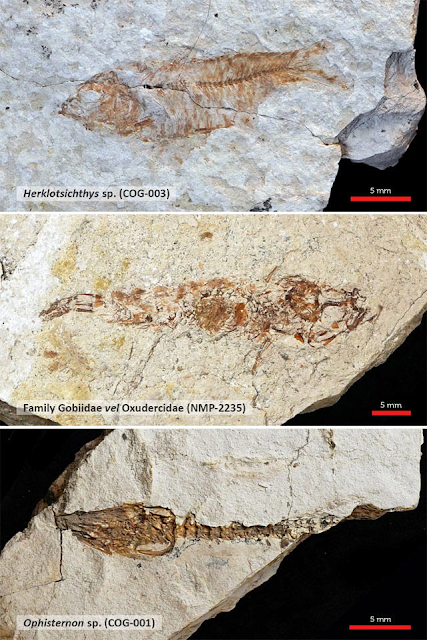
Freshwater Fossils Found in Pleistocene Laguna Formation

The research, "Fossil fish assemblage of the Laguna Formation, Philippines: unveiling the uniqueness of Pleistocene freshwater ecosystems in Southeast Asia," was published in the Swiss Journal of Paleontology in January 2025. It was a collaborative effort among Filipino scientists from the National Museum of the Philippines' Geology and Paleontology Division (Abigael Castro and Jaan Ruy Conrad Nogot), University of the Philippines Diliman's National Institute of Geological Sciences (Allan Gil Fernando) as well as the School of Archaeology (Clarence Magtoto), and Mines and Geoscience Bureau (Kevin Garas). Tomas Prikryl, the lead researcher, is from the Institute of Geology of the Czech Academy of Sciences; Dominique Mediodia and Chien-Hsiang Lin from Taiwan joined them. The group attempted to make great strides in Philippine and Southeast Asian paleoichthyology (the study of prehistoric fish).

"The fossil record in the Philippines, particularly concerning fish, is notably sparse. [... This limited evidence has provided only fragmented insights into the past biodiversity and evolutionary history of the region’s freshwater ecosystems. The absence of freshwater fossil records leaves a significant gap in our understanding of how this ecosystem has changed over time, especially in response to climatic and geological events," Prikryl et al. wrote.

Their objective was to document a collection of freshwater fish fossils from the Pleistocene Laguna Formation in Antipolo, Rizal Province. This included a total of 14 articulated and semi-articulated specimens, which were deposited at the National Institute of Geological Sciences - University of the Philippines and at the National Museum of the Philippines.

Living specimens were compared to the fish fossil specimens, and their physical features—from length to dorsal profile—were documented. We'll not go into the specifics, but the scientists went as far as recognizing the prehistoric fish's jaws and measuring the skull. These are important not only in identifying the species, but also in studying the environment of their habitat, which in this case was the Laguna Lake.

"The fish fossil assemblage of the Pleistocene Laguna Formation is predominantly composed of the families Dorosomatidae, a Gobiidae vel Oxudercidae, and Synbranchidae. These fossils represent the first records of freshwater fish in the Philippines and the first discovery of these taxa in the tropical West Pacific region. Notably, this study also provides the first-ever record of a synbranchid fossil globally," the researchers concluded.


What This Means for Philippine Ecosystems

Aside from establishing several firsts, this discovery represented the first systematic study of freshwater fish fossils in the Philippines and provided valuable data that can be used to compare with modern ecosystems.

First, it provided solid evidence that the distribution of Herklotsichthys (a genus of herrings found mostly in Southeast Asia and Australia, with one species each in the Persian Gulf, the Red Sea, and the western Indian Ocean) was prehistorically restricted in the Indo-Pacific region.

Second, the presence of dorosomatid fish fossils in the lake suggests a habitat transition from marine to freshwater in the Pleistocene period. This is similar to Taal Lake, where fish species adapted from brackish to freshwater. The presence of demersal swamp eels and gobioid fishes also suggests that the Pleistocene Laguna Lake once had a silty and muddy bottom.

Third, the gobioid fossil from the Pleistocene showed their adaptability through all those periods in history. Up to 89 species of Gobiidae have been recorded in the Philippines, with 20 of them endemic (or found only in the country).

Fourth, the identification of the Pleistocene synbranchid fossil suggested that the swamp eel has an Indo-Pacific origin.

"These newly discovered freshwater fish fossils from the Pleistocene Laguna Formation in the Philippines not only provided evidence of their presence in the West Pacific region but also offered new insights into the origin and historical geographic distribution of these taxa," they said.

Thursday, 31 October 2024

Twenty-six Filipino scientists made it to the 2024 “World’s Top 2 Percent Scientists” list by Stanford University

Stanford lists 26 Pinoys in world’s Top 2% scientists

Story by Ranier Allan Ronda
Philstar Global
31 October 2024

MANILA, Philippines — Twenty-six Filipino scientists made it to the 2024 “World’s Top 2 Percent Scientists” list by Stanford University and released through the prestigious Elsevier Data Repository.


“The Stanford List compiles the names of the top two percent most-cited researchers or scientists globally across different fields annually. These individuals’ rankings are determined using the c-score metric created by John Ioannidis, a statistician at Stanford University,” the National Academy of Science and Technology (NAST) said in a post on its official Facebook page yesterday.

Among the Filipino scientists who made the list are National Scientists Carmencita Padilla and Bienvenido Juliano (+), along with NAST Academicians Jose Cruz Jr., Antonio Miguel Dans, Glenn Gregorio, Jurgenne Primavera, Raymond Girard Tan and Allan Bernardo.

Other Filipino scientists included are John Jamir Benzon Aruta, Kathleen Aviso, Jayeel Cornelio, Alonzo Gabriel (+), Mary Ann Lansang, Marie Carmela Lapitan, Paul Gideon Lasco, Lanndon Ocampo, Ourlad Alzeus Tantengco and Aristotle Ubando.

Overseas-based Filipino scientists who also made the list are Ramon Gustilo, Michael Purugganan, Rigoberto Advincula, Josefino Comiso, Carlito Lebrilla, Enrique Ostrea, Baldomero Olivera and Eduardo Padlan.

“On behalf of the DOST (Department of Science and Technology) I would like to congratulate our Filipino scientists that were included in the top two percent of Scientists of the World list. We are proud of their scientific achievements – truly world class,” DOST Secretary Renato Solidum Jr. said.


Wednesday, 16 October 2024

Pinoy scientists creates fire exterminator

Filipino researchers use sound waves to extinguish fire

Bryan Ke
Netshark (United Kingdom)
16 October 2024

A group of researchers from the Philippines is making headlines for creating a “fire exterminator” device that uses sound waves.

The device was created by University of Mindanao engineering graduates Francis Bagol, Franco Bellera and Chris John Pogoy, along with their adviser Stephen Paul Alagao. 

The project was designed to extinguish fires on electrical wiring or gadgets that would otherwise be dangerous to put out with water. 

It incorporates a sensor that automatically detects and stops fire from a maximum range of two meters, making it an ideal home safety device. 

Not only is the device chemical-free; it is also safe for the human ears as it produces only around 80 decibels, the approximate equivalent of the sound produced by a vacuum cleaner.

Winning second place at the 2022 National Invention Contest and Exhibit of the Department of Science and Technology, the group has patented the project, which was registered on March 13, 2023.

Thursday, 26 September 2024

Scientists in Philippines develop new rice variety aimed at combatting diabetes

Scientists in Philippines develop new rice variety aimed at combatting diabetes

Statistics Canada reports that as of 2020-21, there were 3.7 million Canadians living with diabetes — almost 10 per cent of the population


Stewart Lewis
National Post (Canada)
Sep 26, 2024

Scientists at the International Rice Research Institute (IRRI) in the Philippines have developed a new variety of rice that could help reduce the growing worldwide burden of diabetes.

An estimated 537 million adults on the planet are living with the disease. And that number is expected to grow to 783 million in the next 20 years.

Statistics Canada reports that as of 2020-21, there were 3.7 million Canadians living with diabetes – almost 10 per cent of the population.

Diabetes is a chronic condition that develops when a person’s body doesn’t produce or effectively use insulin, which it needs to turn sugar into energy. If a person’s blood sugar is excessively high, symptoms such as thirst, blurred vision, and headaches can arise. The worst-case scenario driven by consistently high blood sugar can involve blindness or amputation of the toes or feet.

There are essentially two types of diabetes. Type 1 is an auto-immune condition that is not preventable. Those sufferers must take insulin daily.

However, Type 2 diabetes can be combatted to some extent by changes in lifestyle and eating, sometimes preventing the need for diabetes medication. People with Type 2 diabetes or pre-diabetes can benefit from a diet of food low on the glycemic index (GI).

GI measures how fast a food item raises blood sugar levels and contributes to diabetes. According to Diabetes Canada, GI is a scale from 1-100 that ranks a carbohydrate-containing food or drink by how much it raises blood sugar levels after it is consumed. Foods with a high GI (70 or more) increase blood sugar higher and faster than foods with a low GI (55 or less).

Most available rice varieties have GI levels between 70 and 72. White rice is notable for having a high glycemic count.

The good news is that the IRRI has developed a rice variety that has a GI as low as 25. Also high in protein, the new rice variety looks like white rice but has smaller grains.

The IRRI researchers have been working with the University of California, the Max Planck Institute of Molecular Plant Physiology in Germany, and Bulgaria’s Centre of Plant Systems Biology, reports the Guardian.

Using the IRRI’s extensive rice gene bank, the world’s largest, researchers screened 380 seed samples over 10 years to identify genes with a lower glycemic index and higher protein content. Then they combined them, creating a diabetes-friendly, healthier rice option.

Dr. Nese Sreenivasulu, the principal scientist at the IRRI’s grain quality and nutrition centre, told the Guardian: “We thought that if we could come up with a diet with low glycemic index properties (and) that could be considered healthier, not only to those subjects who are diabetic and pre-diabetic … then it could be a very good intervention to counter growing incidences (of diabetes).”

The rice has yet to be grown outside IRRI’s laboratories, but the IRRI plan is to start growing the new varieties in India and the Philippines as part of the IRRI’s aim to combat hunger in countries where rice is the staple food, reports Philippines-based website wionnews.com.

The IRRI project is currently undergoing multi-location trials in over 10 Philippines provinces. It is hoping the new rice variety will be ready for market within two years.