Showing posts with label De La Salle University. Show all posts

Friday, 20 November 2026

11 universities from the Philippines in 2027 QS Sustainability Rankings

11 universities from the Philippines in 2027 QS Sustainability Rankings

The Manila Times
November 20, 2026

LONDON, November 17, 2026—QS Quacquarelli Symonds, global higher education experts, have released the 2027 edition of the QS World University Rankings: Sustainability. This year, some 2000 universities in 106 locations are featured, up from 106 locations in the previous edition.

Lund University in Sweden has taken the top spot for the second consecutive year, followed by ETH Zurich climbing to second place and University of Toronto in third. 

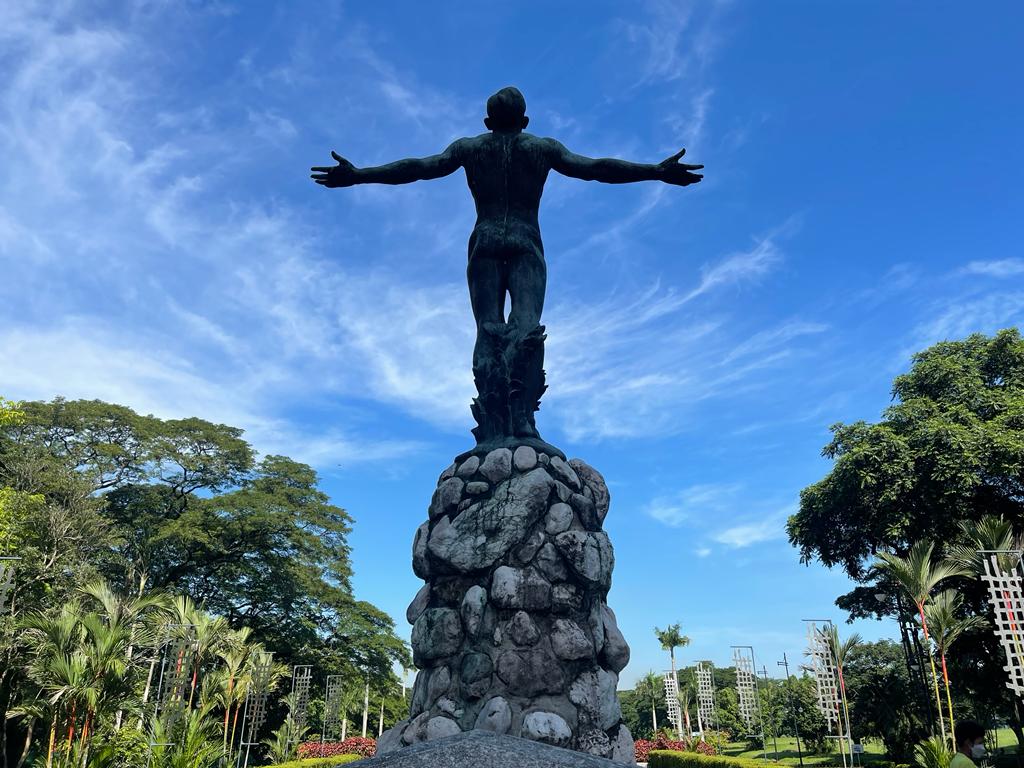
Photo: The Varsitarian

University of the Philippines remains the top ranked institution in the Philippines, despite dropping out of the top 400 for the first time since 2023. It is followed by Ateneo de Manila University and De La Salle University in 477th and 547th, respectively.

The Philippines is represented 11 times in the ranking, up from eight last year. Among these, four fall, three hold their positions and one climbs. Three institutions from the Philippines enter the ranking this year.

Philippines Performance in a Global Landscape

Overall, 214 universities from the United States feature in the ranking, followed by Mainland China with 149 and the United Kingdom with 105, down from 109 in 2026. Some 44 systems globally have more entries that thePhilippines, which has 11 and is joint with Finland, Hong Kong SAR and Ireland. 

However, only six higher education systems have more new entries this year: Türkiye has 12, Republic of Korea 10, India nine, Mainland China seven, and Pakistan and Indonesia each have four.

Jessica Turner, CEO of QS, said, “The QS World University Rankings: Sustainability are designed to encourage higher education institutions worldwide to consider their social and environmental impact as centres of education and research, as well as the operational sustainability challenges as major employers.

“Universities in The Philippines have shown this year that they remain committed to this important mission. However, while there are some outstanding individual achievements, such as University of the Philippines rising into the top 100 in Equality and De La Salle University climbing into the top 150 in Environmental Sustainability, the results suggest that global peers are outpacing institutions in the Philippines in key areas. Health and Wellbeing and Environmental Research are two areas where rivals are outperforming the Philippines, with no Filipino entry among the top 1000,” Turner added 

“The universities that are performing well are measuring their impact across social, environmental and governance and are now collecting data that demonstrates their commitment to sustainability.”

Philippines Spotlight

The three leading institutions in the Philippines all drop since the 2026 ranking, declining in the social impact and governance categories, as well as in environmental education and environmental research indicators.

University of Santo Tomas is the only entry to rise since last year, with three debutants all appearing in the 1501+ range.

The Philippines Performance: Deep Dive

Across the three categories the sustainability rankings measure, De La Salle University rises to 397th and top in the Philippines in the Environmental Impact category, closes followed by Ateneo de Manila University which climbs to 427th. In Governance, University of Santo Tomas rises into the top 500 and is top nationally, ranking 423rd. 

In Social Impact, University of the Philippines remains top nationally, despite dropping 16 places to 433rd. The institution is top in six other indicators or categories.

The QS methodology for the World University Rankings: Sustainability is based on university performance across three assessment categories: 

Social Impact (45% - Aggregating five indicators: Equality, Knowledge Exchange, Impact of Education, Employability & Outcomes and Health & Wellbeing)

University of Santo Tomas rises into the top 300 in Equality, climbing 84 places to rank 276th.

University of the Philippines climbs 48 places to rank 59th in Knowledge exchange – the only entry from Philippines to rank among the top 700 in the area.

Health and Wellbeing is one of the biggest challenges for the Philippines’s system, with the average score of 42.8 far behind the overall average of 62.4.

Environmental Impact (45% - Aggregating three indicators: Environmental Sustainability, Environmental Education and Environmental Research)

De La Salle University climbs 180 places to rank 138th in Environmental Sustainability.

In Environmental Education, peers are improving at a faster pace than Filipino institutions.

The University of the Philippines improved its score from 87.9 in 2026 to 89.5 this year while Ateneo de Manila University improved from 84.2 to 88.9 – however, they dropped by 36 and 18 places, respectively, as rivaling institutions improved at a faster pace.

Environmental Research remains a challenge for the Philippines, with no entry ranking among the top 1000 globally.

Governance (10% - Considering factors related to good governance: ethics, hiring practices, transparency, decision making etc.)

University of Santo Tomas is the only institution from the Philippines to rise in this area, rising to 423rd. It is the only university from the Philippines to appear among the top 500 for Governance. Despite this drop in ranking among institutions from the Philippines, all eight institutions that appeared last year, improved their scores in the area. The challenges is for the institutions to improve at a faster pace than peers.


Saturday, 17 October 2026

Two Filipino inventions reach top 20 of James Dyson Award 2026

Two Filipino inventions reach top 20 of James Dyson Award 2026

Kim Purificacion
Noypigeeks (noypigeeks.com)
October 17, 2026

For the first time, two Philippine entries have entered the Global Top 20 of the James Dyson Award 2026. BiDaKidney and Sentinel now head to the final judging stage, where Sir James Dyson will choose the winners. Results come out on 4 November, with Php2,390,230 going to the winning inventions.

BiDaKidney

UP Diliman graduates Andrew Jacob Buensalido and Allyson Cabrestante built this low-cost, semi-automated peritoneal dialysis machine for home use.


Dialysis demand is rising. In 2024, 64,845 Filipinos received treatment, a 22 percent jump from 53,296 in 2023. Home peritoneal dialysis is tough on patients and families. It requires multiple tube exchanges daily, careful fluid monitoring, and manual record-keeping. These tasks are draining and increase contamination risk.

BiDaKidney takes over key steps while still using standard supplies. A pump pushes dialysis fluid through the tubing, weight sensors measure fluid transfer, and a dual-tube clamp controls flow to stop leaks and backflow.

Andrew’s sister, a government hospital worker, described patient conditions during dialysis, sparking the idea. Over two semesters, the pair turned sketches and 3D models into a working prototype, fine-tuning the pump, sensors, clamp, and controls through repeated tests.

Sentinel

DLSU graduate Aldrei Ong created Sentinel, which converts an ordinary concrete spacer block into a sensor. It emits measurable electrical signals when concrete breaks, allowing earlier remote detection of structural damage.


A major Metro Manila earthquake could kill about 34,000 people, injure over 100,000, and destroy more than 170,000 homes. Once the shaking ends, thousands of buildings need inspection before people can return. Visual checks and physical tests take days or longer and cost heavily. This slows reopening and hides unseen risks.

Sentinel uses self-sensing concrete. Conductive materials form electrical paths inside the block, and damage alters the signal. Embedded electrodes link the block to a compact device that compares readings and sends major changes to an online dashboard. Engineers get an early warning that a structure may need closer inspection.

Each block costs roughly Php10, or $0.15, to produce. This makes structural sensors affordable for more buildings. Blocks are already installed at the St. Margaret Mary Alacoque building of the National Shrine of the Sacred Heart for field testing.

Aldrei said structural safety should not be an afterthought once disaster strikes. He said the award gives Sentinel a platform to prove earlier, more accessible monitoring is achievable.

Michael Recinto, Senior Engineering Manager at Dyson and a Top 20 judge, called the feat a landmark for the Philippines. He said it reflects the country’s maturing innovation ecosystem and shows young Filipino inventors can compete globally. 

Tuesday, 6 October 2026

Philippines to position itself as Asia's next clinical research hub

Philippines eyes role as Asia’s clinical research hub

Logan Kal-El M. Zapanta 
Inquirer.net
06 October 2026

MANILA, Philippines — The Philippines is seeking to position itself as Asia’s next clinical research hub, with a new center of excellence targeted to open in Manila within the year through a partnership with British Swedish pharmaceutical giant AstraZeneca.


The planned Clinical Trial Centre of Excellence is being developed by AstraZeneca with De La Salle University (DLSU), the Department of Science and Technology and the Philippine Economic Zone Authority (Peza).

t will be established within the DLSU Knowledge, Innovation, Science and Technology Zone and serve as the first of three planned pillars of a broader health ecosystem, alongside a Cancer Command Centre and a Cardio-Renal-Metabolic Centre.

The Department of Trade and Industry said it would work with AstraZeneca and other government and academic partners to streamline regulatory approvals and explore a one-stop-shop model to support clinical research.

Currently, AstraZeneca supports more than 28 ongoing and planned clinical trials across over 150 sites nationwide, involving more than 1,000 Filipino patients enrolled since 2022.

AstraZeneca has invested more than P3 billion in Philippine clinical trials over the past six years, covering research in areas including oncology, respiratory and immunology, and cardiovascular, renal and metabolic diseases.

The company has also partnered with AC Health and its Healthway Medical Network to expand clinical trial capabilities to more hospitals, including facilities outside traditional research centers.

Trade Secretary Cristina Roque said expanding the industry could create higher-value employment for doctors, nurses, researchers and other health professionals while giving more patients access to clinical research.

“Just as we built the IT-BPM industry from call centers into a globally competitive knowledge-services sector, we see clinical research and health information management as the Philippines’ next growth industry,” Roque said.

Separately, AstraZeneca and Peza are developing a proposed Multi-Stakeholder Health Innovation Hub within the economic zone network following an agreement signed in August 2025.

Its flagship Oncology Innovation Center is envisioned to use artificial intelligence for early lung cancer detection while expanding patient-support systems and strengthening health-care workforce capabilities.

The initiatives were discussed during Roque’s visit to AstraZeneca’s Discovery Centre in Cambridge, United Kingdom. INQ

Thursday, 26 March 2026

Philippine universities held steady positions in the 2026 QS World University Rankings

UP, Ateneo, La Salle hold ground in 2026 QS rankings

SHERYLIN UNTALAN,
GMA Integrated News 
26 March 2026

Philippine universities held steady positions in the 2026 QS World University Rankings by Subject, with leading institutions maintaining their global brackets in English and improving placements in broader fields such as Arts and Humanities. 


The latest rankings, released by Quacquarelli Symonds (QS), assessed more than 21,000 academic programs from around 1,900 institutions across 100 countries, covering 55 disciplines grouped into five major subject areas.

English Language and Literature

In English Language and Literature, three Philippine universities retained their 2025 global brackets:

University of the Philippines (UP) remained in the 151–200 bracket, with an academic reputation score of 63 and a global rank of 153.

Ateneo de Manila University stayed within the 201–250 bracket, posting an academic score of 58.3 and rank 226.

De La Salle University (DLSU) also held its position in the 201–250 bracket, with an academic score of 59 and rank 211.

These results supposedly indicate relative stability among the country’s top universities in humanities-driven disciplines, even as global competition intensifies.

Arts and Humanities

In the broader Arts and Humanities category, Philippine universities showed notable improvements:

UP climbed to rank 257, up from 331 in 2025, with an academic reputation score of 70.2.

Ateneo improved to rank 333, from 345 previously.

DLSU advanced to rank 365, rising from the 401–450 bracket last year.

The upward movement reflects strengthening recognition of Philippine institutions in interdisciplinary humanities research and teaching.

Global trends: Asia-Pacific on the rise

QS noted that the 2026 subject rankings reflect shifting dynamics in global higher education.

Northern America remains the most represented region overall, but Asia-Pacific systems are gaining ground.

Southern Asia (40%) and Southeast Asia (38%) recorded some of the highest proportions of institutions moving up in the rankings.

Emerging fields are also reshaping the landscape. Computer Science and Information Systems and Medicine remain the most widely ranked subjects, while Data Science and Artificial Intelligence saw the highest number of new entries.

Meanwhile, more established regions, including Eastern Europe and Eastern Asia, posted higher shares of institutions moving down the rankings, signaling increased global competition.

Despite limited movement in English studies, the improved standings of Philippine universities in Arts and Humanities highlight gradual progress in global academic reputation.

The 2026 results underscore a broader trend: while traditional education hubs remain dominant, universities in developing regions—including Southeast Asia—are steadily gaining visibility in international rankings.—MCG, GMA Integrated News

Thursday, 19 June 2025

Adamson and Mapua universities secured spot in World University Ranking 2026

Adamson, Mapua make debut in 2026 QS World University Rankings

SHERYLIN UNTALAN
GMA Integrated News
19 June 2025

Six Philippine universities have secured spots in the latest Quacquarelli-Symonds (QS) World University Rankings 2026 as two more educational institutions made a debut. 


Adamson University and Mapúa University entered the global rankings for the first time.

Adamson landed in the 1,001–1,200 bracket while Mapúa was listed in the 1,401+ —joining the ranks of leading institutions worldwide and expanding the country’s academic presence on the global stage.

“This remarkable achievement reflects our unwavering commitment to quality education, global standards, and Vincentian excellence—ensuring accessible, transformative learning for all,” Adamson University said in a statement.

“Together, let’s continue to strive with purpose, serve with heart, and soar even higher as we shine brighter on the world stage.”

Mapúa University also celebrated the milestone in a Facebook post.

"Mapúa University makes a historic debut in the 2026 QS World University Rankings, securing a spot among the world’s top institutions… This milestone is a powerful testament to our unwavering commitment to global excellence in education,” it said.

While new entrants made headlines, the country’s “Big Four” universities continued to lead the national standings.

The University of the Philippines remained the country’s highest-ranked university, placing 362nd globally despite slipping from 336th last year.

Ateneo de Manila University recorded the only upward movement among Philippine schools, rising slightly to 511th from 516th worldwide.

“This latest performance in the QS World Rankings is a testament to the dedication and excellence of the entire Ateneo community,” said Ateneo president Fr. Roberto Yap, SJ in a statement.

“It affirms that Ateneo can stand alongside the world’s leading institutions—not just in academic reputation, but in making a meaningful impact through teaching, research, and service.”

De La Salle University (DLSU) placed third among Philippine schools at 654th, a slight drop from its previous placement in the 641–650 bracket.

The University of Santo Tomas (UST) held firm in the 851–900 bracket, maintaining its status as the fourth highest-ranked Philippine university. UST also posted an improved overall score of 19.9, with gains across all ten QS performance indicators.

The QS World University Rankings assesses institutions across a range of criteria, including academic reputation, employer reputation, faculty-student ratio, research impact measured through citations per faculty, and internationalization through faculty and student diversity. Additional metrics now also consider sustainability and institutional impact.—AOL, GMA Integrated News

Friday, 24 January 2025

6 Philippine universities in world rankings

6 Philippine universities in world rankings

Neil Jayson Servallos 
The Philippine Star 
January 24, 2025

MANILA, Philippines — Six Philippine universities earned spots in Times Higher Education (THE)’s World University Rankings by Subject, missing only one out of 11 disciplines rated this year.


The University of the Philippines, Ateneo de Manila University, De La Salle University (DLSU), University of Santo Tomas, Mapua University and Mindanao State University – Iligan Institute of Technology (MSU-IIT) earned spots in all subjects except Law.

Under Arts and Humanities, Business and Economics, only UP and DLSU earned rankings and shared spots for each subject at the 601+ and 801+ brackets, respectively.

Both universities were also the only institutions that earned rankings in the Medicine and Health subject, with UP emerging at the top locally at the 501-600 spot.

UP was the lone school to be ranked within the Life Sciences at the 801-1000 bracket.

Mapua emerged as the top Philippine school in Computer Science and Engineering, ranking within the 801-1000 and 1001-1250 brackets, respectively. Under the same subjects, UP and DLSU shared the No. 2 spot.

DLSU was the top Philippine university in Education studies at the 401-500 spot, followed by UP and UST at the 501-600 bracket. DLSU also topped the ranking among local universities in Psychology at the 401-500 spot, followed by Ateneo at 501-600.

Under Physical Sciences, only UST did not receive a ranking. Mapua and MSU-IIT earned rankings within the 801-1000 bracket, followed by UP, Ateneo and DLSU at the 1001+ bracket.

UP, Ateneo and DLSU landed on the same spots globally in Social Sciences at the 801-1000 bracket.

The rankings were based on key indicators submitted by each university during the academic year 2022, THE said.

Key indicators included research quality, industry, international outlook, research environment and teaching.

‘UP Best performing’

Most Filipinos perceive the University of the Philippines as the “best university” in the country, a survey conducted by the OCTA Research group showed.

The survey, conducted from Nov. 10 to 16, found that 71 percent of the respondents perceiving UP as the best university in the Philippines.

Some 15 percent selected DLSU, while 14 percent chose Ateneo de Manila.

The respondents were asked to select among the three universities or provide a different answer.

Less than one percent chose “others,” the survey results showed.

Based on the poll, UP was perceived as the “best performing” university in the country across all geographic areas and socio-economic indicators.

OCTA, whose founders include several UP professors, said it released the survey results to UP as a public service.

The survey was non-commissioned and had 1,200 respondents and a margin of error of plus/minus three percent. – Janvic Mateo

Tuesday, 9 July 2024

DLSU: Philippines can achieve upper middle-income economy status this year 2024

No need to wait long: Upper-middle economy status coming this year —DLSU

Story by Alden M. Monzon 
Inquirer.net
09 July 2024

The Philippines can achieve upper middle-income economy status this year, earlier than the government’s projection that such status is attainable only by 2025, according to the De La Salle University (DLSU).


The forecast was made using DLSU’s software ANIMO Annual Model version 2.0, which calculated that the country’s gross national income (GNI) per capita would hit $4,572.86 by the end of this year.

“We have the exchange rate depreciating. So, in a sense, the numerator is smaller. Also, the population growth is lower,” Mariel Monica Sauler, an associate professor at the DLSU Department of Economics, told the Inquirer on the sidelines of a briefing organized by the university at the Makati Diamond Residences.

GNI per capita, or the total amount of money earned by a country’s people and businesses, is computed by converting the GNI to US dollars and dividing it by the population.

The Philippines has languished in the lower middle-income group of economies since 1987, making 37 long years of trying to expand its economy in step with population growth. This is the classification for economies with per capita GNI of between $1,146 and $4,515.

According to the latest classification from the World Bank, upper middle-income economies deliver a per capita GNI of at least $4,516 to as much as $14,005.

Beyond 2024, DLSU has projected that the country’s per capita GNI would rise to $4,892.85 next year, $5,225.09 in 2026, $5,521.59 in 2027 and $5,9191.40 in 2028.

To speed up its economic progress, DLSU economics professor Jesus Felipe said the Philippines should put more focus on its manufacturing sector and modernize the agriculture industry.

“We lack firms that produce products that compete in international markets. We need an industrial policy centered on the creation of competitive firms that make high-quality products,” he added. INQ

Wednesday, 5 June 2024

UP is Philippines’ top university in 2025 QS world rankings

UP is Philippines’ top university in 2025 QS world rankings

Adrian Parungao
Inquirer.net
05 June 2024

MANILA, Philippines — The University of the Philippines (UP) was named the Philippines’ top-performing university in the 2025 edition of the Quacquarelli Symonds (QS) World University Rankings.


In the results posted on Tuesday, UP ranked 336th among more than 1,500 universities worldwide.

Previously, UP ranked 404th in the 2024 edition.

Meanwhile, UP was followed by the Ateneo de Manila University at 516th, while the De La Salle University placed at the 641-650 bracket.


The University of Santo Tomas was included in the rankings at the 851-900 bracket, and the University of San Carlos ranked 1401+.


In Asia, the National University of Singapore was the top-performing university, followed by Peking University, and Nanyang Technological University.

Listed below are the top ten universities worldwide:

  1. Massachusetts Institute of Technology
  2. Imperial College London
  3. University of Oxford
  4. Harvard University
  5. University of Cambridge
  6. Stanford University
  7. ETH Zurich
  8. National University of Singapore
  9. University College London
  10. California Institute of Technology

According to QS, some of the metrics that it uses into its rankings are the sustainability, employment outcomes, and the international research network of the university.

QS is an international higher education network analyst based in London, United Kingdom.

Thursday, 11 April 2024

UP makes it to 2024 QS World University Rankings

UP makes it to 2024 QS World University Rankings in 3 subjects

Story by Adrian Parungao
Inquirer.net
11 April 2024

MANILA, Philippines — The University of the Philippines (UP) ranked among the top universities in the world in the 2024 edition of the Quacquarelli-Symonds (QS) World University Rankings by Subject.


In the results published on April 10, three Philippine universities placed in one out of four subject disciplines of the QS, while only UP ranked in 2 other subjects.

For the Arts and Humanities subject, Ateneo de Manila University was the best university in the Philippines with a 325 rank and a score of 65.6, followed by UP at rank 351 and a 64.8 score, and De La Salle University at rank 401-450.

UP was the sole Philippine university that ranked in the Engineering and Technology subject as well as the Life Sciences and Medicine subject, placing 501-550 for both subjects.

Meanwhile, no Philippine universities made it to the Natural Sciences subject ranking.

The following are the best universities in the world per subject as ranked by the QS:

Arts and Humanities

  1. Harvard University
  2. University of Cambridge
  3. University of Oxford
  4. Stanford University
  5. University of California, Berkeley
  6. Yale University
  7. Massachusetts Institute of Technology
  8. New York University
  9. University of California, Los Angeles
  10. UCL, University of Toronto

Engineering and Technology

  1. Massachusetts Institute of Technology
  2. Stanford University
  3. University of Oxford
  4. University of Cambridge
  5. University of California, Berkeley
  6. ETH Zurich
  7. Imperial College, London
  8. Harvard University
  9. California Institute of Technology
  10. École polytechnique fédérale de Lausanne

Life Sciences and Medicine

  1. Harvard University
  2. University of Oxford
  3. John Hopkins University
  4. Stanford University
  5. Massachusetts Institute of Technology
  6. University of Cambridge
  7. Imperial College, London
  8. University of California, San Francisco
  9. UCL
  10. Karolinska Institutet

Natural Sciences

  1. Harvard University
  2. Massachusetts Institute of Technology
  3. University of Oxford
  4. University of Cambridge
  5. Stanford University
  6. California Institute of Technology
  7. University of California, Berkeley
  8. ETH Zurich
  9. Imperial College, London
  10. Princeton University