Showing posts with label Siargao. Show all posts

Saturday, 7 November 2026

EuroNews tackles the Philippines

A trip to the Philippines offers hidden gems, slow food and colourful events

Fakhriya M. Suleiman
EuroNews 
07 November 2026

An archipelago of more than 7,000 islands in Southeast Asia, the Philippines offers everything from coastline and tropical rainforests to volcanic peaks.

Speaking to Euronews Travel at World Travel Market in London, Marga Nograles, COO at Tourism Promotions Board Philippines, described the country as tropical, and one that welcomes visitors in every season.


There is an “authentic experience for every traveller” at any time of the year, Nograles said. “From December to May, we have whale watching activities, which can be done in four destinations around the Philippines. Around that time also, we [have] perfect island hopping experiences, [for travellers] visiting all our award-winning beach resorts.”

For adventure tourists, she recommended visiting Siargao Island from September to January for watersports when waves can reach as high as around nine feet.

Surfing at Cloud 9 | Siargao

“We have many surfers coming into the Philippines at that time,” she said. “That is also the best for canyoneering and doing the sardine run.”

The Ruins in Bacolod | Tourism Promotions Board Philippines

Hidden gems in the Philippines

Beyond the capital, Manila, Nograles shared the Philippines’ must-visit destinations.

“Siquijor remains one of our hidden gems, with beautiful beaches, waterfalls, and rich local tradition,” she said.

Cambugahay Falls | Siquijor

The third smallest province across the country, Siquijor features white sand beaches, crystal clear waters and rich marine biodiversity. Visitors can enjoy kayaking, trekking and snorkelling in the Caticugan Marine Protected Area, among other popular activities to do on the island.

In Pampanga, Nograles recommended Clark for being an accessible getaway and an area that has a “rich history, exciting culinary culture, and growing leisure opportunities”.

She also spotlighted how Camiguin, an island home to 14 volcanoes, was listed among The New York Times’ 52 Places to Go in 2026, making it the only province in the Philippines to receive such international distinction.

Camiguin Island

“Its volcanic landscapes, waterfalls and natural springs make it a wonderful destination for nature and adventure,” she said.

The coastal country offers visitors no shortage of seafood dishes Avel Chuklanov/Unsplash

Food tourism: Where to eat in the Philippines

Nicknamed the “heart of the Philippines”, Iloilo City was named as a Creative City of Gastronomy in 2023 by UNESCO and is home to more than 300 restaurants.

"It's very interesting to come visit because their cuisine is heavily inspired by the culture and traditions of that city," Nograles said.

UNESCO recognises Iloilo for its culture of "fiesta" and tradition of festive banquets. Since 2021, the province has also held Timplada, an event that showcases local cuisine. This includes educational activities focused on Iloilo culinary heritage.

Bacolod, an urbanised city on the northwest coast of Negros Island, became the first international Slow Food Hub in Asia and the Pacific, according to the Slow Food Foundation.

“Bacolod City is a slow food hub in Asia and the centre for sustainable gastronomy,” said Nograles. “Negros Occidental also is the organic capital of the Philippines.”

She recommends visiting Carbin Reef in Negros Occidental. It’s a sandbar where visitors can sample "kinilaw", which is a traditional Filipino seafood dish where raw fish is marinated in vinegar, diced into cubes and accompanied with tomato, red onions, ginger and lemon zest.

MassKara Festival in Bacolod Sherwin Ballesteros |Tourism Promotions Board Philippines

Colourful celebrations of faith, flowers and harvest

Nograles told Euronews Travel that the country hosts more than 40,000 festivals each year. And there are three in particular that she highlights for travellers.

“First is the Sinulog, which is in Cebu in the Visayas,” she said. “Sinulog is a celebration of faith. In the Philippines, they celebrate the Señor Santo Niño (the Holy Child Jesus).

Sinulog Festival | Cebu

"During this time, the whole city stops because everyone is celebrating in the streets. They take out their boats. And everyone has their face painted. The energy is unlike any other.”

In the southern city of Davao, the Kadayawan Festival is a celebration of harvest. “There are different concerts, also street dancing,” she said. “[There are] also the freshest fruits around that time so, we also get a lot of visitors coming in – so it would be nice to come visit and try the fruits of the south of the Philippines.”

Kadayawan Festival | Davao 

Further north of the archipelago is where the month-long Panagbenga Festival takes place. "That is a celebration of the flowers," she said. "So all kinds of flowers are in bloom up the mountains during that time."

Panagbenga Festival | Baguio 


Friday, 30 October 2026

PH's Siargao to host World Surf League championship

Philippine hosts surfing’s premier Championship Tour event

Caecent No-ot Magsumbol 
The Freeman 
October 30, 2026

CEBU, Philippines — The gods and goddesses of the waves are headed to Siargao as Olympic gold medalists, world champions and some of surfing’s biggest names will descend on Cloud 9 from today, October 30, to November 8 for the World Surf League (WSL) Philippines Pro Championship Tour.

This is the first time the Philippines will host the sport’s premier Championship Tour event.

The star-studded field features some of the most accomplished surfers in the sport.

Leading the men’s division are Brazilian stars Italo Ferreira, the 2019 WSL world champion and surfing’s first Olympic gold medalist; Gabriel Medina, a three-time world champion and one of Brazil’s most celebrated surfers; and Filipe Toledo, a two-time world champion.

Also competing are Brazil’s Yago Dora and Miguel Pupo, Italy’s Leonardo Fioravanti, and Japan’s Kanoa Igarashi, underscoring the global stature of the event.

The women’s field is equally formidable.

Headlining the draw are Caroline Marks of the United States, a former world champion and Olympic gold medalist; Australia’s Molly Picklum, rising talent Erin Brooks; Hawaii’s Gabriela Bryan; and veteran campaigner Lakey Peterson.

For the Philippines, the event is being billed as more than a surfing competition.

Philippine Sports Commission Chairman Patrick Gregorio, who also chairs the National Sports Tourism Inter-Agency Committee (NST-IAC), said the tour showcases the country’s growing position as a sports tourism destination.

“Sports tourism is more than staging competitions. It is a powerful platform that showcases destinations, drives local economies, inspires communities, and places the Philippines on the global map,” Gregorio said.

Three Filipinos will carry local hopes before a global audience, led by Siargao standout and “King of Cloud 9” John Mark “Marama” Tokong, alongside Jayuard Alciso and Mara Lopez.

The hosting of the Championship Tour is aligned with Administrative Order No. 38 signed by President Ferdinand Marcos Jr., which created the NST-IAC to strengthen the country’s position as a destination for international sporting events.

Organizers flash the shaka or “hang loose” hand sign to convey the the “Aloha spirit,” during the launching of the World Surf League Championship Tour event at the Philippine Sports Commission office in Manila on Wednesday, July 15, 2026. | Philippine Sports Commission photo

William Vincent “Vinny” Araneta Marcos, Philippine Sports Ambassador and a key supporter of local surfing, said the event presents a rare opportunity to showcase both Filipino athletes and the country’s world-class surf breaks.

“The waves have always been here. The talent has always been here,” Marcos said.

“Bringing the WSL Championship Tour to the Philippines is the perfect opportunity to finally show the world what Filipinos have known all along: the Philippines has everything the world is looking for. Siargao will be unforgettable,” he added.

Gregorio described the arrival of surfing’s premier circuit as a watershed moment for the sport in the country.

“This will be a historic moment for Philippine surfing, and the arrival of the Championship Tour will usher the sport into an exciting new era,” he said.

The event is expected to generate worldwide exposure for Siargao, long regarded as one of the world’s premier surf destinations, while boosting tourism and local economic activity.

Gregorio also thanked WSL Chief Executive Officer Ryan Crosby and WSL Asia Pacific President Andrew Stark for their confidence in the country’s surfing potential and for choosing Siargao to host the milestone event.

“Let it inspire a new generation of athletes. Let the world discover not just our waves, but the vision, ambition, and heart of the Filipino people,” he said.


Monday, 13 October 2025

Three PH islands among Asia's top islands in Conde Nast Traveler 2025

Boracay, Palawan, Siargao voted among Asia's 'top islands' in Condé Nast Traveler

GMA Integrated News
13 October 2025

Three Philippine islands, namely Boracay, Palawan, and Siargao, have once again made it to Condé Nast Traveler's (CNT) Top 10 Islands in Asia in its 2025 Readers' Choice Awards.

As seen on the US-based luxury and lifestyle travel magazine's website, Boracay ranked fourth with a score of 90.54, while Palawan landed fifth with 90.23. Siargao, meanwhile, took the seventh spot, earning 85.49 points.

Here is the complete list of Condé Nast Traveler's Top 10 Islands in Asia for 2025:

  • Phú Quoc, Vietnam 95.51
  • Langkawi, Malaysia 92.99
  • Koh Samui, Thailand 92.7
  • Boracay, Philippines 90.54
  • Palawan, Philippines 90.23
  • Bali, Indonesia 89.84
  • Siargao, Philippines 85.49
  • Andaman Islands, India 85.33
  • Phuket, Thailand 84.62
  • Phi Phi Islands, Thailand 83.27

According to CNT, over 700,000 readers have cast their votes in the annual Readers' Choice Awards survey.

In 2024, Boracay, Palawan, Cebu, and Siargao were voted CNT's Top 10 islands in Asia, placing third, sixth, eighth, and 10th, respectively.

Boracay, located in the municipality of Malay, Aklan, is renowned for its pristine white beaches and stunning sunsets.


Palawan, an archipelagic province located in Southern Luzon, is known for its crystal-clear waters, lush tropical landscapes, and idyllic white-sand beaches and has long been celebrated for its responsible and sustainable tourism practices.


Meanwhile, Siargao, located in Surigao del Norte province, is a surfer's paradise and a favorite among the global surfing community.


 —Hermes Joy Tunac/MGP, GMA Integrated News

Thursday, 15 May 2025

Experience the beauty of the Philippines

30 reasons to visit the Philippines

Stars Insider
15 May 2025

With over 7,000 tropical islands to choose from, the Philippines affords travelers some of the best beach holiday options in the world. But this archipelagic nation in Southeast Asia is also renowned for an amazingly varied interior landscape of smoldering volcanic mountains, dense verdant forests, emerald rice fields, and hundreds of pristine lakes and lagoons. Coupling a 500-year-old cultural heritage with a globally significant level of biodiversity, the country is indeed one of the most enticing tourism destinations on the planet.

Browse through this gallery for 30 reasons why you should start planning your Philippines vacation now.

Palawan Island (Palawan)

©Shutterstock 

The largest island of the province of Palawan has often been cited by travel pundits as the most beautiful island in the world for its abundant wildlife, jungle-clad mountains, and remote powder-white beaches. The entire length of the island forms a mountain range, its forests and grasslands home to many endemic species of birds and animals.

Apo Island (Negros Oriental)


©Shutterstock 

The marine habitat around the island of Apo, in Negros Oriental province, is a popular dive site and snorkeling destination. The island is home to over 650 documented species of fish and other marine creatures, including the protected sea turtle.

Siargao Island (Surigao del Norte)

©Shutterstock 

Siargao Island is moored among numerous other islands and islets and lies within the province of Surigao del Norte. Siargao is renowned for its watersports options, perhaps most famously Cloud 9, one of the top surfing spots in the Philippines.

Philippine Tarsier and Wildlife Sanctuary (Bohol)


©Shutterstock 

Located on the island of Bohol, the Philippine Tarsier and Wildlife Sanctuary is effectively a forested area dedicated to the protection of the tarsier, a ridiculously cute and small nocturnal primate with big, round eyes. These tiny creatures (one of the world's smallest primates), are shy, delicate, and emotionally sensitive. Visitors to the sanctuary are therefore asked to lower their voices and move slowly and carefully.

Banaue (Ifugao)


©Shutterstock 

Resembling ripples of emerald-colored velvet, the rice terraces of the Philippine Cordilleras include the Batad rice terraces (pictured) and the Bangaan rice terraces, both found in Banaue in the province of Ifugao. These terraces are believed to have been hand-carved into the mountains 2,000 years ago to plant rice, and are the main tourist sites in the region.

Mambajao (Camiguin)


©Shutterstock

Aim to be in Mambajao in Camiguin province through October for the riotously colorful Lanzones Festival, a four-day celebration in honor of the lanzones tree and its fruit.

Coron Island (Palawan)


©Shutterstock 

Coron Island lies within the Calamian Islands group in northern Palawan. Its clear azure waters provide underwater visibility extending up to 24 m (80 ft), which attracts divers from all over the world keen to explore the Second World War wrecks the destination is famous for. Ecotourism thrives on Coron, its lakes and lagoons among some of the cleanest in Southeast Asia.

Vigan (Ilocos Sur)


©Shutterstock

The delightful city of Vigan, the capital of the province of Ilocos Sur, should be explored at leisure. Fusing colonial Spanish architecture with that of native Philippine and Oriental building designs and construction, the destination's streets, plazas, and heritage buildings are a pleasure to discover.

Asik-Asik Falls (Cotabato)


©Shutterstock 

Incredibly, this wondrous waterfall was only discovered in 2010. Asik-Asik means "sprinkle sprinkle" in the local Hiligaynon language, though after heavy rain the waters can turn into a cascade. The previously hidden waterfall is located near the village of Sitio Dulao, in the mountainous Alamada region of Cotabato province.

Oslob (Cebu)


©Shutterstock 

Oslob on Cebu Island is renowned for its whale sharks. A good spot for sightings is Sogod Bay, and the best time of the year is from November through May, when these gentle giants migrate through the area. While observing whale sharks from boats on the water's surface is perfectly acceptable (pictured), resist the temptation to swim with them. The whale shark is a protected species and it is illegal to harass them.

MassKara Festival (Negros Occidental)


©Shutterstock 

One of the most eagerly anticipated of all Philippine festivals is the colorful and exotic MassKara Festival. Held annually in Bacolod on the fourth Sunday of October, the event is influenced by the Carnival of Venice and the Rio Carnival.

Mayon Volcano (Albay)


©Shutterstock 

The near-perfect cone of the Mayon Volcano, the most active volcano in the Philippines, is a cherished landmark. It looms large, 2,463 m (8,081 ft), over the island of Luzon.

Manila


©Shutterstock 

Chances are you'll enter the Philippines via Manila, the country's busy and densely populated capital city. Founded by Spanish conquistadors in 1571, Manila today packs a historic and cultural punch. Spend a few days exploring its many neighborhoods including Binondo and Makati (pictured), Manila's modern shopping hub.

Taal Lake (Batangas)


©Shutterstock 

Taal Lake surrounds the exposed cone of Taal Volcano, itself filled to the brim with what looks like green tea. The freshwater crater lake is found in the province of Batangas, on the island of Luzon. Regular tours of the lake are available to tourists. After crossing the lake, visitors travel to the top of the volcano island on horseback for incredible views like this one.

El Nido (Palawan)


©Shutterstock 

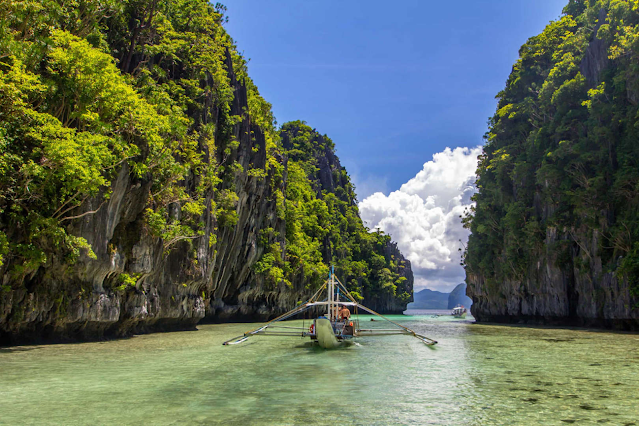
El Nido region, in the northernmost tip of mainland Palawan, boasts one of the most diverse ecosystems in the Philippines, and is protected for its unique flora and fauna, and pristine geologic formations. This includes over 50 spotless white sand beaches and a network of shallow lagoons (pictured).

Hundred Islands National Park (Pangasinan)


©Shutterstock 

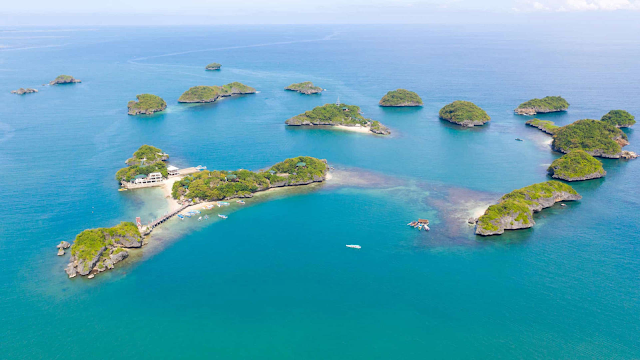
In fact totaling 124 islands, this outstanding national park is located in Pangasinan province, in the northern Philippines. This is the place for island-hopping, so why not jump in a bangka (native watercraft) and explore the reefs and golden beaches at leisure? Remember to pack snorkeling gear!

Corregidor Island (Cavite)


©Shutterstock 

Corregidor is one of the most important historic sites in the Philippines. During the Second World War, it was the location of two costly sieges and pitched battles—the first during the first months of 1942, and the second in January 1945—between the Imperial Japanese Army and the US Army. The ruined army barracks and military installations defended by the Americans serve as part of the Pacific War Memorial complex.

Tubbataha Natural Park (Palawan)


©Shutterstock 

The uninhabited Tubbataha islands and reefs in the middle of the Sulu Sea rank among some of the best diving sites in the world. The park is a unique example of an atoll reef with a very high density of marine species. As a center of marine biodiversity, Tubbataha contains 75% of the described coral species and 40% of the world's reef fish.

Magellan's Cross (Cebu)


©Shutterstock 

A cross of tindalo wood said to encase the original cross planted by Portuguese explorer Ferdinand Magellan on April 21, 1521 is housed in a chapel next to the Basilica Menor del Santo Niño in Cebu City. On April 27, six days after planting the cross, Magellan was killed at the Battle of Mactan.

Batanes (Batanes)


©Shutterstock 

This archipelagic province in the country's northernmost Cagayan Valley region is appreciated for its verdant pastoral landscape, a hilly and mountainous environment that some travelers say remind them of New Zealand. The province's three largest islands, Batan, Itbayat, and Sabtang, are the only inhabited islands. Incidentally, the Japanese incursion of the Philippines during the Second World War began with the invasion of Batan Island, on December 8, 1941. Pictured is the Basco lighthouse. Its viewing deck is the perfect place to take in the whole of Batan Island.

Fort San Pedro (Cebu)


©Shutterstock 

Built by the Spanish and dating back to 1738, this is the oldest triangular bastion fort in the Philippines. It's located in Cebu City, on Cebu Island, where the first Spanish settlement was established. Its sturdy weathered walls house an engaging museum that preserves all sorts of documents and artifacts relating to Spanish colonial rule.

Philippine Eagle (Mindanao)


©Shutterstock 

Endemic to the country's forests, the Philippine eagle is the country's national bird. This majestic raptor, one of the rarest and most powerful birds in the world, is critically endangered, so spying one circling above the canopy will be a real privilege.

Puerto Princesa Subterranean River National Park (Palawan)


©Shutterstock 

The Puerto Princesa Subterranean River National Park was voted as a New7Wonders of Nature in 2012 for its unbeatable biodiversity and the fact that the river flows directly into the sea, with its brackish lower half subjected to tidal influence, distinguishing it as a significant natural global phenomenon. The park is found on the western coast of the island of Palawan and can be visited by sightseeing watercraft.

Bohol Island (Bohol)


©Shutterstock 

Mention Bohol and chocolate springs to mind—the Chocolate Hills, numerous mounds of brown-colored limestone formations that have put this part of the Philippines on the tourism map. In fact, the entire landscape is a national Geological Monument.

Manila Ocean Park


©Shutterstock 

Manila's amazing oceanarium teems with over 14,000 marine creatures representing 277 species, all indigenous to the Philippines and Southeast Asia. The main attraction is the subterranean walkway tunnel (pictured), which provides a spectacular underwater view of sharks, stingrays, and other denizens of the deep.

Filipino cuisine


©Shutterstock 

One of the great delights of visiting the Philippines is indulging in its delicious and varied cuisine. Dishes range from the very simple to the more complex. Pictured is pork adobo (or adobong baboy)—braised pork belly, with bay leaves, soy sauce, vinegar, and spices—known for its simplicity and ease of preparation.

Street food


©Shutterstock 

If eating on the go, Filipino street food will surprise and sustain you. Try shakoy, also known as pilipit—deep fried twisted donuts, a favorite dessert snack.

La Trinidad (Benguet)


©Shutterstock 

Make a diversion to La Trinidad, the capital of Benguet province and celebrated for the first and largest community artwork project in the Philippines, "Colors of StoBoSa." Dozens of hillside residences have been decorated in rainbow hues to produce a stunning multicolored canvas, which was retouched in 2018. The painting has a projected life expectancy of five years, so visit sooner rather than later.

Sagada (Mountain Province)


©Shutterstock 

One of the country's more bizarre tourist attractions can be found in Sagada, a destination tucked away in the aptly named Mountain Province. The people of Sagada follow a unique burial ritual whereby coffins containing the town's dearly departed are hung either inside the caves or on the face of the cliffs rather than placed into the ground. If you visit, whatever you do don't touch the coffins. Instead, observe the scene from a distance using binoculars.

Quiapo (Manila)


©Getty Images

Pause at the Minor Basilica of the Black Nazarene in the Quiapo district of Manila and admire the revered Black Nazarene, a life-sized image of a dark-skinned, kneeling Jesus Christ carrying the cross carved from a dark wood in the 16th century in Mexico.

Wednesday, 16 April 2025

Siargao: best island of your life

Siargao’s rise: How a hidden paradise became the world’s best island

Story by Jan Escosio 
Inquirer.net
16 April 2025

Thirty years ago, Siargao was a quiet island off Mindanao’s northeastern coast—remote, untouched, and largely unknown to the outside world. Surrounded by pristine waters and dense forests, the island offered unparalleled natural beauty but lacked basic infrastructure, making daily life challenging for locals and visits inconvenient for outsiders.

Fast forward to today, Siargao consistently ranks among the world’s best islands, a beloved destination for both local and international tourists. But how did this hidden gem transform into an internationally acclaimed paradise?


Siargao’s rise wasn’t accidental—it didn’t simply happen on its own. It was driven by people who believed in Siargao’s potential long before anyone else did. Despite skepticism and criticism, dedicated individuals worked tirelessly to build essential infrastructure and develop the island to realize its potential as the legendary tourist destination they envisioned. Siargao now stands as a compelling example of how visionary local leadership can elevate an unknown island in the Philippines onto the global stage—bringing tremendous opportunities to its people and immense pride to the entire country.

One such visionary leader is Francisco “Lalo” Matugas, born and raised in the municipality of Dapa, Siargao. The eldest of nine children, he grew up supporting his family’s business and learned early on the value of community service and generosity from his parents. After becoming a lawyer and serving in government agencies, Lalo entered public service in 1992 when he ran for governor and won. At the time, most people—including Filipinos—had no idea where or what Siargao Island was. But Lalo Matugas already saw the great potential of his island home. He was determined to make the world see it too.


In 1993, former Governor Lalo Matugas, together with the late Mayor Jaime Rusillon of General Luna, literally cut a path through dense jungle to the now-famous Cloud 9 surf break. This simple yet pivotal action opened access for surfers, initiating a cultural shift—introducing surfing as both a viable sport and a source of livelihood for locals. In the same year, despite limited resources and initial skepticism, these leaders hosted the first-ever Siargao Surfing Classic, planting the seeds for what would become a globally renowned surfing destination.

By 1996, their efforts had resulted in the iconic Cloud 9 boardwalk and tower—initially practical structures, but ones that quickly became symbolic landmarks. This laid the groundwork for Siargao’s global surfing prominence, recently highlighted when the island hosted the Philippines’ largest surfing event, the World Surf League QS5000.


However, surfing was only part of the island’s success story. After serving as governor, Lalo continued to serve Siargao as its congressman. It was during this time that Cong. Lalo Matugas spearheaded major infrastructure projects that dramatically changed Siargao’s trajectory. His landmark achievement was the concreting of the island’s entire 162-kilometer circumferential road. He began this in 2007 and completed it in 2016—a development now enjoyed by both tourists and locals. This revolutionized local transportation, facilitated the growth of businesses, and laid the foundation for Siargao’s thriving tourism industry.

Equally transformative was Cong. Matugas’ expansion and modernization of Siargao’s Sayak Airport. In the 1960s, then-Governor Oging Navarro (who also served as congressman) donated a portion of his family’s land to create a small local airport. Cong. Matugas sought to expand this airport to welcome more visitors from across the country and around the world.

He faced heavy criticism that the project was unnecessary and a waste of public funds. Critics argued that no one knew what Siargao was, so no one would want to fly there. Even local airlines believed this and initially refused to give him flights. Undaunted, Cong. Matugas held firm in his vision that Siargao could become a prime tourist destination. He pushed forward and, in 2009, secured just one commercial flight per week—just in time to serve participants of the second annual International Gamefishing Tournament in the municipality of Pilar. He believed that small start was enough to get the ball rolling—and he was right.

Just as he envisioned, Sayak Airport has become a bustling regional gateway, now welcoming 18 daily flights and over a thousand tourists per day, totaling more than half a million tourists annually. This once-contested airport now plays a pivotal role in both the island’s and the country’s booming tourism economy.

Cong. Lalo Matugas’s son, Cong. Bingo Matugas, succeeded him as Siargao’s district representative after Cong. Lalo completed his initial three terms. Building upon his father’s vision, Cong. Bingo oversaw key developments, including Siargao’s first national hospital, the island’s first international cruise port, and the approval of its first international airport—a landmark Public-Private Partnership (PPP) project under President Bongbong Marcos’ Build Better More program, supported by the DOTr. Officially signed on December 18, 2024, this project marks a transformative step for the island.

From its humble beginnings as a local airport with just one weekly flight, the Matugas congressmen have propelled Siargao into international prominence, making world-class transportation infrastructure a necessity. As Cong. Bingo Matugas concludes his third term as district representative, Cong. Lalo Matugas seeks to return to office, eager to complete these visionary projects and sustain the remarkable progress he initiated decades ago.

Beyond tourism, Cong. Lalo Matugas is deeply committed to the welfare of local residents. He supports programs like widespread free medical missions—affectionately known as Panambay sa Barangay—and advances education through the creation of Siargao National Science High School, Surigao del Norte State University, and the conversion of annex high schools into national high schools, enabling more students to enroll and creating more teaching positions for Siargaonon educators.

His commitment extends beyond official programs—it’s deeply personal. Cong. Matugas has donated several hectares of his own land to support Siargaonons directly. He donated one hectare to locals without titled land so they could have a place to call home. Another hectare went to a high school under the Department of Education to improve access to education. And yet another hectare was donated for vital government offices like the RTC, LTO, DepEd, and TESDA—bringing essential services closer to the people.

Siargao’s remarkable transformation vividly demonstrates how committed, visionary leadership and genuine community engagement can shape a community’s destiny. The island’s quiet yet sudden revolution serves as both an inspiring model and a hopeful message to other localities across the Philippines: when leaders invest strategically, govern responsibly, and truly love their people, extraordinary world-class progress isn’t just possible—it’s achievable.


Monday, 29 July 2024

Siargao tops list of best places to visit in Southeast Asia

Siargao tops list of best places to visit in Southeast Asia

Story by Moises Cruz
Manila Times
29 July 2024

MANILA, Philippines — Siargao topped the list of the seven best places to visit in Southeast Asia, according to Lonely Planet's July article.

Siargao, which is in Surigao del Norte, is famous for its top-notch surfing, including the Cloud 9 break, which is recognized as one of the greatest waves in the world.

Tourism Secretary Christina Garcia Frasco thanked Lonely Planet for the recognition, as well as all visitors and locals who contributed to Siargao's status as an exceptional destination.

"This achievement motivates us to continue our efforts in promoting sustainable tourism and preserving the natural wonders of our beautiful archipelago," Frasco said in a statement on Monday.


Also in the Lonely Planet's list are Amed, Bali; Cao Bang, Vietnam; Khao Sok National Park, Thailand; Luang Prabang, Laos; Penang, Malaysia; and Gili Air, Indonesia.


Saturday, 29 June 2024

Philippines travel industry heading toward record high

Philippines travel industry heading toward record high P5.4 trillion

Story by Elijah Felice Rosales
Philstar Global 
29 June 2024

MANILA, Philippines — The Philippine travel industry is heading toward an all-time high value of P5.4 trillion this year, propelled by efforts to boost tourism in the provinces and upgrade aviation infrastructure.

Based on forecast by the World Travel and Tourism Council (WTTC), the country will grow its travel and tourism to new highs in 2024, particularly on economic contribution, job generation and visitor spending.


WTTC projects travel’s contribution to the economy to rise by almost a quarter to P5.4 trillion this year, from P4.34 trillion in 2023.

Likewise, travel will generate at least 9.5 million jobs for Filipinos, comprising one in every five of the labor force. Also, domestic visitor spending is seen to go up to P3.7 trillion, while foreign tourist expenditure is estimated to hit P715.6 billion.

WTTC president and CEO Julia Simpson said travel would benefit from public and private efforts to upgrade regional airports. The Department of Transportation (DOTr) is investing P14 billion for the development and reconstruction of provincial gateways this year.

Similarly, the DOTr is arranging public-private partnership contracts for the upgrade of airports in Bacolod, Bohol, Davao, Iloilo, Kalibo, Puerto Princesa and Siargao.

Apart from this, Simpson said travel would gain from the impending turnover of the Ninoy Aquino International Airport (NAIA) to the New NAIA Infrastructure Corp. led by San Miguel Corp.

The DOTr is set to hand over NAIA to the consortium by September, and from there the airport will undergo a P170.6 billion rehabilitation in the next 15 years.

WTTC estimates that travel and tourism will raise about P9.5 trillion for the Philippine economy by 2034. By then, the industry will take up 22 percent of the economy, creating jobs for as many as 11.9 million, sustaining one in every five Filipinos.

Regionally, WTTC believes Southeast Asia will grow its travel segment by 21 percent to hit P21 trillion this year. Additionally, jobs in travel and tourism will balloon to 42.4 million, expanding the role of the industry in livelihood generation.

The government is working on the improvement of transport infrastructure across the Philippines to enhance inter-island connectivity, benefitting industries reliant on tourism.

For one, the rehabilitation and upgrade of NAIA is expected to increase the passenger capacity of the airport to 62 million a year, from 32 million at present.

Monday, 17 June 2024

World-class ambitions: How PH can level up its tourism game

World-class ambitions: How PH can level up its tourism game

Story by Ruth Vedan 
Inquirer.net
15 June 2024

The Philippines, a perennial favorite for sun-seekers and adventurers, is not resting on its laurels. While the archipelago nation consistently charms with pristine beaches, a rich cultural heritage, and warm hospitality, the ambition is clear: to ascend to the ranks of the world’s premier tourism destinations.


The 2024 Travel & Tourism Development Index (TTDI), a comprehensive assessment by the World Economic Forum, offers a roadmap for this upward trajectory. The Philippines has made notable gains, climbing six spots to 69th place overall, and ranks 6th out of the 8 Southeast Asian countries in the report. Yet, regional rivals like Thailand, Malaysia, and Indonesia still hold a significant lead, ranking at 47th, 35th, and 22nd place, respectively.

Strengths and challenges

Price competitiveness remains a key advantage for the Philippines, scoring 5.57 out of 7 in this critical category. However, the report reveals a pressing need for investment in tourist services and infrastructure, where we received a score of 1.55.

Leechiu Property Consultants recorded approximately 24,267 keys across 87 hotel projects throughout the country until 2028. Despite this substantial number, the anticipated influx of both domestic and international travelers in the coming years may put a strain on the existing supply of accommodations and facilities, presenting a significant opportunity for hotel investments.

Developers have traditionally focused their hotel investments on established locations like Metro Manila, Cebu, and Boracay. However, we’re seeing a noticeable shift toward emerging tourist destinations such as Bohol, Siargao, San Vicente, and Siquijor. These up-and-coming spots, which have been experiencing a steady rise in visitor numbers, present early and promising opportunities for investors.

Areas for growth

To capitalize on its strengths and address its shortcomings, the Philippines must focus on several key areas:

Economic resilience: Navigate inflationary pressures with strategic pricing to maintain the allure of affordability.

Infrastructure investment: Attract significant investment in hotels and tourism-related infrastructure to meet growing demand and avoid capacity constraints.

Key collaborations: Forge stronger partnerships between the public and private sectors to drive innovation and ensure the sustainable growth of the tourism industry.

The path forward

The Philippines’ significant reliance on tourism for economic growth underscores the importance of continued progress in this sector. While the country has made commendable strides, the 2024 TTDI provides a blueprint for strategic action.

By addressing these challenges head-on, the Philippines can confidently position itself as a global tourism powerhouse. It’s not just about catching up, it’s about setting a new standard for a truly exceptional travel experience.