Showing posts with label Philippine history. Show all posts

Tuesday, 15 September 2026

Mexican University named ADMU historian an international honorary professor

Filipino historian named honorary professor in Mexico

Cristina Eloisa Baclig 
Inquirer.net
15 September 2026

MANILA, Philippines — Ateneo de Manila University historian Dr. Filomeno V. Aguilar Jr. has been named an International Honorary Professor by a Mexican university, as the Philippines became the first Southeast Asian country to be named Guest Country of Honor at the 39th Feria Universitaria del Libro (FUL).


Aguilar, a professor of history and assistant vice president for research, creative work and innovation at Ateneo, received the distinction from the Universidad Autónoma del Estado de Hidalgo (UAEH) during the university book fair, held from Sept. 4 to 13.

The recognition acknowledged his career as a historian and his contributions to Philippine studies, according to Ateneo de Manila University.

The investiture also coincided with the signing of a memorandum of understanding between Ateneo and UAEH covering faculty and student exchanges, joint research, internships, conferences and other academic activities.

Tracing the Philippines-Mexico link

At the FUL, Aguilar delivered the keynote lecture, “Mexico and the Philippines: The Beginning of World Trade,” examining the historical links between the two countries through the Manila-Acapulco Galleon.

“Philippine history cannot be comprehended apart from Mexico—and the other way around,” Aguilar said.

He traced how the galleon route connected Asia and the Americas and contributed to the development of world trade, drawing on the work of historians Dennis Flynn and Arturo Giráldez.

In their framework, world trade refers not only to commerce between continents but also to a continuous commercial network connecting all permanently inhabited continents.

Aguilar also discussed the inequalities and systemic vulnerabilities that emerged from the global economy built around the trade.

He noted that the system left the Philippine countryside underdeveloped while helping support affluent lifestyles in the Americas through profits from silver.

The historical relationship between the Philippines and Mexico was also reflected in language, Aguilar said, pointing to Indoamerican words that entered Philippine languages through Spanish and Philippine words that became part of Mexican Spanish along Mexico’s west coast.

He said the imbalance in the linguistic exchange reflected differences in administrative power, population size and the structure of colonial trade.

“The Galleon Trade, for better or worse, put our two countries at the center of global history—at the birth of world trade. This undeniable fact is worth remembering and celebrating,” Aguilar said.

“México y las Filipinas no son desconocidos; somos hermanos del Pacífico (Mexico and the Philippines are not strangers; we are brothers of the Pacific),” he added.

Aguilar also gave a separate lecture for undergraduate students on national hero José Rizal and his novels and delivered a graduate-level lecture on Philippine global migrations from a comparative Mexican perspective.

Philippine literature, culture showcased in Mexico

The FUL, organized by UAEH, is one of Mexico’s longest-running university book fairs and a major publishing and cultural event.

Its 2026 edition, themed “Global Trade,” featured more than 800 publishing imprints and over 550 literary, academic, scientific, artistic and cultural activities.

The Philippine program featured the country’s literature, history, scholarship, food, music, textiles, tourism and arts.

More than 300 Philippine publications were showcased, including over 200 titles from the University of the Philippines Press.

Exhibitions also highlighted indigenous textiles and the Manila-Acapulco trade route.

Filipino participants included Philippine Ambassador Arvin de Leon, Second Secretary and Consul Marisa Winkler, poet, novelist and filmmaker Kristian Sendon Cordero, and chef and author Claude Tayag.

The UAEH Symphony Orchestra also featured Philippine National Artist for Music Lucrecia Kasilag’s “Philippine Scenes” in its opening program. /dm

Sunday, 23 February 2025

Early Filipinos had mastered boatbuilding and other seafaring skills thousands of years ago

Ancient Filipino seafarers mastered ocean voyages 40,000 years ago, new study reveals
Microscopic analysis of stone tools shows ancient extraction of plant fibers for ropes and nets.

Jerusalem Post Staff (Israel)
23 February 2025

A new study by Ateneo de Manila University claims that early Filipinos had already mastered boatbuilding and other seafaring skills thousands of years before renowned explorers like Ferdinand Magellan, Zheng He, and the Polynesians. Advanced boats were created around 40,000 years ago, changing the understanding of humanity's mastery of marine technologies.


Archaeological sites in the Philippines, Indonesia, and Timor-Leste yielded remains of deep ocean fish such as tuna and sharks, indicating that early Filipinos engaged in deep-sea fishing. 

Archaeologists Riczar Fuentes and Alfred Pawlik initiated the First Long-Distance Open-Sea Watercrafts (FLOW) Project in collaboration with naval architects from the University of Cebu. The project aims to test raw materials that were possibly used in the past and to design and test scaled-down models of seacraft.

Supported by a research grant from Ateneo de Manila University [https://www.eurekalert.org/news-releases/1074507], the FLOW Project seeks to understand how prehistoric peoples achieved ocean crossings. Organic materials like wood and fiber, typically used for boats, rarely survive in the archaeological record, making this an enduring mystery. Inspired by several years of fieldwork on Ilin Island, Occidental Mindoro, Fuentes and Pawlik decided to explore this topic and test their hypothesis.

"The remains of large predatory pelagic fish in these sites indicate the capacity for advanced seafaring and knowledge of the seasonality and migration routes of those fish species," stated Fuentes and Pawlik.

In addition to fish remains, these archaeological sites have also produced fishing implements such as hooks, gorges, and net weights. The discovery of fishing implements indicated the need for strong and well-crafted cordage for ropes and fishing lines to catch the marine fauna. This suggests that ancient seafarers possessed a technological capability comparable to much later civilizations.

Microscopic analysis of stone tools excavated in these regions revealed traces of plant processing. According to Phys.org, this includes the extraction of fibers necessary for making ropes, nets, and bindings used in boatbuilding and open-sea fishing. The presence of such technology points to boat construction using organic composite materials held together with plant-based ropes.

Fuentes and Pawlik highlight that the Philippines and Island Southeast Asia have evidence of early human habitation despite never being connected to Mainland Asia. As reported by GMA Network, this lack of connection poses the question of how the inhabitants were able to cross oceans. "Prehistoric migrations across ISEA were not undertaken by mere passive sea drifters on flimsy bamboo rafts but by highly skilled navigators equipped with the knowledge and technology to travel vast distances and to remote islands over deep waters," stated the researchers.

The study conducted by Fuentes and Pawlik is scheduled to be published in the April 2025 issue of the Journal of Archaeological Science: Reports. 

Friday, 24 January 2025

Laguna harbors the first ever recorded swamp eel fossil in the world

Today I Learned: PH Geologists Found the First-Ever Global Record of a Swamp Eel Fossil

Christa I. De La Cruz 
Esquire Philippines
24 January 2024

"The fossil nobody wants," said Allan Gil Fernando of the National Institute of Geological Sciences, University of the Philippines Diliman.

The piece of rock was initially discarded and ignored by a student during fieldwork at the fish fossil locality site in Antipolo, Rizal, in 2013. The fossil specimen isn't complete, after all. However, the geologist, being the self-admitted hoarder that he is, stored it in his office without knowing its identity and significance. More than 10 years later, the specimen in question was identified to be the first-ever global record of a swamp eel fossil.


Freshwater Fossils Found in Pleistocene Laguna Formation

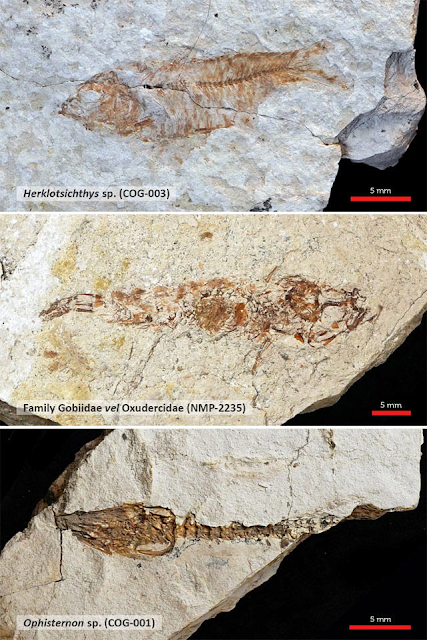
The research, "Fossil fish assemblage of the Laguna Formation, Philippines: unveiling the uniqueness of Pleistocene freshwater ecosystems in Southeast Asia," was published in the Swiss Journal of Paleontology in January 2025. It was a collaborative effort among Filipino scientists from the National Museum of the Philippines' Geology and Paleontology Division (Abigael Castro and Jaan Ruy Conrad Nogot), University of the Philippines Diliman's National Institute of Geological Sciences (Allan Gil Fernando) as well as the School of Archaeology (Clarence Magtoto), and Mines and Geoscience Bureau (Kevin Garas). Tomas Prikryl, the lead researcher, is from the Institute of Geology of the Czech Academy of Sciences; Dominique Mediodia and Chien-Hsiang Lin from Taiwan joined them. The group attempted to make great strides in Philippine and Southeast Asian paleoichthyology (the study of prehistoric fish).

"The fossil record in the Philippines, particularly concerning fish, is notably sparse. [... This limited evidence has provided only fragmented insights into the past biodiversity and evolutionary history of the region’s freshwater ecosystems. The absence of freshwater fossil records leaves a significant gap in our understanding of how this ecosystem has changed over time, especially in response to climatic and geological events," Prikryl et al. wrote.

Their objective was to document a collection of freshwater fish fossils from the Pleistocene Laguna Formation in Antipolo, Rizal Province. This included a total of 14 articulated and semi-articulated specimens, which were deposited at the National Institute of Geological Sciences - University of the Philippines and at the National Museum of the Philippines.

Living specimens were compared to the fish fossil specimens, and their physical features—from length to dorsal profile—were documented. We'll not go into the specifics, but the scientists went as far as recognizing the prehistoric fish's jaws and measuring the skull. These are important not only in identifying the species, but also in studying the environment of their habitat, which in this case was the Laguna Lake.

"The fish fossil assemblage of the Pleistocene Laguna Formation is predominantly composed of the families Dorosomatidae, a Gobiidae vel Oxudercidae, and Synbranchidae. These fossils represent the first records of freshwater fish in the Philippines and the first discovery of these taxa in the tropical West Pacific region. Notably, this study also provides the first-ever record of a synbranchid fossil globally," the researchers concluded.


What This Means for Philippine Ecosystems

Aside from establishing several firsts, this discovery represented the first systematic study of freshwater fish fossils in the Philippines and provided valuable data that can be used to compare with modern ecosystems.

First, it provided solid evidence that the distribution of Herklotsichthys (a genus of herrings found mostly in Southeast Asia and Australia, with one species each in the Persian Gulf, the Red Sea, and the western Indian Ocean) was prehistorically restricted in the Indo-Pacific region.

Second, the presence of dorosomatid fish fossils in the lake suggests a habitat transition from marine to freshwater in the Pleistocene period. This is similar to Taal Lake, where fish species adapted from brackish to freshwater. The presence of demersal swamp eels and gobioid fishes also suggests that the Pleistocene Laguna Lake once had a silty and muddy bottom.

Third, the gobioid fossil from the Pleistocene showed their adaptability through all those periods in history. Up to 89 species of Gobiidae have been recorded in the Philippines, with 20 of them endemic (or found only in the country).

Fourth, the identification of the Pleistocene synbranchid fossil suggested that the swamp eel has an Indo-Pacific origin.

"These newly discovered freshwater fish fossils from the Pleistocene Laguna Formation in the Philippines not only provided evidence of their presence in the West Pacific region but also offered new insights into the origin and historical geographic distribution of these taxa," they said.

Tuesday, 18 June 2024

PH Flag from 1900s Preserved in Michigan Museum

PH Flag from 1900s Preserved in Michigan Museum

Story by the SPOT.ph team 
17 June 2024

(SPOT.ph) A Philippine flag from a time of quiet resistance in the early 1900s has been preserved at the University of Michigan Museum of Anthropology (UMMA), a relic from the past when Filipinos had yet to gain independence and could only express patriotism in secret.

Renowned Filipino historian Ambeth Ocampo recently gained access to the Philippine flag, which he said was collected by American constabulary officer Owen Tomlinson who was deployed in the Philippine highlands in the early 1900s, when the Philippines was held by the Americans.

He shared this on his Facebook page just a few days after the celebration of Philippine Independence on June 12.

On its website, the UMMA talks about the origin of the flag, noting how it served as an expression of defiance against the American occupation of the Philippines. It was a time of resistance in the country, and the US banned images of the Philippine flag, which was already hoisted upon the declaration of independence from Spain in 1898.

That original flag bears three stars and the sun in the middle of a white equilateral triangle, with equal blue and red strips.

"This flag originated from the Ifugao Province in Northern Philippines between 1909 and 1915, during a time of great political turmoil: The Philippines had just declared independence from Spain in 1898 and was ready to establish itself as a new nation, even boasting a new national flag designed by its first President, Emilio Aguinaldo," UMMA says.


"It is likely that this flag was created as a way for rebel groups in Ifugao and other areas in the northern Philippines to proudly display their defiance against the US Occupation of the Philippines while intentionally flipping the flag upside down as a declaration of war, symbolizing courage and valor."

Ocampo adds further insights, saying the flag, while found in Ifugao, actually came from lowland Bulacan, as explained by the inscription "Kabinataang Baliwag" in the middle of the triangle on the flag, in place of the sun. This means the flag was from the Youth of Baliwag town in Bulacan.

The edges of the triangle, meanwhile, bears the inscription "Magbangon Bayan" (Rise Motherland), while the apex of the triangle bears the letters KA, which stands for the revolutionary group Katipunan.  

"It is a significant relic from a time described by my history teachers as the Period of Suppressed Nationalism, when it was forbidden to display our flag that was a symbol of resistance against Spanish and U.S. rule. This flag reminded young people of the independence stolen from the Filipinos in 1898 and returned in 1946," said Ocampo, the latter year in reference to the Philippines’ liberation from Japanese rule.

Ocampo's post about the relic has drawn several calls for the flag to be returned home.

"Shouldn’t it be returned to the Philippines?" read one comment.

Another echoed this sentiment, saying: "Dapat isauli sa Pilipinas ang mga bagay na ‘yan."    

Still, another commenter said: "I hope that, just like the Balangiga Bells, this precious flag would be returned to our country." The Balangiga Bells, church bells taken by US soldiers as war trophies from a church in Eastern Samar in 1901, were returned to the Philippines in 2018 following adamant calls from then President Rodrigo Duterte.

For Ocampo, however, a digital repatriation of the flag might be good enough for now. Besides, it's best to make sure we first have the capacity to preserve the item. "Maaalagaan ba natin gaya ng nasa larawan?" asked the historian. To another comment, he said: "We have physical and soon digital access already. Let's see what comes next."